Valentine
Promise at DawnValentine is the girl whose childhood romance with the narrator becomes one of his earliest lessons in desire, rivalry, and performance. Their affair lasts almost a year, but its importance outlives the relationship: it changes his behavior, supplies material for later writing, and leaves him carrying a battered rubber galosh for more than two decades.
Identity and First Encounter
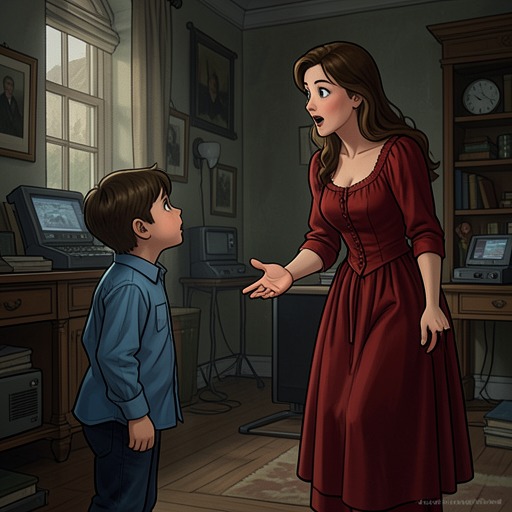
Valentine is eight when the narrator, already nearly nine, sees her near a woodshed at the edge of a patch of nettles. She has dark hair, light eyes, and a ball; the narrator recalls the sudden intensity of his response, which he expresses by imitating his mother's romantic manner. He gazes toward the sun in hopes of impressing her, but she continues playing and gives him no attention.
When the narrator's display fails, he offers Valentine three green apples he has stolen from a neighboring orchard. She accepts them without ceremony and points to a more astonishing precedent: Jan had eaten his entire sump collection for her. Her remark immediately places the narrator's small gift within a larger contest of what a suitor might do.
The Courtship and Its Effects
The narrator remembers the affair as a period of near-total absorption. He tries to win and keep Valentine through increasingly extravagant demonstrations, including eating earthworms, her father's collection of rare butterflies, a mouse, decaying leaves, and, finally, one of his rubber galoshes. The account presents these acts as a child's comic escalation of romantic devotion, not as evidence that Valentine demanded them.
The relationship changes the narrator's conduct. He says it forced him to compete with rivals and to prove himself through feats and fights. One Polish boy, whose name the narrator has forgotten, courts Valentine by juggling five apples; after repeated attempts to match him, the narrator recalls the apples scattered around him and his sense of defeat. The episode makes the courtship a contest not only for Valentine's attention but also over the narrator's own measure of masculine worth.
Memory and Narrative Significance
Valentine's role in the story is chiefly as the focus of the narrator's remembered first passion. The surviving details center on his efforts and their consequences rather than on her inner life: she plays with her ball during his sun-gazing performance, accepts the apples, and becomes the object around whom his rivalry and self-testing gather. The account therefore distinguishes her actual presence from the extravagant romantic script the narrator brings to the encounter.
The memory continues to shape his later life. About twenty years afterward, the childhood affair inspires his first novel, A European Education, and passages in The Company of Men. For more than twenty years, he also keeps the galosh with four large holes among his belongings, always within reach. He eventually leaves it behind when he is more than forty. Valentine thus remains in the narrative less as a developed adult presence than as the origin of a lasting emblem: the object preserves both the comic scale of the boy's sacrifice and the narrator's knowledge that such an intensity cannot simply be repeated.