
Poverty and Respectability
REThis flow traces how the characters confront the social meaning attached to Sunset Estates and the label Trailer trash.
increasing Bearing strength in each event
 decreasing
Bearing strength in each eventdecreasingThe Dirty Trailer
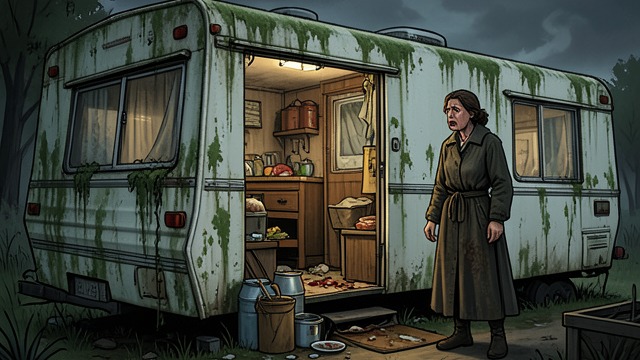
The Dirty Trailer
Tabitha Moore sees the neglected mobile home with the horror of an adult who has learned what her childhood normalized.
Material Shame
Mold, odor, clutter, and poor food become evidence in her mind that the family has failed.
Internalization
The environment confirms the identity she was taught to fear: Trailer trash.
Cleaning as Rebellion
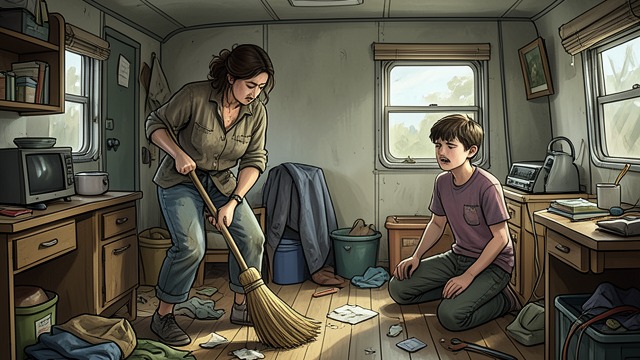
Cleaning as Rebellion
Tabitha Moore cleans the trailer and reorganizes the household despite resistance from Shannon Moore.
Visible Change
The home becomes brighter and more functional.
Class Conflict
The improvement is interpreted as criticism, because changing the space exposes the family’s accumulated neglect.
The Public Label
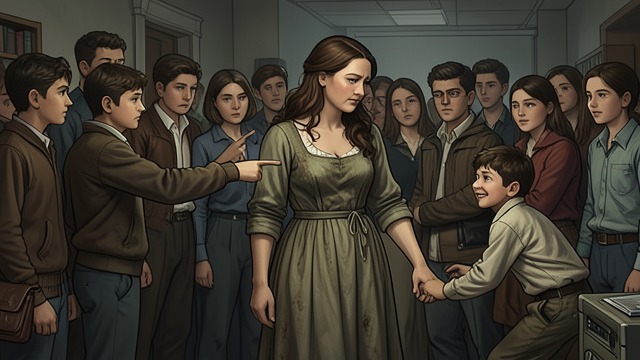
The Public Label
Springton High students use Tabitha Moore’s origins in Sunset Estates to explain and discredit her.
Rumor Economy
Poverty becomes proof that she is dishonest, promiscuous, or socially defective.
Counterexample
Her rescue of Darren MacIntire forces the community to see a hero emerging from the stigmatized neighborhood.
Repairing the Yard
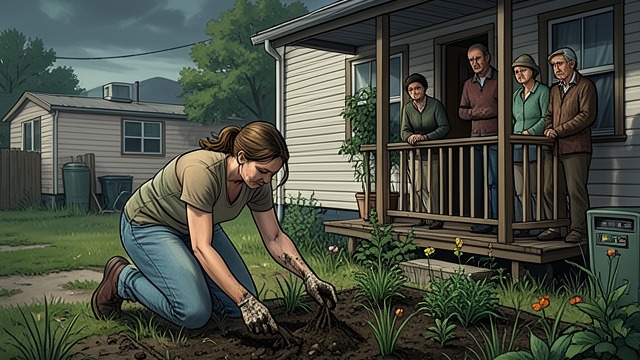
Repairing the Yard
Tabitha Moore weeds the trailer park and prepares a garden despite limited health and resources.
Local Agency
She treats small environmental improvements as meaningful civic work.
Reframing
The neighborhood becomes a community of homes that can be cared for rather than a permanent mark of shame.
Respect Without Escape

Respect Without Escape
Tabitha Moore begins separating dignity from wealth, property, and suburban approval.
Reassessment
The Williams residence offers comfort, but it does not automatically feel like home.
Principle
A better life means reliable care and meaningful work, not simply leaving poor people behind.
First return home in May 1998
May 1998
September to October 1998
November 1998
Late November 1998
