
Rama’s Anger and His Rule of Restraint
RamayanaThis thread traces Ráma’s growing anger after Sítá disappears and the repeated efforts to keep grief from becoming indiscriminate violence.
increasing Bearing strength in each event
 decreasing
Bearing strength in each eventdecreasingGrief at the Empty Hermitage
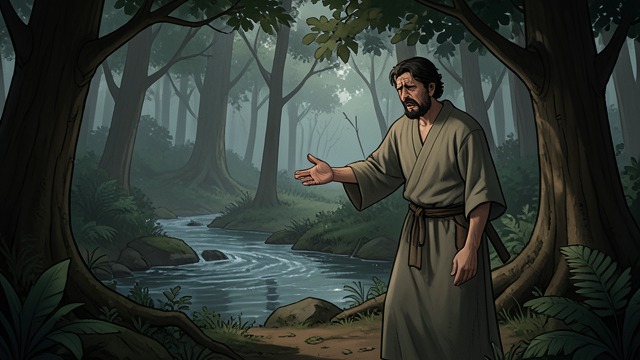
Grief at the Empty Hermitage
A loss without explanation
Ráma finds the cottage empty and searches the surrounding wood. His anguish turns toward Lakshmaṇ, then toward every place that might have sheltered Sítá.
The search widens
Trees, streams, and animals become imagined witnesses. Grief begins as personal panic and develops into a determined search for evidence and direction.
A Threat to Destroy the World

A Threat to Destroy the World
Anger overwhelms judgment
As signs of Sítá’s fate remain unclear, Ráma threatens to destroy the worlds if no one reveals where she is. His grief is no longer contained within private loss.
Lakshmana’s intervention
Lakshmaṇ appeals to his brother’s better nature and urges him to renew the search. The exchange shows the risk of vengeance consuming the very values Ráma represents.
Purpose Replaces Despair

Purpose Replaces Despair
Evidence directs anger
Ráma and Lakshmaṇ discover signs of a struggle and hear Jaṭáyu’s account of Rávaṇ’s attack. Their grief gains a responsible target and a clear direction.
A disciplined campaign
Ráma seeks allies rather than attacking indiscriminately. His anger becomes military purpose, focused on finding Sítá and confronting the person who took her.
Immediately after Ráma returns from pursuing Márícha
During the search for Sítá after the forest abduction
After Lakshmaṇ finds signs of the abduction
