
The Test of Kingship
RamayanaThis thread traces competing ideas of rule through Ráma’s exile, Bharat’s regency, and the final restoration of the throne.
increasing Bearing strength in each event
 decreasing
Bearing strength in each eventdecreasingThe Heir and the People
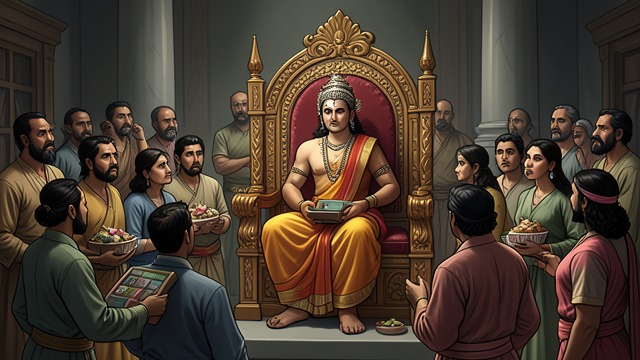
The Heir and the People
Public consent
Daśaratha asks nobles and citizens to approve Ráma’s appointment. They praise his justice, restraint, and concern for ordinary people.
Kingship as service
Their support presents rule as an obligation to protect and listen, not merely an inheritance. That ideal is tested when court politics overturn the planned succession.
Authority Without Possession
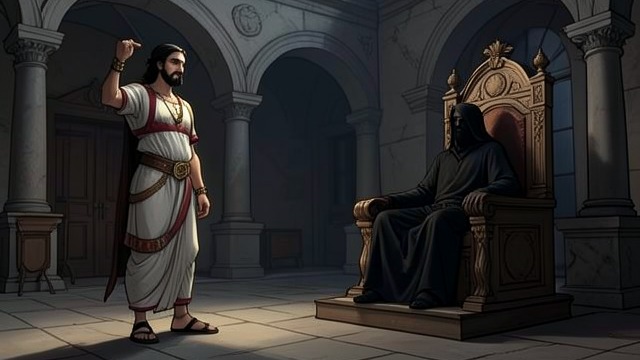
Authority Without Possession
A rejected crown
Bharat refuses to treat the kingdom as his own, despite the court’s readiness to install him. Ráma’s sandals become the visible sign that the absent heir remains sovereign.
A restrained regency
Bharat governs from Nandigrám while avoiding the pleasures and symbols of a full kingship. The arrangement makes legitimate rule depend on fidelity rather than possession.
Rule Restored
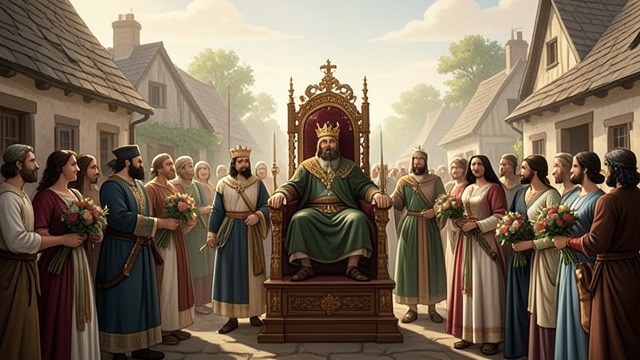
Rule Restored
Succession repaired
Ráma returns after completing the exile and is consecrated with the support of his family and subjects. The royal order is restored through the same heir whose rights were earlier denied.
An ideal reign
The poem describes prosperity, health, and security under Ráma. The ending turns kingship into a measure of collective well-being rather than royal splendor alone.
At the assembly where Daśaratha proposes Ráma as heir
After Ráma gives Bharat his sandals at Chitrakúṭa
At Ráma’s consecration in Ayodhyá
