
The Ethics of the Vow
RamayanaThis thread examines how the story treats promises as both a source of moral integrity and a force that can cause suffering.
increasing Bearing strength in each event
 decreasing
Bearing strength in each eventdecreasingA Father’s Promise

A Father’s Promise
Words become binding
Daśaratha’s promise to Kaikeyí arises from gratitude for her care during battle. When she later claims the boons, the king sees no honorable way to withdraw them.
The cost to a household
The promise results in Ráma’s exile and the king’s grief. The episode shows that a virtuous commitment can become painful when another person uses it for ambition.
A Son’s Obedience
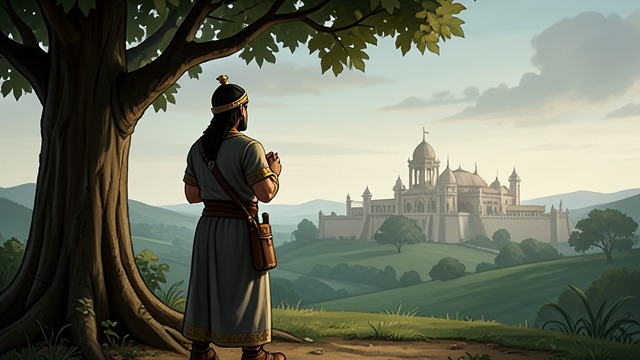
A Son’s Obedience
Acceptance without bargaining
Ráma does not demand an explanation or attempt to reverse the order. He promises to leave so his father’s word will remain intact.
Duty over reward
The heir relinquishes authority and comfort. His choice presents truthfulness as a discipline that must survive the loss of personal advantage.
A Promise Kept by Two Brothers
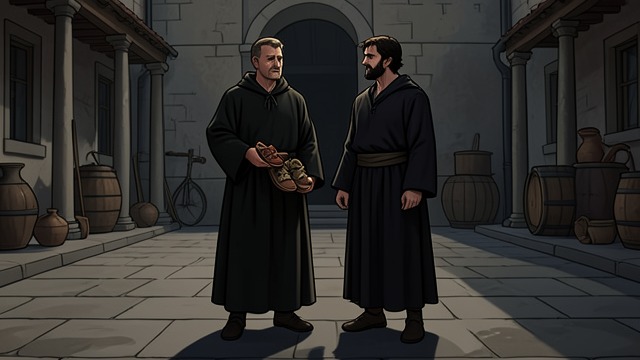
A Promise Kept by Two Brothers
Two forms of loyalty
Bharat asks Ráma to return, but Ráma refuses to violate his father’s command. Bharat, in turn, refuses to accept authority as his own.
A shared standard
The sandals allow Bharat to preserve public order without claiming the throne. Both brothers treat fidelity as more important than immediate political success.
When Kaikeyí invokes Daśaratha’s earlier boons
During Ráma’s first conversation with Kaikeyí
At the Chitrakúṭa reunion
