
The Making of the Ramayana
RamayanaThis thread traces how Válmíki receives the story, discovers poetic form, composes the epic, and entrusts it to its first singers.
increasing Bearing strength in each event
 decreasing
Bearing strength in each eventdecreasingThe Search for a Hero
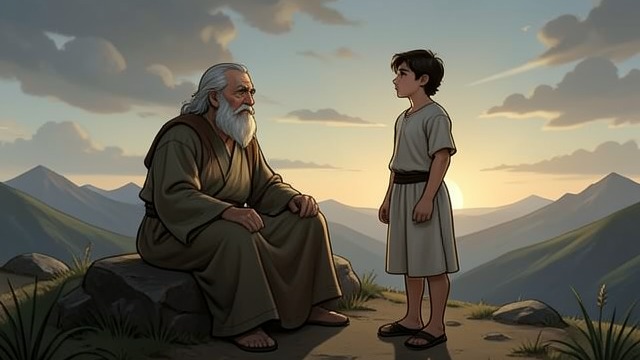
The Search for a Hero
A question to Nárada
Válmíki asks Nárada whether anyone embodies virtue, courage, truth, and care for the people. Nárada answers by recounting the life of Ráma.
A story takes shape
The account supplies the narrative framework that Válmíki will expand. The poem thus begins as both an inquiry into ideal character and a transmission of remembered events.
The First Śloka
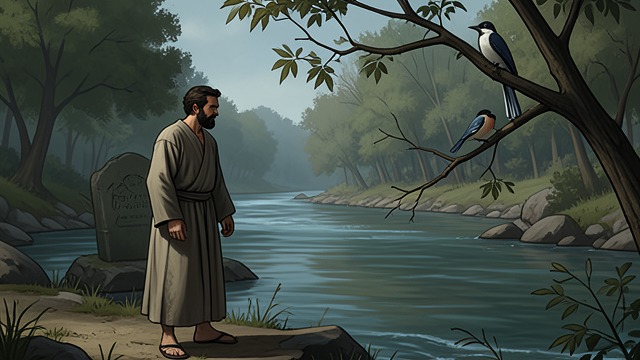
The First Śloka
Grief at the river
Válmíki sees a hunter kill one bird from a pair and speaks a curse against the act. The bereaved bird’s cry moves him to compassion and leaves him wondering at his own measured words.
Grief becomes form
He recognizes that the utterance has the structure of a śloka. Brahmá then urges him to compose Ráma’s story in that newly discovered meter.
The Epic’s First Singers
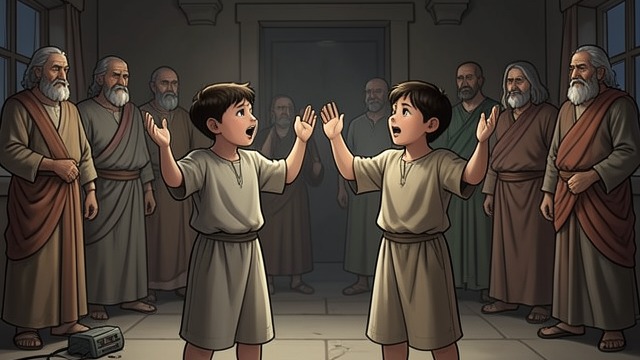
The Epic’s First Singers
Training the twins
Válmíki teaches Kuśa and Lava the poem, its music, and its changing emotional registers. Their skill makes them suited to carry the work beyond the hermitage.
A poem enters public life
They sing before sages and eventually before Ráma’s court. The epic becomes a living performance, capable of making the king hear his own history from another generation.
At the beginning of the narrative frame
Soon after Válmíki hears Nárada’s account
After Válmíki completes his composition
