
The Young Couple's Ritual
Rear WindowThis thread uses the newlyweds' repeated light-switch routine as a small portrait of habit and a baseline for Hal's observations.
increasing Bearing strength in each event
 decreasing
Bearing strength in each eventdecreasingThe Rush to Leave
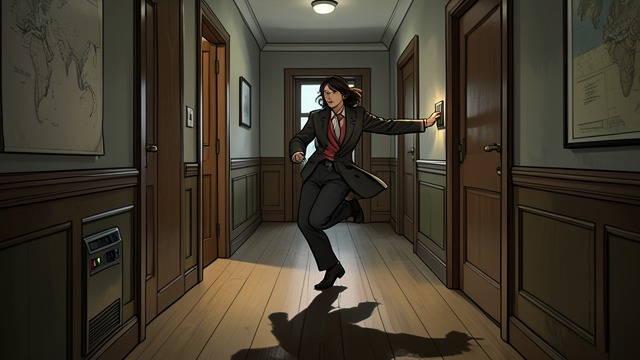
The Rush to Leave
Restless Departures
The young couple seem unable to spend an evening at home. They hurry out without turning off their lights.
A Comic Pattern
Hal finds their repeated haste amusing. Their ordinary behavior supplies a stable, recognizable rhythm in the courtyard.
The Return for Lights
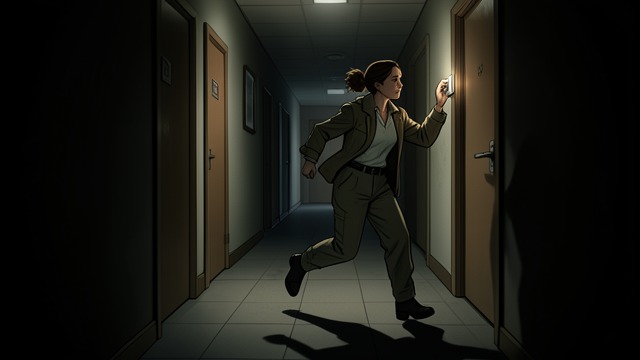
The Return for Lights
Delayed Correction
One spouse rushes back from the street to switch off the lights, then leaves again and stumbles in the dark. The routine is clumsy but dependable.
Meaning in Repetition
Hal learns to call the pattern delayed action. An initially missed act is corrected only after a short interval, introducing an idea that later resonates with his own deductions.
A Habit Becomes a Measure
A Habit Becomes a Measure
The Expected Sequence
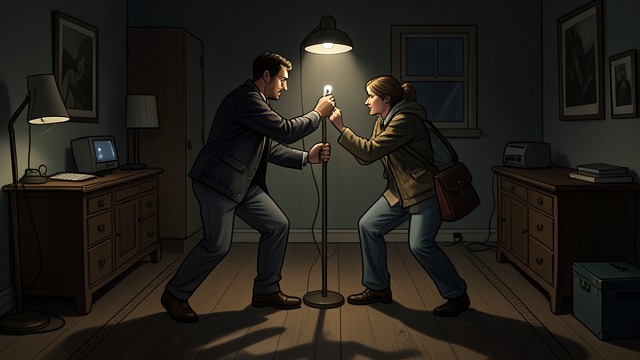
Because the couple repeat the same movement, Hal can distinguish their behavior from a genuine change. Their light-switch ritual becomes a kind of informal control pattern.
Ordinary Life as Contrast
Their comedy highlights how small habits bind daily life together. The story's darker household stands out because its routine breaks down.
The Courtyard's Familiarity
The Courtyard's Familiarity
Known Without Names
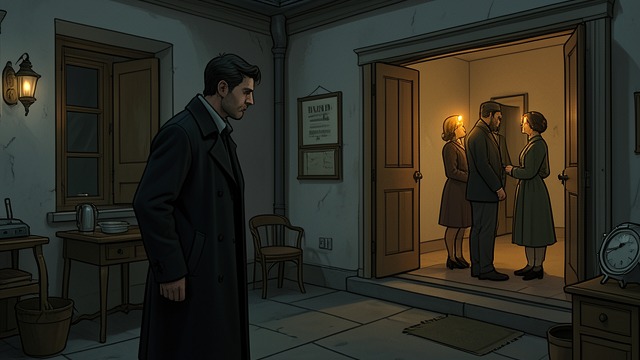
Hal can predict the couple's lights and movements despite never learning their names or hearing their voices. Repetition produces a limited, practical knowledge.
A Boundary of Knowing
Their example also reminds him that familiarity is not the same as full understanding. A visible ritual can be known precisely while the people behind it remain strangers.
A Small Counterpoint
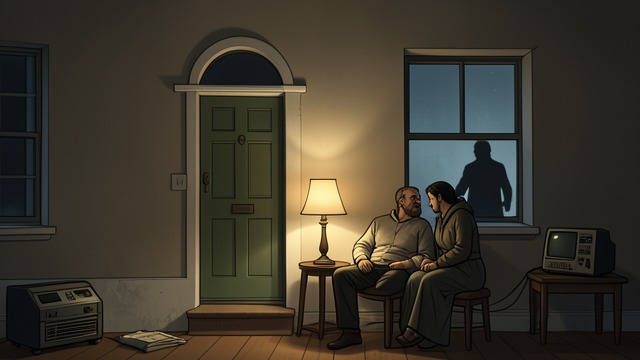
A Small Counterpoint
Life Continues Nearby
The couple's ordinary routines belong to the continuing life of the courtyard, even as Hal faces a lethal threat. Their predictable behavior remains distant from the crisis.
Habit's Double Edge
Their ritual is harmless, but the same attention to repeated behavior helped Hal detect the murder. The everyday can be comic in one window and ominous in another.
Early in the story, on an ordinary evening
A few minutes after their usual departure
During later evenings, as Hal compares households
During the evening when the murder suspicion grows
Near the ending, as Hal awaits the police
