
The Chain of Everyday Habits
Rear WindowThis theme thread examines how ordinary repetitions create both social order and the deviations that expose a concealed crime.
increasing Bearing strength in each event
 decreasing
Bearing strength in each eventdecreasingHouseholds on Schedule
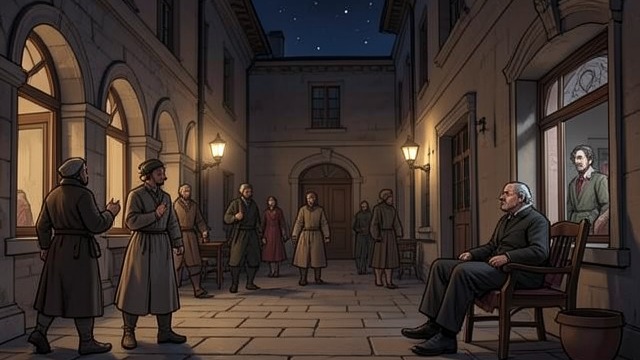
Households on Schedule
Repetition Across Windows
Lights, meals, radios, departures, and returns mark the evening lives of the courtyard. Hal imagines residents bound to routines they regard as freedom.
Pattern as Environment
These habits create the ordinary background against which unusual behavior can be noticed. The courtyard's social order is built from small, repeated acts.
A Familiar Ritual
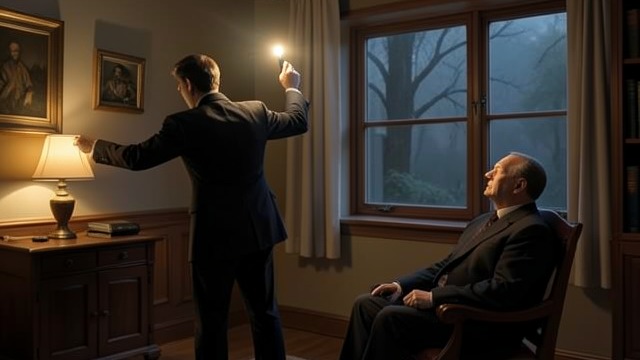
A Familiar Ritual
Forgetting and Returning
The couple repeatedly leave their lights on, then one spouse returns to switch them off. Hal can predict the sequence almost perfectly.
A Model of Delayed Action
A missed act is corrected after a pause, making a small household habit an early image of delayed understanding. The pattern is comic before it becomes ominous.
The Missing Response
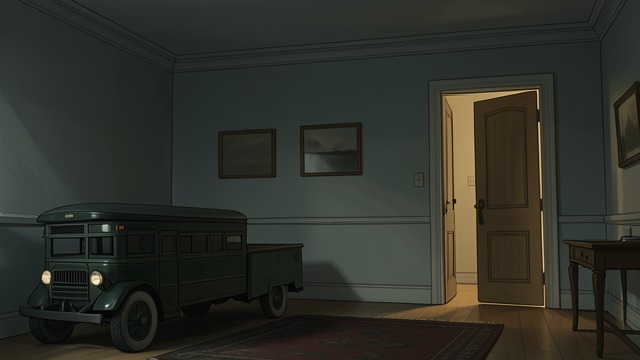
The Missing Response
A Routine Breaks
Anna does not appear to greet Lars, and the rooms remain lifeless for an unusually long period. The familiar chain of domestic responses no longer holds.
Absence as Information
Hal notices not a dramatic act but a missing one. The crime first becomes legible through what a household no longer does.
The Bedroom's Interrupted Use
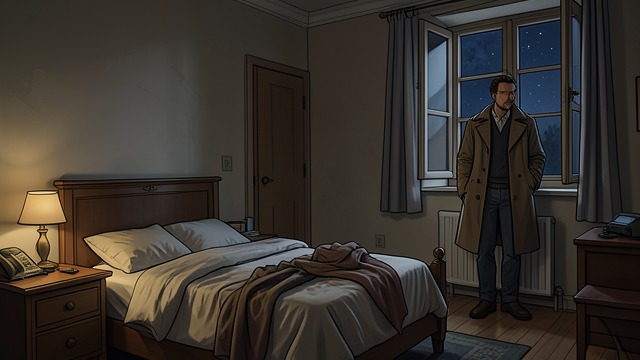
The Bedroom's Interrupted Use
A Room Avoided
Lars sleeps outside the bedroom while the beds remain available. The choice seems inconsistent with the claim that Anna has already departed.
The Habitual Against the Claimed
The ordinary use of a bedroom makes its avoidance meaningful. Hal's knowledge of expected routines helps him challenge an otherwise plausible story.
A Pattern Reconstructed
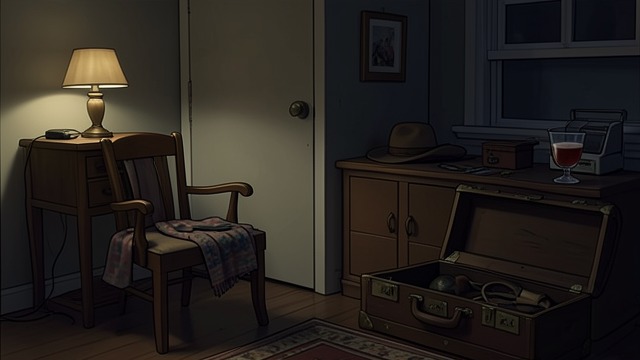
A Pattern Reconstructed
Small Breaks Connected
Hal lists the lights, the late return, the hat, the missing greeting, the trunk, the drinking, and the avoided bedroom. Each detail is weak in isolation.
Habit as Evidence
Together, the deviations expose a story that does not fit the household's visible rhythms. The everyday becomes an evidentiary system, though it still needs physical confirmation.
Early in the story, as lights appear at dusk
On a typical evening, when the young couple leave
The evening Lars returns to a quiet apartment
During the night before the trunk is dispatched
The morning Hal lists the discrepancies
