
The Ethics of Looking
Rear WindowThis theme thread weighs the knowledge Hal gains by watching against the privacy he violates and the danger of mistaken interpretation.
increasing Bearing strength in each event
 decreasing
Bearing strength in each eventdecreasingA Self-Aware Peeping Tom
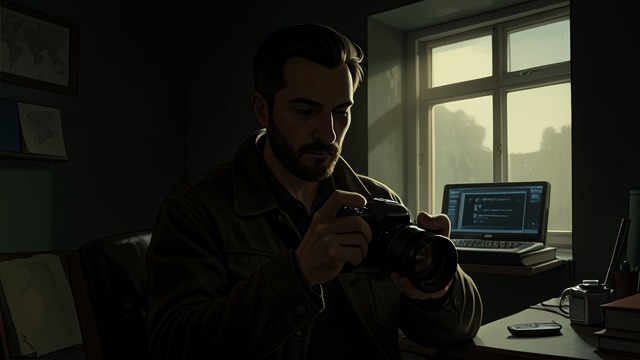
A Self-Aware Peeping Tom
Watching to Pass Time
Hal acknowledges that the behavior could be mistaken for prying, but argues that boredom and immobility leave him little else to do. He watches from the dark to avoid drawing attention.
Justification and Unease
His explanation makes his conduct understandable without making it neutral. The story begins with a question about what an observer is entitled to see.
People Reduced to Windows
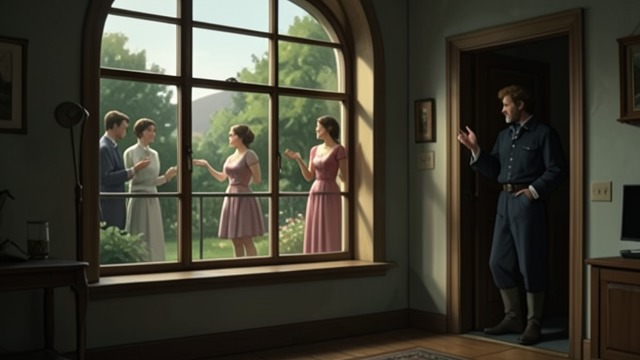
People Reduced to Windows
Partial Characters
Hal gives the neighbors identities through gestures and routines: a restless couple, a lonely woman, and a sick wife. Their inner lives remain largely conjectural.
The Limits of Distance
The window makes domestic behavior visible while withholding context. Hal can feel sympathy and make judgments, but he cannot verify either person's full story.
Inference Under Pressure
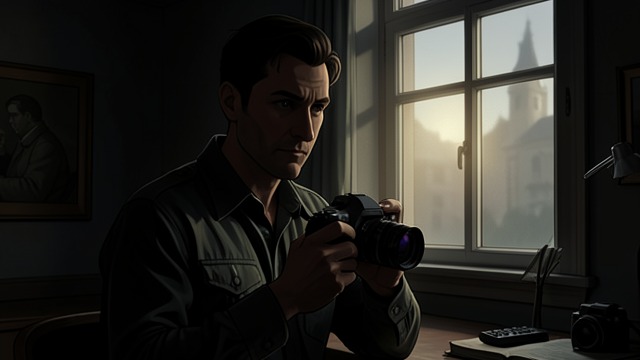
Inference Under Pressure
Reading Gestures
Hal interprets Lars's glances, drinking, and avoidance as signs of guilt. Each is suggestive, but none is uniquely incriminating.
Ethical Risk
The observer who sees without asking must accept the possibility of error. Hal's moral certainty grows faster than the evidence available to anyone else.
The Observer Is Identified
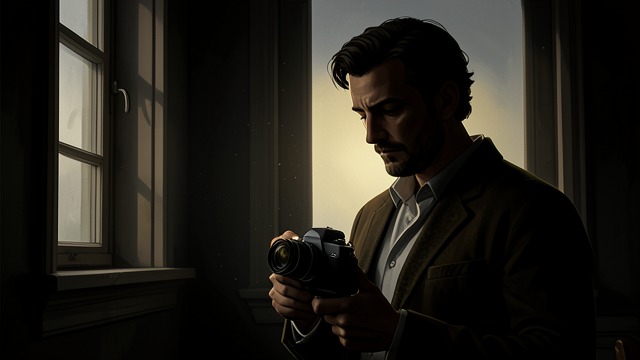
The Observer Is Identified
Surveillance Reversed
Lars's direct glance reveals that the watcher may have become visible. Hal can no longer assume that darkness protects him.
Consequences of Looking
The surveillance relationship is reciprocal, although not equal in purpose or power. Hal's private observation has drawn the attention of the person he suspects.
Witness and Participant
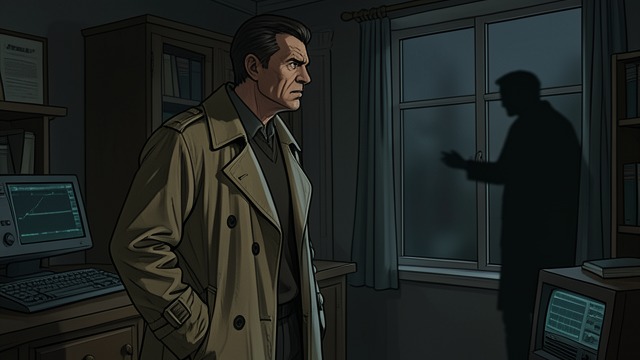
Witness and Participant
From Spectator to Evidence-Giver
Hal's window observations help locate Anna and expose Lars, but the final confrontation pulls him directly into the events. He is no longer only a viewer.
The Cost of Knowledge
Looking becomes both a civic act that uncovers a crime and a personal risk that invites retaliation. The story leaves the ethics of observation unresolved even as its practical value is confirmed.
At the beginning, as Hal explains his watching
During the first evening Hal describes the residents
After Hal first suspects Anna has vanished
Late in the final night, after Lars looks at Hal's window
At the ending, after Hal survives the attack
