Anna Thorwald’s chronic illness
Rear WindowAnna Thorwald’s chronic illness shapes both the few glimpses the narrator has of her daily life and his later reconstruction of her disappearance. The account offers no diagnosis from Anna herself: her condition is inferred from across the courtyard, then folded into a theory whose details the narrator cannot verify.
Observed Condition
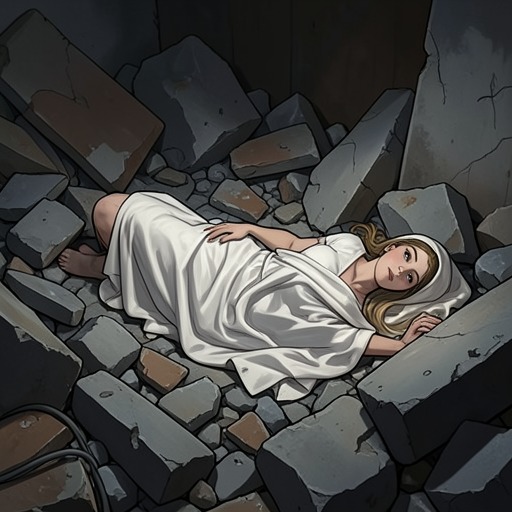
Anna is described as being in chronically poor health while living in the flat beneath one undergoing noisy renovation. From a distance, the narrator sees her move listlessly, remain in her bathrobe rather than dress, and sometimes sit by the window holding her head. These observations suggest that her illness constrains her everyday activity, but they do not establish its cause or specific symptoms.
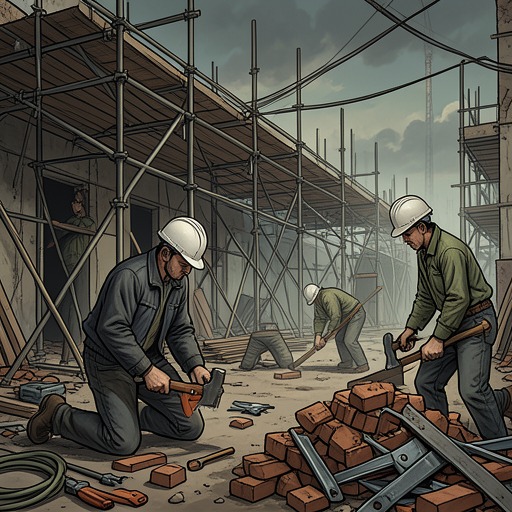
Her surroundings compound the impression of an uncomfortable domestic routine. Work in the flat overhead brings hammering and sawing into the building, and the narrator wonders how the couple endure the disturbance while Anna is unwell. He speculates that they may not be able to afford a doctor, especially because Lars Thorwald appears to be out of work; this is the observer’s explanation, not confirmed information about their finances or medical care.
Illness and the Household
The bedroom light is often visible late at night behind a drawn shade. The narrator takes this as a sign that Lars may be sitting up with his ill wife. On one especially long night, the light remains on until three in the morning and is still burning near dawn. When it finally dims, Lars appears at a different window, smoking and making quick, nervous movements with his hand. The narrator supposes that Anna has only just fallen asleep after suffering through the night, and imagines that the construction noise will soon disturb her again.
Lars’s actions do not fit that interpretation neatly. He raises shades in several rooms and slowly scans the surrounding windows, while Anna’s bedroom shade stays down. The narrator notices the contrast between an apparent inward preoccupation with a sick spouse and Lars’s outward attention to the other windows. The discrepancy first registers as a small oddity; in retrospect, it becomes part of the pattern that leads the narrator to doubt the appearance of ordinary concern.
Illness in the Narrator’s Theory
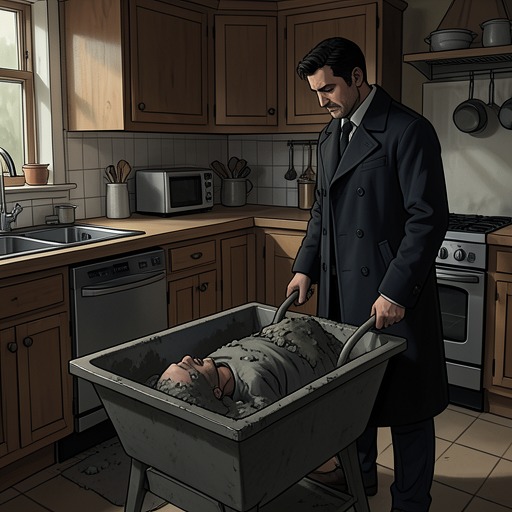
When explaining his deductions to Inspector Boyne, the narrator describes Anna as having been ill for years and Lars as having been out of work. He proposes that resentment of both circumstances may have figured in Lars’s motive, but presents the explanation as a theory rather than established fact. He further speculates that Lars might have tried to make her death appear to result from her poor health, and that her illness could have supported a later account of suicide attributed to despondency.
That proposed cover story gives the illness a second, troubling function in the narrative: what had first seemed to explain Anna’s restricted daily life and her husband’s possible nighttime vigilance could also be used to make her disappearance seem plausible. The narrator’s reconstruction is not proof that Lars acted for those reasons or that every part of the plan unfolded as he imagines. The distinction matters: Anna’s poor health is observed as a condition, while its role in the suspected crime remains an interpretation.
Narrative Limits
Anna is never given a direct account of her illness in these scenes. Her condition reaches the reader through the narrator’s view of her across the courtyard and his inferences about what her gestures, clothing, and prolonged nights mean. That distance makes the illness consequential but only partially knowable: the text shows signs of hardship while leaving its medical particulars and Anna’s own understanding of it unstated.