Buckingham Palace Coming-Out Confrontation
Red, White & Royal BlueThe Buckingham Palace Coming-Out Confrontation is the pivotal scene where Prince Henry and Alex Claremont-Diaz stop hiding and formally present their relationship to the British royal family, forcing Queen Mary to confront a reality she had spent years trying to suppress. It is the moment the couple's private romance becomes an institutional matter, a face-to-face collision between the monarchy's demand for appearances and two young men's insistence on being seen as they are. The confrontation does not merely reveal a secret; it dismantles the queen's authority over Henry's life and converts a hidden love affair into a public, acknowledged bond that the world will soon celebrate.
Causes and Background
The confrontation is the culmination of a long-brewing crisis within the royal family. Queen Mary had made her position clear years earlier: if Henry were "drawn in unnatural directions," as she put it, "appropriate measures could be taken." Her vision for Henry was rigid and unyielding—his role was to "perpetuate our bloodline and maintain the appearance of the monarchy as the ideal of British excellence." The queen's stance was not merely personal preference but institutional policy, a demand that Henry's private life serve the crown's public image. This pressure had already fractured the family once, when Beatrice's "little problem" had humiliated them in the papers, and the queen was determined not to repeat that embarrassment. Henry, for his part, had spent years internalizing this expectation, believing that his happiness was secondary to his duty. The arrival of Alex—an American, a person of color, the First Son of the United States—made the conflict unavoidable. Their relationship, conducted in secret across oceans and time zones, could not remain hidden forever, and the decision to bring it before the queen was a deliberate act of defiance against the very structure that had tried to shape Henry's life.
The Confrontation
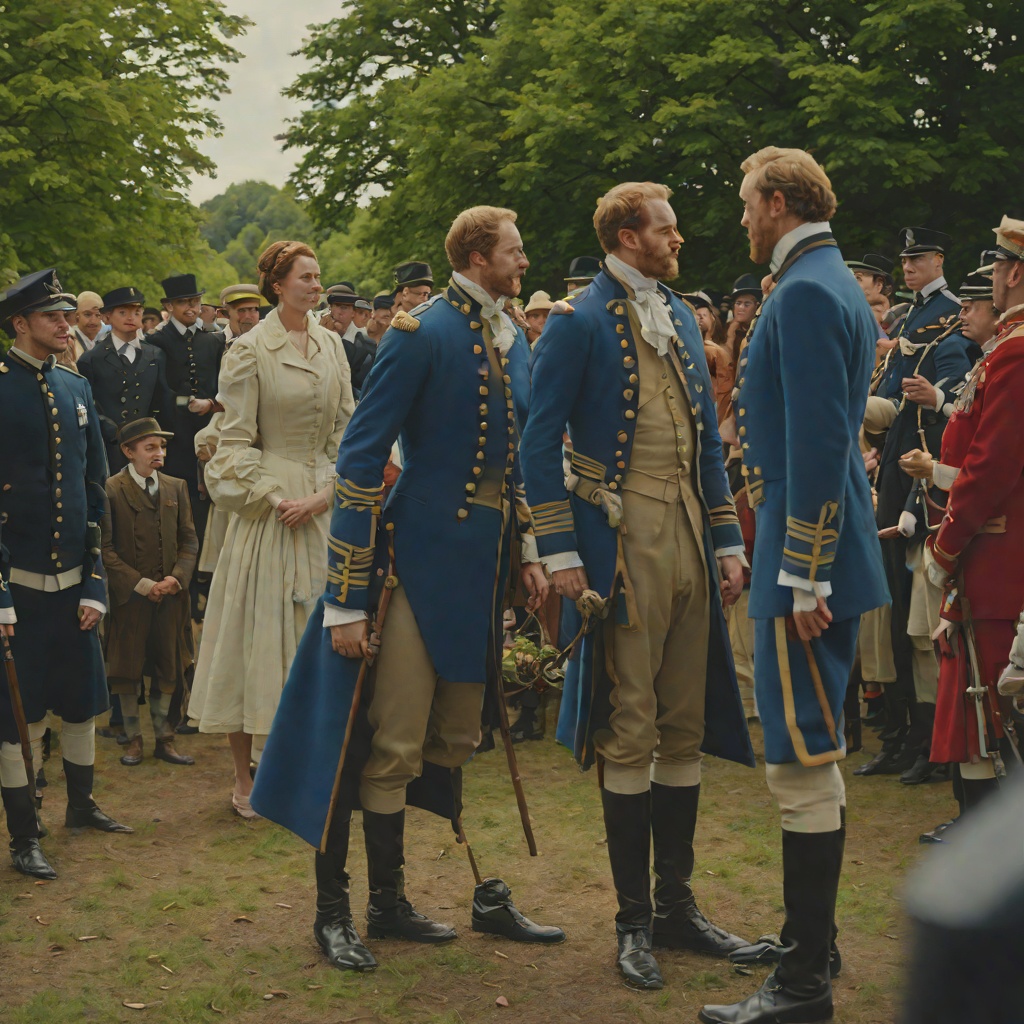
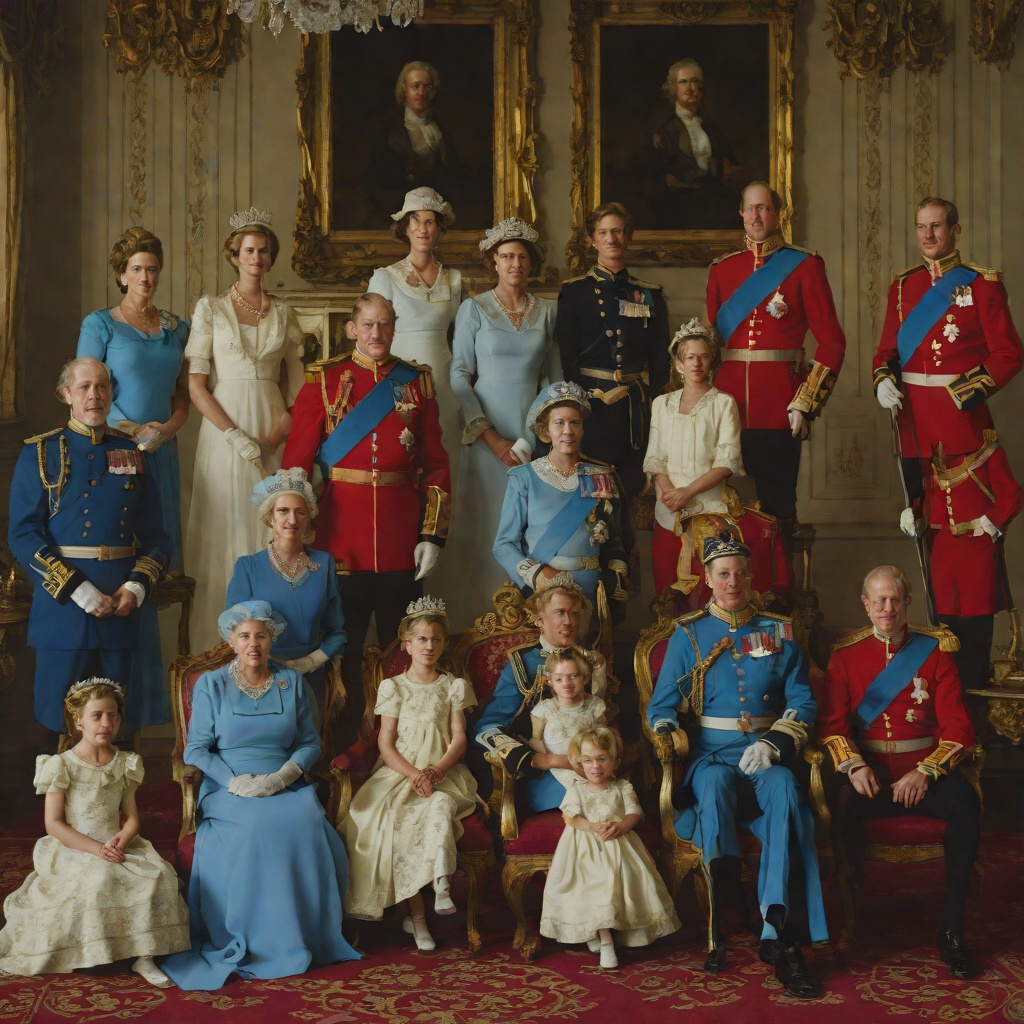
The scene unfolds in a meeting room at Buckingham Palace, where the family has gathered around a long, ornately carved table to await the queen's arrival. Philip is present, looking as though he is about to chew through his tongue, while Henry cannot stop fidgeting with his tie. Queen Mary enters wearing slate-gray separates and a stony expression, her gray bob arranged with razor precision. Alex is struck by how tall she is, straight-backed and fine-jawed even in her early eighties, with a definite story in her shrewd blue eyes and angular features. She takes her seat at the head of the table, and the temperature in the room drops. A royal attendant fetches the teapot and pours into pristine china, and the queen fixes her tea at a glacial pace, making them wait—the milk poured with one gently tremoring, ancient hand, one cube of sugar picked up with deliberate care, then a second. The ritual is a display of control, a reminder of who holds power in this room. When the queen finally speaks, she offers Henry a way out: keep ignoring it, pretend it was a lie, make it all go away. Henry grits his teeth and refuses. "It's real," he says. "All of it." The queen's face moves through a series of expressions, settling on a terse frown as if she has found something unsightly on the bottom of one of her kitten heels. She turns to Alex and tells him that had she known he was involved with her grandson, she would have insisted upon a more formal first meeting. Then she delivers her verdict: Henry's role is to perpetuate the bloodline and maintain the monarchy's appearance, and she cannot allow anything less. She speaks of Henry's "unnatural directions" and the humiliation Beatrice caused, and under her polite tone, Alex can hear epithets for everything from his race to his sexuality. Henry is looking down, eyes distant and cast toward the grain of the table, while Catherine's energy roils across from him—the princess who ran away with James Bond, who told her children to give back what their country stole, making a choice.
Henry's Stand
The confrontation reaches its breaking point when Henry bursts out, "Stop it!" All eyes swivel to him, and he looks pale and shocked at the sound of his own voice, but he goes on. "You can't—you can't intimidate me into submission forever!" Alex's hand gropes across the space between them under the table, and the minute his fingertips catch on the back of Henry's wrist, Henry's hand is gripping his, hard. Henry speaks with a trembling but resolute voice: "I know it will be difficult. I … It's terrifying. And if you'd asked me a year ago, I probably would have said it was fine, that nobody needs to know. But … I'm as much a person and a part of this family as you. I deserve to be happy as much as any of you do. And I don't think I ever will be if I have to spend my whole life pretending." Philip cuts in, dismissing the relationship as a hormonal decision based on less than a year of Henry's life when he was barely in his twenties. Henry looks Philip square in the face and delivers the line that shatters the family's pretense: "I've been gay as a maypole since the day I came out of Mum, Philip." The statement is not a confession but a correction—Henry has always been this way, and the family's demand that he hide it was never about protecting him but about protecting their image.
The Turning Point
The standoff is broken not by argument but by evidence. Beatrice, who has been watching the confrontation unfold, stands and brandishes her tablet. "Oh, will you all shut up for a second?" she says, thunking it down on the table so Queen Mary and Philip can see it. It is a news report from the BBC, the sound off, and Alex reads the scroll at the bottom of the screen: WORLDWIDE SUPPORT POURS IN FOR PRINCE HENRY AND FIRST SON OF US. The room falls silent at the images on the screen. A rally in New York outside the Beekman, decked out in rainbows, waving signs that say FIRST SON OF OUR HEARTS. A banner on the side of a bridge in Paris that reads HENRY + ALEX WERE HERE. A hasty mural on a wall in Mexico City of Alex's face in blue, purple, and pink, a crown on his head. A herd of people in Hyde Park with rainbow Union Jacks and Henry's face ripped out of magazines and pasted onto poster boards reading FREE HENRY. A young woman with a buzz cut throwing two fingers up at the windows of the Daily Mail. A crowd of teenagers in front of the White House, wearing homemade T-shirts that all say the same thing in crooked Sharpie letters, a phrase Alex recognizes from one of his own emails: HISTORY, HUH? Alex tries to swallow, but he can't. He looks up, and Henry is looking back at him, mouth open, eyes wet. The world has already decided which side it is on, and it is not the queen's.
Aftermath and Significance
The queen, confronted with the weight of global opinion, concedes. "Well," she says. "I suppose. I suppose you don't leave me much choice, do you?" Catherine answers her with quiet steel: "Oh, you have a choice, Mum. You've always had a choice. Perhaps today you'll make the right one." In the corridor of Buckingham Palace, as soon as the door has shut behind them, Henry and Alex fall sideways into a tapestry on a wall, breathless and delirious and laughing, cheeks wet. Henry pulls Alex close and kisses him, whispering, "I love you I love you I love you," and it doesn't matter if anyone sees. The confrontation is the hinge on which the entire story turns. It transforms the couple's relationship from a secret to be protected into a truth to be proclaimed, and it sets the stage for the public coming-out that will follow. The scene also marks a profound shift in the royal family's internal dynamics: Catherine, who had long been sidelined, finds her voice and stands up to her mother; Beatrice, who had been the source of a previous scandal, becomes the one who breaks the deadlock; and Philip, who had dismissed Henry's love as a youthful mistake, is forced to confront the reality of his brother's identity. The confrontation is not merely a personal victory for Henry and Alex but a redefinition of what the monarchy can demand of its members—and what it cannot. It is the moment the private becomes public, the hidden becomes acknowledged, and the love that had been conducted in secret becomes a force that the world, and the crown, can no longer ignore.