First Son's Coming-Out Speech
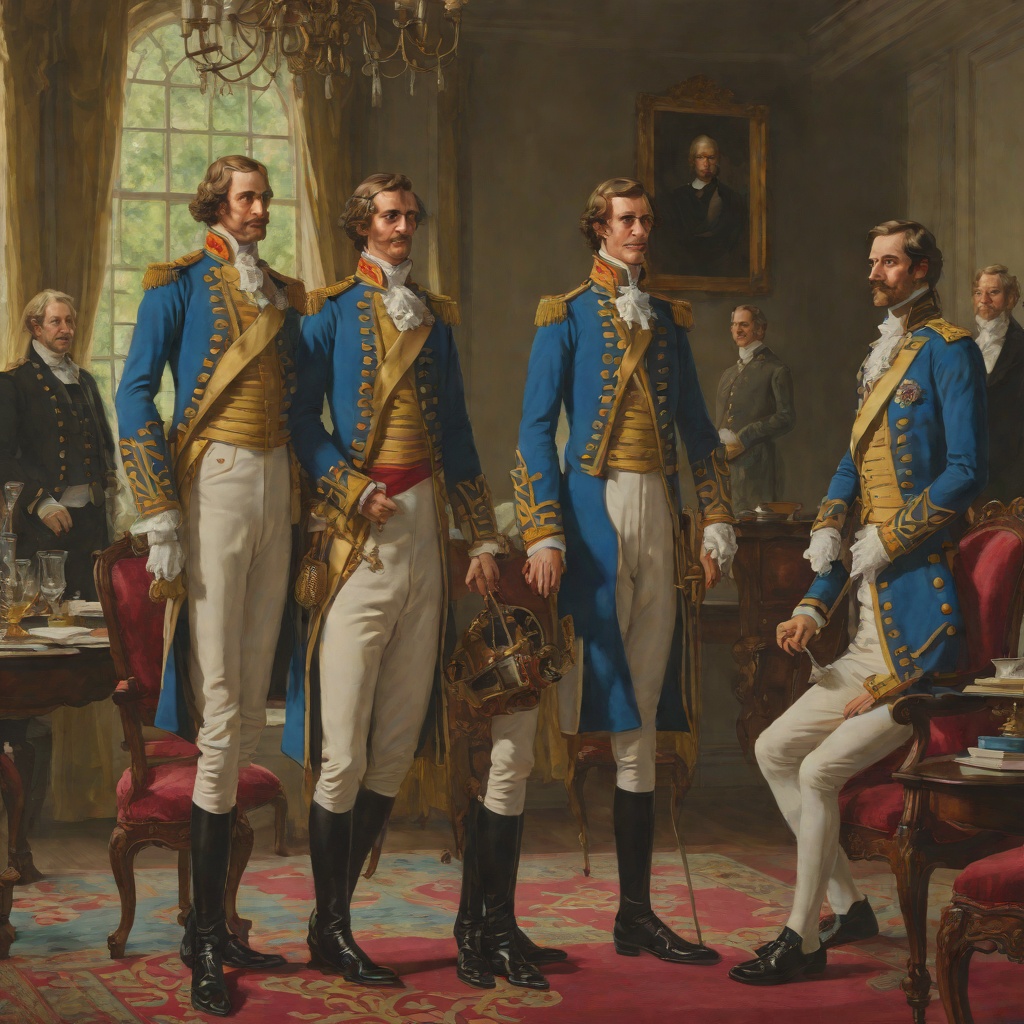
Red, White & Royal BlueOn October 2, 2020, Alexander Gabriel Claremont-Diaz, the First Son of the United States, walked into the Diplomatic Reception Room of the White House and delivered a speech that would redefine his public life and the stakes of the 2020 presidential election. This was not a hastily issued statement but a carefully crafted address, written by his sister June Catalina June Claremont-Diaz at his explicit request, after he had scrapped the statement drafted by the press secretary. The room itself carried historical weight: it was where Franklin D. Roosevelt once recorded his fireside chats, and Alex intended to use that hallowed space to tell the country the truth about his relationship with Prince Henry George Edward James Fox-Mountchristen-Windsor and his own bisexuality. The speech was the culmination of a private journey that had begun with a secret kiss and had been violently exposed by the leak of intimate emails, and it was Alex's deliberate choice to seize control of his own story before the world could define it for him.
The Road to the Diplomatic Reception Room
The speech was not an impulsive act but the resolution of a long and painful arc. Alex's relationship with Henry had been conducted in secret, governed by the unspoken rule that they must never be caught. Their early interactions were marked by public posturing and private banter, from Alex's mockery of Henry's grey tie to the prank of sending five kilos of campaign buttons to Kensington Palace. The private correspondence that developed between them, particularly the emails where Henry confessed he was "so fucking beautiful" and where Alex mused about Alexander Hamilton's possible bisexuality, became the emotional core of their bond. These letters were supposed to remain safe, a sacred space where Henry could speak his truth about being gay, his sister Beatrice's rehab, and the queen's tacit enforcement of his closet. When the Waterloo Letters were leaked, that sanctuary was violated, and Alex was confronted with the reality that the world now knew, in his own private words, what was pumping out of his heart. The decision to give a speech, rather than a mere statement, was a response to this violation: a refusal to let the leak be the final word and an insistence on speaking for himself.
The Speech as a Performative Act
The address itself was a masterful piece of rhetoric that wove together personal history, national identity, and a direct appeal to the American people. Alex opened by declaring himself "a child of America," grounding his authority in his Texas upbringing and his family's immigrant heritage. He recalled speaking at the Democratic National Convention in Philadelphia at eighteen, when he introduced his mother as the nominee, and reminded his audience that they had cheered for him and pinned the flag to his lapel. He then pivoted to the central revelation: "The truth is, Henry and I have been together since the beginning of this year." He acknowledged the struggles they had faced, the compromises that cost them sleep, and the liberty they were not afforded to share their relationship on their own terms. The speech's most resonant line, "love is indomitable," framed his relationship not as a scandal but as an affirmation of a core American belief. He drew a direct parallel between his love and that of historical presidential couples, declaring, "the same as Jack loved Jackie, the same as Lyndon loved Lady Bird," and asserted, "America: He is my choice." In a moment of profound personal and political identification, he stated, "I am the First Son of the United States, and I'm bisexual. History will remember us." He concluded by asking the American people not to let his actions influence their decision in November, urging them to focus on the campaign and the lives of millions of Americans, and expressing his hope to continue as First Son after Inauguration Day.
The Setting and the Stakes
The speech was staged with deliberate theatricality. Henry was flown in from London for the telecast and positioned at Alex's shoulder, "the emblematic politician's spouse." Alex's mind raced with the image of millions of televisions across America simulcasting his face, his voice, June's words, and Henry at his side. The choice of the Diplomatic Reception Room, rather than the impersonal press briefing room in the West Wing, was itself a statement, invoking the legacy of FDR's fireside chats. The event was a public spectacle that transformed their private love into a matter of national and international significance. Across the Atlantic, viewers would see their youngest prince, "the most beautiful one, Prince Charming," standing beside his American boyfriend. The speech was a calculated act of self-revelation that aimed to preempt the narrative of scandal and replace it with one of dignity and choice.
Immediate Aftermath and Public Response
The first twenty-four hours after the speech were a blur, but certain images crystallized for Alex. The morning after, a new crowd gathered on the Mall, the biggest yet. From the safety of the Residence, Alex watched the live stream on CNN with Henry, June, Nora Holleran, and all three of his parents. In the crowd, he spotted Amy at the front, wearing June's yellow "HISTORY, HUH?" T-shirt and a trans flag pin, with Cash nearby, Amy's wife on his shoulders, wearing the jean jacket Amy had been embroidering on the plane in the colors of the pansexual flag. Alex whooped so hard he spilled his coffee on George Bush's favorite rug. The political response was immediate and polarized. Senator Jeffrey Richards appeared on CNN to express his "grave concern" for President Ellen Claremont's ability to remain impartial on matters of traditional family values, while Senator Oscar Diaz, Alex's father, responded via satellite that the president's primary value was upholding the Constitution, and that the White House was built by slaves, not forefathers. The speech had successfully reframed the conversation, turning a personal revelation into a political battleground.
The Speech's Role in the 2020 Election and Beyond
The coming-out speech was a decisive factor in the 2020 presidential campaign. It was delivered just over a month before the election on November 3, 2020, and was part of a broader narrative that included the exposure of the Richards campaign's conspiracy and the unlikely heroism of Rafael Luna. Alex's address was a deliberate attempt to inoculate his mother's campaign against the fallout of the leak, and it succeeded in shifting the focus from scandal to a broader conversation about love, family, and American values. The speech's impact was felt in the election's outcome: President Ellen Claremont won re-election, and her victory address from Austin, Texas, on November 3, 2020, explicitly celebrated her family as "made up of the children of immigrants, of people who love in defiance of expectations or condemnation." The speech had not only secured Alex's public identity but had also contributed to a political victory that would define the nation's future. In the aftermath, Alex and Henry's relationship was no longer a secret to be protected but a public fact to be celebrated, and Alex's declaration that "history will remember us" proved prophetic as their story became part of the nation's ongoing narrative.