Kensington Palace
Red, White & Royal BlueKensington Palace is the London royal residence that serves as the primary domestic setting for Prince Henry and his sister Princess Beatrice, and it becomes the stage for some of the most intimate and consequential scenes between Henry and Alex Claremont-Diaz. More than a mere backdrop, the palace operates as a character in its own right: a sprawling, opulent, and deeply impersonal space that both confines its royal inhabitants and shelters their most private rebellions. It is within these walls that the novel's central romance shifts from public performance to private reality, and where the emotional stakes of their hidden relationship are most acutely felt.
A Palace of Haunted Grandeur
Alex first encounters Kensington Palace as a guest, assigned to the guest quarters by Shaan Srivastava, the prince's equerry, upon his arrival in London for a series of public engagements. The rooms strike him as vaguely familiar, even though he has never been there before. He notes the ornately carved bed with spun gold bedding and observes that many of the rooms in the White House have a similar hauntedness, a sense of history that hangs like cobwebs no matter how pristine the rooms are kept. The familiarity, he realizes, reaches farther back in his memory, to the summer before seventh grade when his parents were splitting up and he was shuttled between homes. The palace, like the White House, is a place where the weight of the past presses in on the present, a quality that makes it feel both grand and suffocating.
The palace's layout reinforces its role as a space of separation and surveillance. Princess Beatrice lives in a different section of the palace, and so does Henry. The Personal Protection Officers and Alex's own security sleep on the guest floor, a constant reminder that privacy is a luxury no one in the building truly enjoys. When Alex hears rustling down the hall and quiet footsteps approaching one night, he instinctively covers his phone speaker, and the person who comes padding into the kitchen is none other than Prince Henry. The casual intrusion underscores how the palace's corridors, though vast, are never truly empty, and how the boundaries between public and private are perpetually blurred.
Henry's Twenty-Two Rooms of Isolation
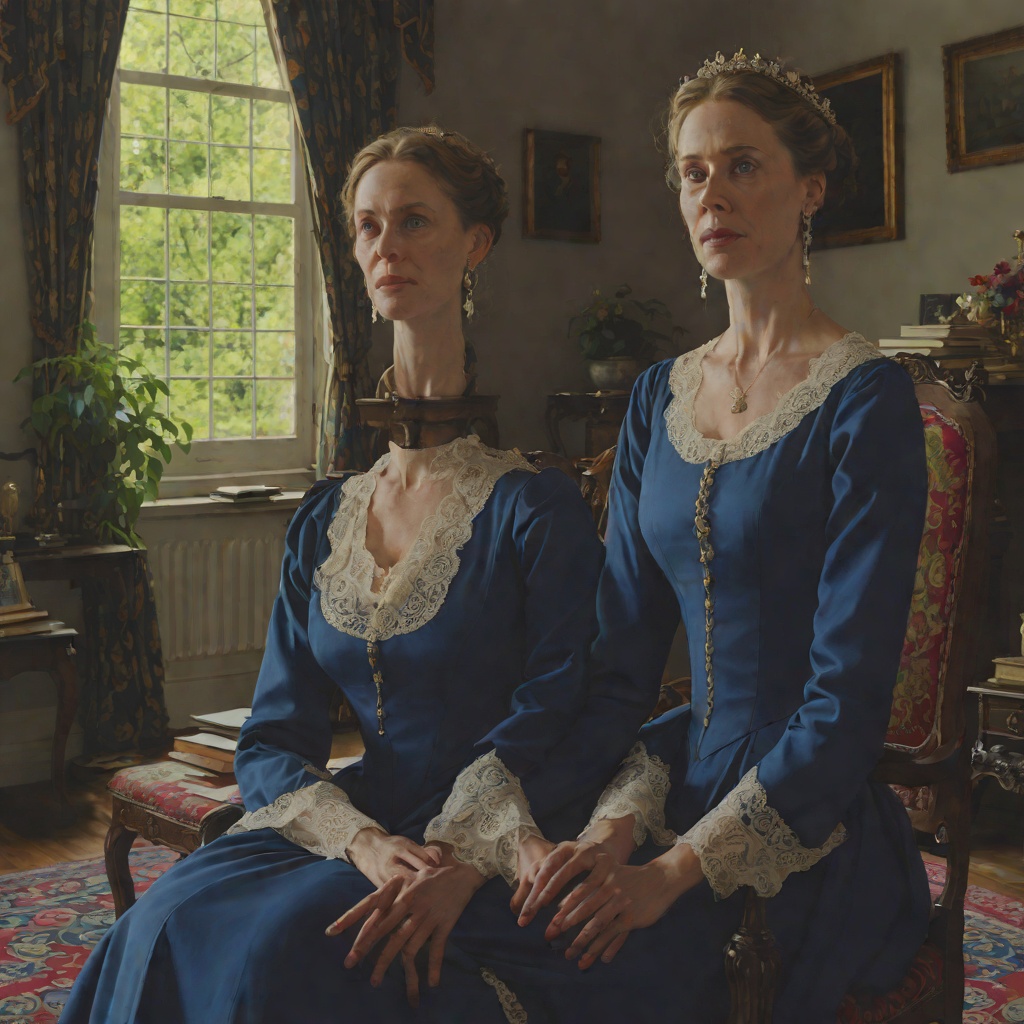
Henry's personal apartment within the palace is a sprawling warren of twenty-two rooms on the northwest side of the building, closest to the Orangery. He splits the space with Beatrice, but there is not much of either of them in the high ceilings and heavy, jacquard furniture. What little personality exists in the rooms belongs more to Bea than to Henry: a leather jacket flung over the back of a chaise, a pet parrot named Mr. Wobbles preening in a corner, and a seventeenth-century Dutch oil painting on one landing literally called Woman at her Toilet that only Bea would have selected from the royal collection. Henry's own bedroom is as cavernous and opulent and insufferably beige as Alex could have imagined, with a gilded baroque bed and windows overlooking the gardens.
Watching Henry shrug out of his suit in that room, Alex is struck by a profound sense of the prince's confinement. He imagines having to live in such a space, wondering if Henry simply is not allowed to choose what his rooms look like or if he never wanted to ask for something different. The image that stays with him is of all those nights Henry cannot sleep, just knocking around these endless, impersonal rooms, like a bird trapped in a museum. The palace, for all its splendor, is a gilded cage, and Henry's apartment is its most direct expression: a space so devoid of personal mark that it seems designed to erase the person who lives in it.
A Site of Secret Intimacy and Reunion
Despite its oppressive grandeur, Kensington Palace becomes the setting for some of the most tender moments between Henry and Alex. After a tennis match, the two steal away behind a crowd, blocked by PPOs and umbrellas, and back at Kensington, Henry brings Alex up to his rooms. It is here that their private relationship finds a sanctuary, a place where the public performance of royal duty can be set aside, however briefly. The palace, which enforces distance and decorum, paradoxically provides the cover for their most intimate encounters.
The palace also serves as the site of their reconciliation. After the devastating breakup at the lake house, Alex, in a white-noise gap of time, texts Cash and buys two first-class plane tickets from Dulles International to Heathrow, boarding in two hours. When they land in London around nine in the evening, it is dark and pissing down rain, and both Alex and Cash are soaked the second they climb out of the car inside the back gates of Kensington. Shaan is waiting at the door to Henry's apartments, impeccable in a gray peacoat, dry and unmoved under a black umbrella, greeting Alex with a dry, "Mr. Claremont-Diaz. What a treat." The palace gates, which once marked the boundary of Alex's official visit, now mark the threshold of his return to Henry, and the rain-soaked arrival transforms the residence from a place of state into a place of personal pilgrimage.
The Palace as a Gothic Threshold
Kensington Palace's narrative significance extends beyond its function as a residence. It is a space where the gothic and the romantic converge, where the weight of history and the possibility of intimacy coexist. The palace's haunted quality, its sense of cobwebs and ghosts, mirrors the emotional baggage both Henry and Alex carry. It is a place of thresholds: the threshold between public and private, between duty and desire, between isolation and connection. When Alex first arrives, the palace feels like a museum of royal life; by the end, it is the place he crosses oceans to reach. The building itself does not change, but its meaning is transformed by the relationship it shelters, becoming less a cage and more a refuge, however temporary and fragile that refuge may be.