Philip Fox-Mountchristen-Windsor
Red, White & Royal BluePhilip Fox-Mountchristen-Windsor is the elder brother of Henry and Beatrice, a prince whose rigid devotion to royal duty and family legacy makes him the primary antagonist to Henry's relationship with Alex Claremont-Diaz, before a late reckoning with his own cruelty leads him to apologize and begin a tentative reconciliation. Throughout the novel, Philip functions as the embodiment of the institution he serves—starched, well groomed, and relentlessly focused on the preservation of the monarchy's image—yet his harshness is revealed to be a deformation wrought by the pressure of his position and the manipulation of the queen. His arc traces a movement from unyielding opposition to a fragile, blood-stained peace, one that Alex can acknowledge without ever fully forgiving.
Identity and Introduction
Philip is introduced as one of the royal siblings whose public presence dominates the news cycle, a figure Alex already knows about from hate-reading Henry's Wikipedia page. He is described as "generically handsome as ever," with Alex privately marveling that such rich genetics could produce the mischievous smiles and swooping cheekbones of Bea and Henry while "punting so hard on Philip," who looks like a stock photo. This early assessment frames Philip as a flat, institutional figure—handsome but unremarkable, a placeholder for the crown rather than a person in his own right. His arrival at a royal event is marked by his eyes tracking over Alex twice, radiating skepticism about why Alex was even allowed to be present, and his wife Martha looks at Alex strangely too, perhaps still holding a grudge about her wedding cake. Philip's presence immediately establishes the social hierarchy Alex has intruded upon, and his silent judgment sets the tone for the conflict to come.
The Antagonist of Henry's Happiness
Philip's role as antagonist crystallizes in the aftermath of the scandal that threatens to expose Henry's relationship with Alex. In a confrontation that reveals the depth of his cruelty, Philip attacks the very foundation of Henry's family, sneering that their mother's marriage to their father was hardly a wise decision—marrying a man who spent half their childhoods making films, who never served his country, who got sick and left them. Henry's response is immediate and fierce: "Don't, Philip. I swear to God. Just because your obsession with family legacy didn't impress him—" But Philip cuts him off, snapping that Henry clearly doesn't know the first thing about what a legacy means if he can let something like this happen. His prescription is brutal and absolute: "The only thing to do now is bury it and hope that somehow people will believe that none of it was real. That's your duty, Henry. It's the least you can do." This moment reveals Philip's moral framework—legacy is paramount, feeling is weakness, and the institution must be protected at any cost, even the erasure of his brother's truth. His words carry the weight of the entire monarchy, and his insistence on burial rather than acceptance positions him as the direct obstacle to Henry's happiness.
The Weight of the Crown
Philip's harshness is not presented as innate malice but as a deformation produced by his circumstances. He grew from "an uptight people-pleaser into an abusive, self-righteous twat under the pressure of his position and the manipulation of the queen." This diagnosis, offered by Henry to Alex, reframes Philip's cruelty as a tragedy of the institution itself—a man crushed into a shape that serves the crown rather than his family. His obsession with family legacy, which Henry identifies as the root of his behavior, is itself a product of the system that raised him. Philip's confrontation with Henry is thus not merely personal but institutional: he speaks as the heir to a throne that demands the suppression of anything that might tarnish it. His insistence that Henry bury the truth is the monarchy speaking through him, and his inability to see his brother's humanity is the cost of his own absorption into the role.
The Late Reckoning
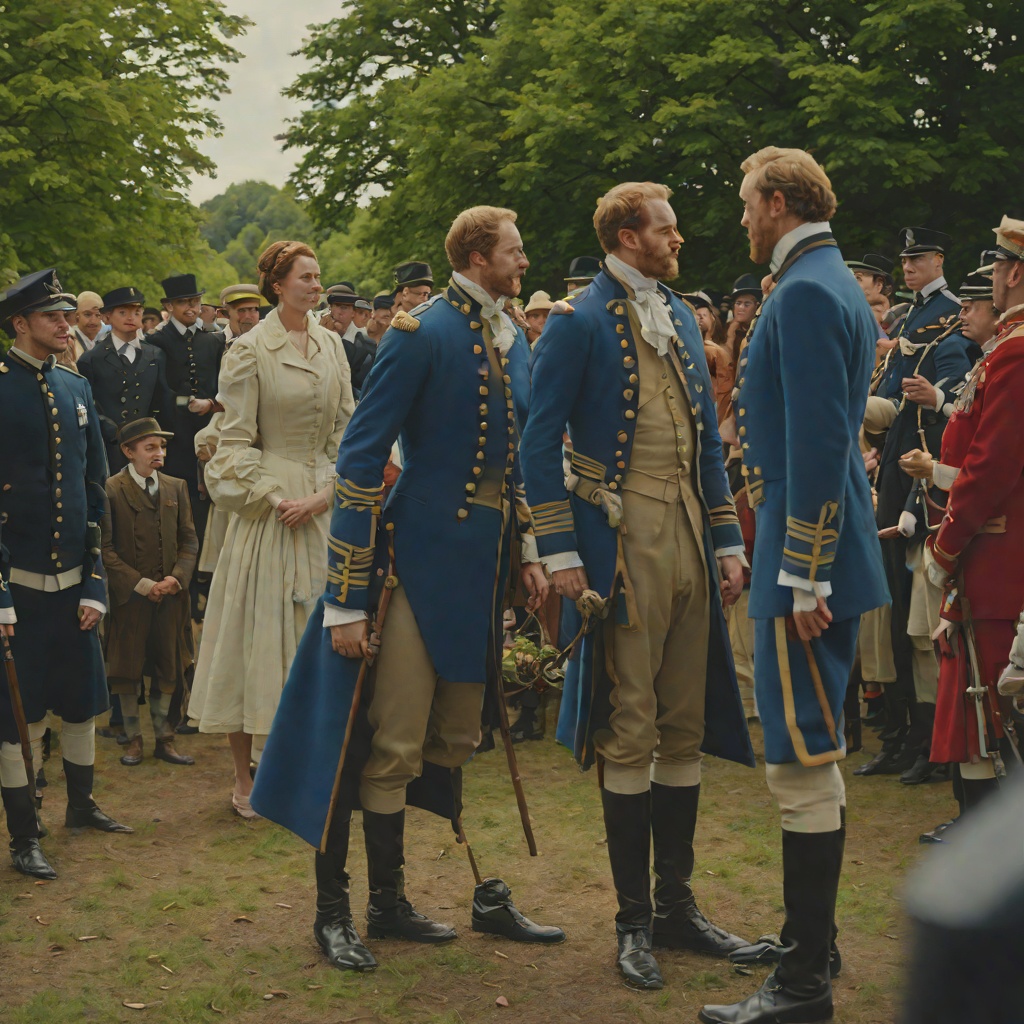
Philip's arc reaches its turning point when he comes to Kensington two weeks before the novel's climax to apologize to both Henry and Bea for the years since their father's death—the harsh words, the domineeringness, the intense scrutiny. Henry's explanation for believing him is telling: "He's fallen out with Gran. That's the only reason I actually believe anything he says." The apology is thus doubly qualified: it is genuine enough to be believed, but its motivation is entangled with Philip's own break from the queen's manipulation. When Philip arrives at the victory celebration, starched and well groomed, striding across the lawn, Alex feels the slight flutter through the air of Henry's spine automatically straightening beside him—a physical testament to the years of tension between the brothers. Yet Alex acknowledges that there's blood that can't be unshed; he wants to throw a punch every time he sees Philip's stupid face, but it's Henry's family, not his, so he doesn't get to make that call. The reconciliation is real but incomplete, a peace forged by apology and rupture rather than by healing.
Narrative Role and Significance
Philip's narrative function is to embody the institutional opposition to Henry and Alex's relationship, giving concrete form to the abstract pressures of the monarchy. His cruelty is the personal face of a systemic force, and his late apology suggests the possibility of change even within the most rigid structures. Yet the novel refuses a neat redemption: Alex's lingering desire to punch Philip and the acknowledgment of unshed blood keep the reconciliation honest. Philip's arc mirrors the larger theme of the book—that love in defiance of expectation requires not only personal courage but also the renegotiation of family bonds, and that such renegotiation is never fully clean. His presence at the victory stage, part of the family that now includes Alex, marks the completion of a journey from antagonist to reluctant ally, a transformation that is believable precisely because it is partial and qualified.