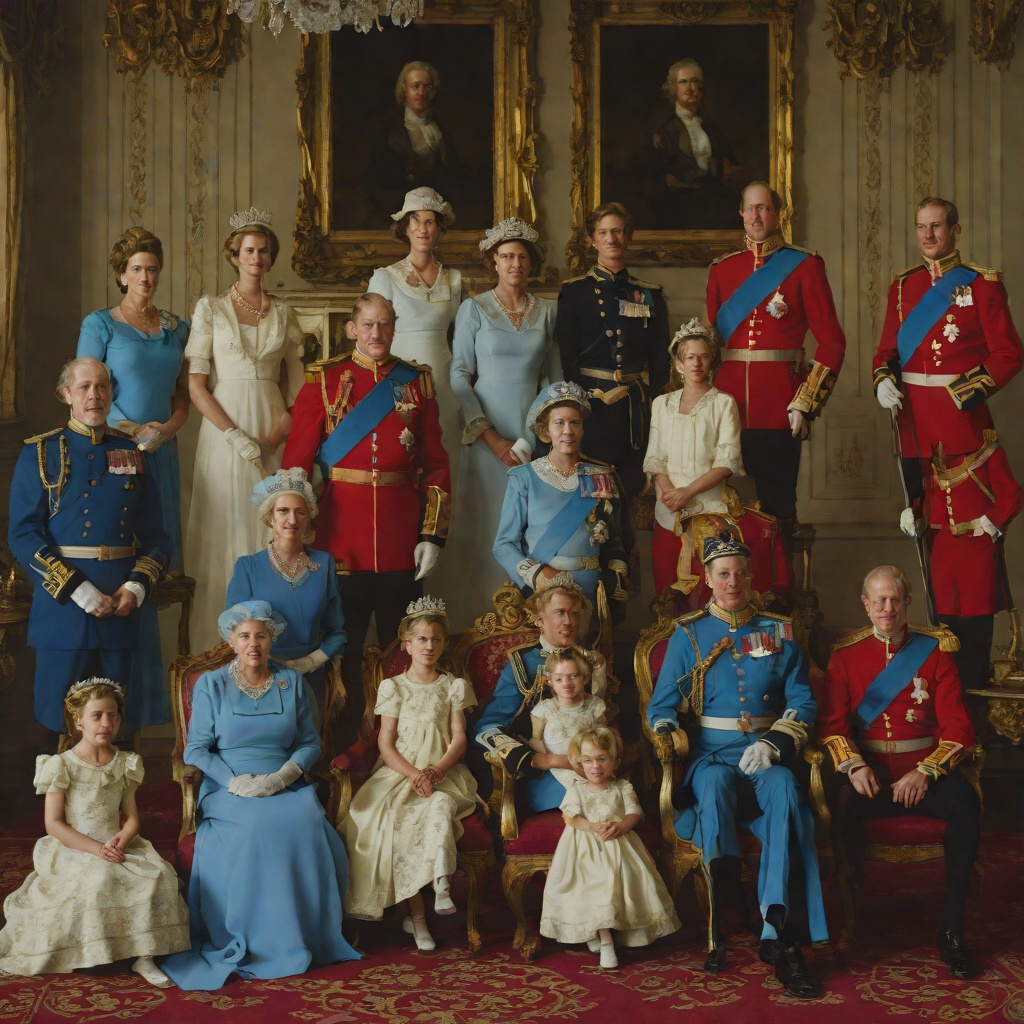
Princess Catherine
Red, White & Royal BluePrincess Catherine, the oldest daughter of Queen Mary, is defined in the novel by a single, striking distinction: she was the first princess to obtain a doctorate, in English literature. This intellectual achievement, paired with her marriage to the beloved English actor Arthur Fox, marks her as a figure of quiet rebellion within the British monarchy. Her shrewd blue eyes are noted by Alex Claremont-Diaz, who catalogs her as part of a party game, and her story is one of a woman who chose love and learning over the strictures of her position, a choice that would echo profoundly in the life of her son, Henry.
A Marriage of Defiance and Devotion
The story of how Catherine met Arthur Fox is one Henry recounts to Alex in a low voice, a tale of romantic defiance that seems almost impossible within the gilded cage of the palace. In her mid-twenties, dead set on her doctorate, Catherine was wading through Shakespeare when she went to see a production of Henry V at the Royal Shakespeare Company, where Arthur was starring. She pushed her way backstage, shook off her security detail, and disappeared into London with him to dance all night. The Queen forbade the match, but Catherine married him anyway. This act of choosing a beloved actor over the crown's approval established a pattern of prioritizing personal love over institutional expectation, a legacy that would both inspire and complicate her son's own path. The man Henry remembers is both superhuman and heartbreakingly flesh and blood, a man who encompassed his entire childhood and charmed the world, and Catherine was the woman who chose that man against all odds.
A Mother's Withdrawal and a Family's Fracture
The warmth of that origin story stands in stark contrast to the family's later state. After Arthur's death in 2015, Catherine's presence in her children's lives receded dramatically. Henry tells Alex that his mother hasn't been involved in much since his father died, a statement that carries the weight of years of absence. This withdrawal is felt most acutely by Henry, who, in the aftermath of the Waterloo Letters scandal, confronts her with a raw and bitter accusation. When Catherine visits him once, stone-faced and sad, to tell him she loves him and he could have told her sooner, Henry's response is a furious rejection: "That's great, Mum, but as long as you're letting Gran keep me trapped, it doesn't mean a fucking thing." He later admits to feeling awful, acknowledging that all the times she should have been there in the past few years had caught up to him. His sister, Bea, offers a more forgiving interpretation, suggesting that the confrontation might be "the kick in the arse she needs," noting that they've been trying to get her to do anything for years since their father's death. This moment reveals a family fractured by grief, where Catherine's love, though real, had become passive and ineffective in the face of the Queen's control.
A Reunion at the Palace
The first time Alex meets Catherine in person, she is a study in contradictions. Waiting outside a conference room at Buckingham Palace, she is described as a small, older woman with Bea's upturned nose and Henry's blue eyes, wearing thick glasses, a worn-in maroon sweater, and a pair of cuffed jeans, looking decidedly out of place in the halls of the palace, with a paperback tucked into her back pocket. This image of a bookish, unassuming woman contrasts sharply with the grandeur of her surroundings. When she sees Henry and Alex, her expression flutters through something pained to reserved to gentle. She greets Henry with a simple, tender "Hi, my baby," and Henry, his jaw tight with fear rather than anger, puts his arm around her and lets her kiss his cheek. In this moment, he is visibly wondering if it is safe to accept the love offered to him, and wanting desperately to take it regardless. When Henry introduces Alex as "my boyfriend," Catherine pulls Alex toward her and kisses his cheek too, her gaze piercing as she says, "My Bea has told me what you've done for my son. Thank you." This gesture marks a significant step toward re-engagement, a public acceptance of her son's relationship that stands in opposition to the Queen's fury.
A Place in the Family's Future
Catherine's re-emergence is part of a larger reconfiguration of family in the novel's climax. As Alex watches his mother, President Ellen Claremont, celebrate her 2020 victory, he realizes that Henry is no longer just his boyfriend but family, part of it all now, headlines and oil paintings and pages in the Library of Congress, etched right alongside. This new definition of family, built on love and choice rather than blood and title, implicitly includes Catherine, whose own marriage was a testament to the same principle. Her journey from a defiant young princess to a grieving, withdrawn mother and finally to a grandmother-like figure who can offer acceptance and thanks is a quiet counterpoint to the novel's central romance. She embodies the possibility of change, of a love that, though it faltered, could be rekindled and extended to include a new son.