British Monarchy
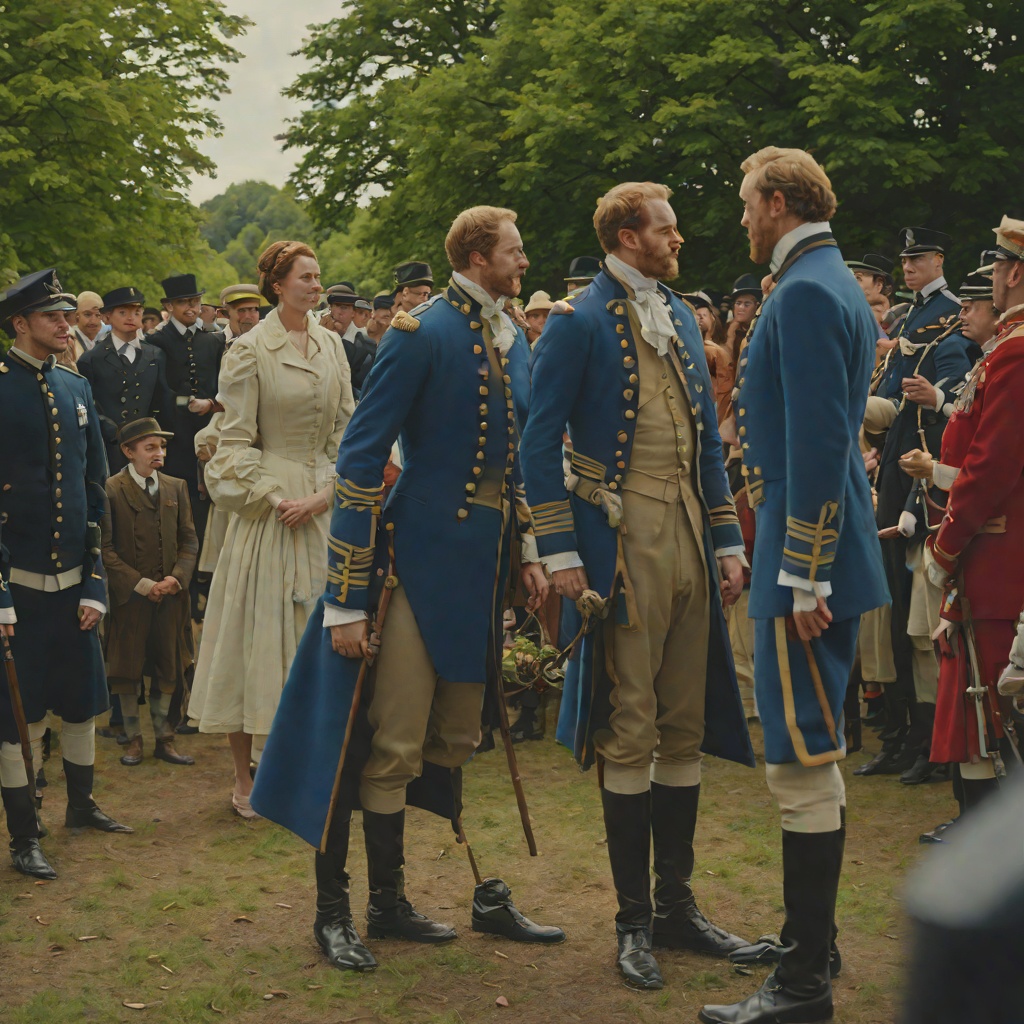
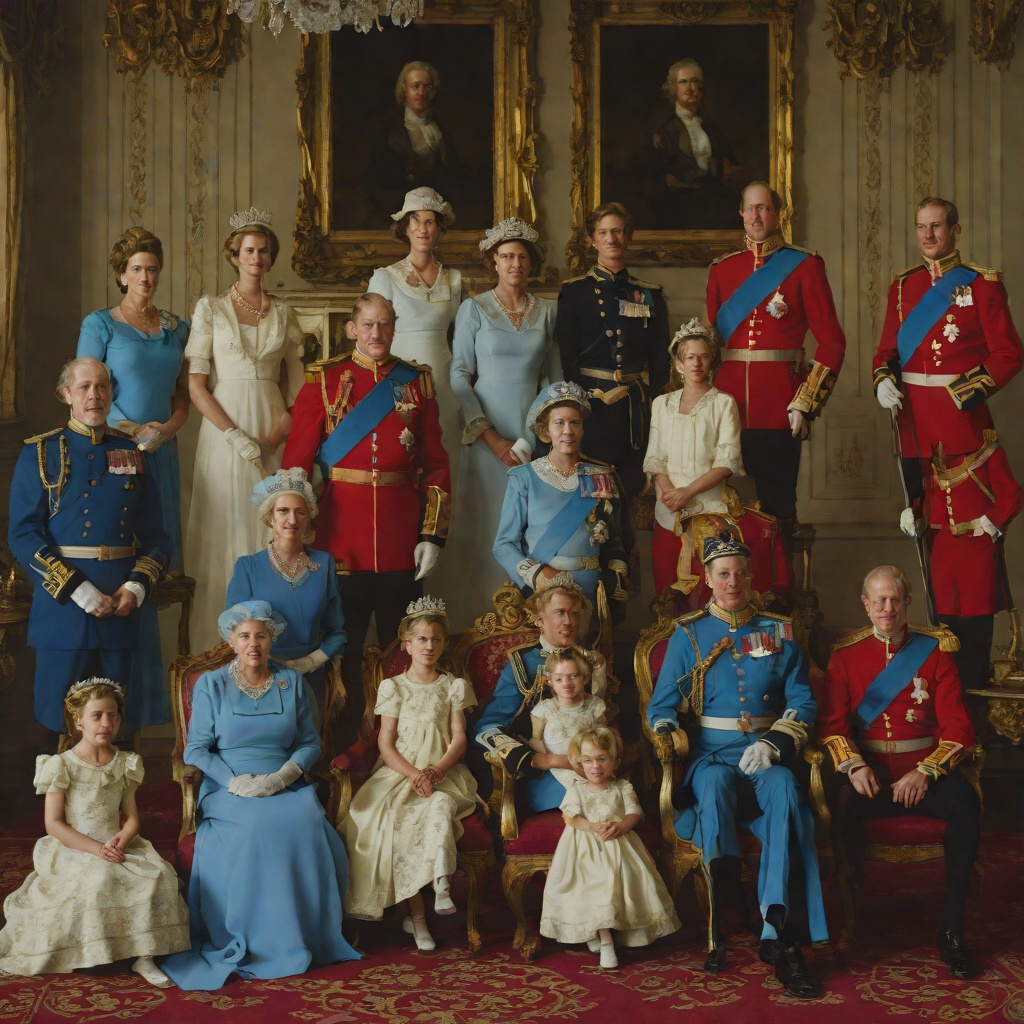
Red, White & Royal BlueThe British monarchy, as rendered in the novel, is less a family than a machine for producing a particular kind of public image. It is an institution built on bloodline, inheritance, and the relentless maintenance of appearance, where the personal desires of its members are subordinate to the crown's standing. The novel frames it as the structural opposite of the American presidency: where the White House is a site of elected, contested power, the monarchy is a hereditary birthright that demands conformity and the perpetuation of its bloodline above all else. This contrast is established early and sharpened throughout, as the monarchy's demands collide with the individual humanity of its youngest prince, Henry George Edward James Fox-Mountchristen-Windsor.
The Monarchy as a System of Control
The monarchy's function is articulated most brutally by Queen Mary herself, who tells Henry that his role in the family is to "perpetuate our bloodline and maintain the appearance of the monarchy as the ideal of British excellence." This is not a suggestion but a stipulation of his birthright, and the queen makes clear that she "simply cannot allow anything less." The institution's priority is not happiness, not love, not even the well-being of its members, but the preservation of its own image. This is the same logic that led the queen, years earlier, to sit Henry down on the day he finished his A levels and make it "abundantly clear" that he was not to let anyone know about any "deviant desires" he might harbor that could reflect poorly upon the crown. The message was explicit: there were "appropriate channels to maintain appearances if necessary." The monarchy thus functions as a system of enforced closetedness, demanding that its members suppress their true selves to serve the institution's symbolic needs.
The Weight of the Crown on Henry
Henry internalizes this pressure to the point of despair. When Alex confronts him about his unwillingness to fight for their relationship, Henry articulates the monarchy's grip on his psyche with devastating clarity: "I've been trying to be happy my entire idiot life. My birthright is a country, not happiness." This is the monarchy's deepest damage—it has convinced Henry that his own happiness is not merely secondary but fundamentally incompatible with his identity as a prince. The institution's demands have shaped him into someone who instinctively questions whether it is safe to accept love, a pattern Alex recognizes when Henry meets his mother, Princess Catherine, and wonders if he can trust the affection offered to him. The monarchy has made Henry a man who must be taught, slowly and painfully, that he is allowed to want things for himself.
The Monarchy's Public Face and Its Contradictions
The monarchy's obsession with appearance is dramatized in its handling of the Royal Wedding Cake Incident, when Alex and Henry's altercation at Prince Philip's wedding threatens to embarrass the institution. The response is not to address the underlying conflict but to manufacture a cover story: the White House and the monarchy will release a joint statement claiming the incident was "a complete accident and a misunderstanding," and that Alex and Henry have been "close personal friends for the past several years." The monarchy's solution to any threat to its image is to double down on the fiction of its own respectability, even if that fiction requires its members to perform a friendship they do not feel. This is the same logic that produced the queen's earlier warning to Henry: the institution does not care about the truth of its members' lives, only about the appearance of propriety.
The monarchy's public spectacle is also a site of critique. Alex, attending Philip's wedding, is struck by the sheer scale of public devotion to an institution he finds "comprehensively dull," with crowds cramming the streets outside Buckingham Palace, draped in Union Jacks, and commemorative souvenirs plastering the royal couple's faces on everything from chocolate bars to underwear. He reflects that there won't be this kind of turnout when he or his sister June marry, nor would he want it. The wedding itself, he observes, is "as sexy as a business transaction"—a union of a "perfectly respectable daughter of nobility" and a prince, with no passion and no drama. The monarchy, in this view, is an institution that reduces even marriage to a matter of state.
The Monarchy's Confrontation with Change
The monarchy's rigidity is ultimately challenged by Henry's refusal to remain silent. In the confrontation at Buckingham Palace, Henry looks Philip square in the face and declares, "I've been gay as a maypole since the day I came out of Mum, Philip." The queen's response is to retreat to the stipulations of his birthright: "You are to produce heirs." But even this is met with defiance, as Alex blurts out, "We could still do that." The moment is a rupture in the monarchy's carefully maintained facade, a public acknowledgment of what the institution had spent years trying to suppress. The queen's earlier dismissal of Henry's relationship—her demand that he "await orders" and her refusal to "summit with some ... boy"—is revealed as the last gasp of an institution that cannot comprehend a future it does not control.
The monarchy's inability to accommodate change is also reflected in its treatment of those who deviate. The queen references Beatrice's "little problem" as a source of humiliation, and she has clearly applied the same logic to Henry. The institution's response to any threat to its standing is to demand silence and conformity, to treat its members as instruments of its own preservation. This is the system that Henry has spent his life fighting against, and it is the system that ultimately forces him to choose between his birthright and his happiness.
The Monarchy's Place in the New Order
By the novel's end, the monarchy has been forced to accommodate what it could not prevent. Henry's relationship with Alex becomes public, and the couple is seen together on the world stage, with Alex waiting on the South Lawn as Marine One touches down and Henry emerges "in head-to-toe Burberry looking dramatic and windswept." The monarchy's demand for heirs is left unresolved, but the institution's grip on Henry's identity has been broken. He is no longer merely a prince; he is Alex's boyfriend, a man who can step onto a stage in Austin, Texas, and be welcomed as part of the First Family. The monarchy, which once seemed an immovable force, is revealed as an institution that can be defied, that can be made to bend, even if it never fully breaks. The novel's final image of Henry, hovering hesitantly in the wings before Alex calls him onto the stage, captures the monarchy's legacy: a man who has spent his life learning to step back, now learning, slowly, that he belongs in the light.