The Washington Post
Red, White & Royal BlueThe Washington Post occupies a unique position in the novel's media landscape: it is simultaneously a professional home for a member of the First Family and the journalistic institution that ultimately shapes the public narrative of the story's central political crisis. As the newspaper of record in Washington, D.C., it functions as the lens through which the American public learns about the private lives of the Claremont-Diaz family, and its reporting trajectory mirrors the arc of the novel's central conflict—from the mundane frustrations of a young journalist finding her footing, to the explosive revelation of a secret affair, to the vindication of a conspiracy exposed.
A Workplace for the First Daughter
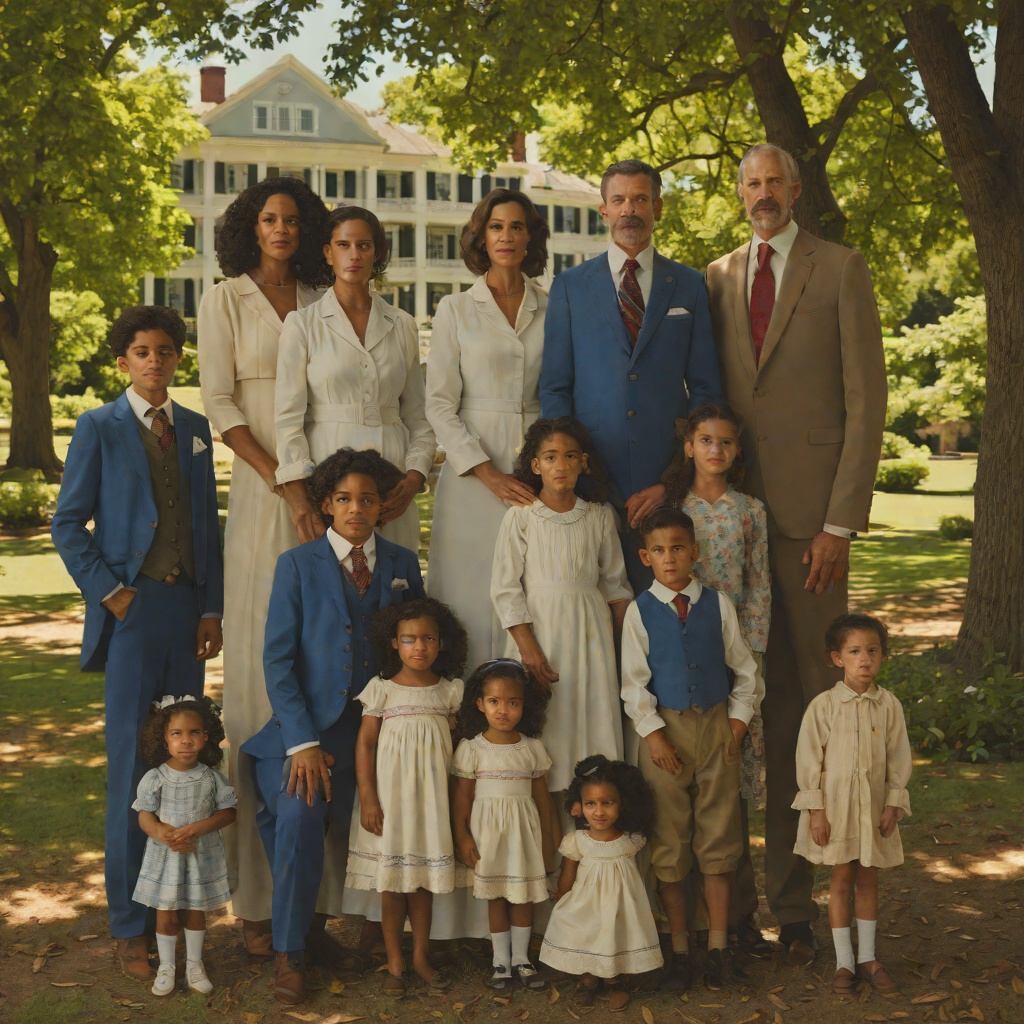
The Post first appears not as a news-gathering institution but as the professional context for June Claremont-Diaz, the First Daughter and Alex's sister. June's relationship with the paper is one of constrained ambition. She writes a column for the Post, but it is a limited arrangement: roughly one op-ed a month, with half her pitches rejected for being too close to her mother's political platform. Even the pieces she does produce must be vetted by the campaign's press team before publication, a fact that rankles her. As she explains to Nora, she is left to "email in these fluff pieces" while knowing that on the other side of the screen, other journalists are doing "the most important journalism of their careers." The irony of her position is that she is a journalist who cannot practice journalism freely because of her family's political prominence. Alex, for his part, struggles to keep track of her various professional commitments, wondering whether she is working on a column for the Post or a photoshoot for her blog, or both. June's frustration with the constraints of her Post gig becomes a quiet thread in the novel's early chapters, establishing the tension between the First Family's public image and the individuals who must navigate it.
The Waterloo Letters Scandal Breaks
The Post's role transforms dramatically in the aftermath of the Daily Mail's explosive report on Alex's relationship with Prince Henry. When the British tabloid publishes leaked emails and photographs revealing the affair, the Post becomes the authoritative American outlet covering the fallout. Its coverage frames the story in explicitly political terms, noting that the revelation carries "major repercussions for two of the world's most powerful nations" and arrives "less than two months before the United States casts its vote on President Claremont's second term." The Post's reporting details the shuttering of the usually high-profile First Family, the scramble by FBI and administration security experts to identify the sources who provided the tabloid with evidence, and the absence of any official statement from the First Son. The paper also relays the White House's brief prepared statement from Press Secretary Davis Sutherland, who asks for "patience and understanding from the American people" as the family handles "this very private matter." Crucially, the Post's coverage identifies the leaked email collection as "The Waterloo Letters," a name derived from Prince Henry's reference to the Waterloo Vase in the Buckingham Palace Gardens. The paper reports that the full email transcripts have been uploaded to WikiLeaks and that the correspondence appears to have been lifted from a private email server used by residents of the White House.
The Post's reporting also becomes a platform for the political opposition. The paper quotes Republican presidential candidate Senator Jeffrey Richards, who seizes on the private email server as a campaign issue, expressing concern about what kind of information was being disseminated on it and insisting that American voters have a right to know everything for which the server may have been used. The Post balances this with sources close to the Claremont administration who insist the private server was similar to one used during the George W. Bush administration, employed only for day-to-day operations and personal correspondence. The paper also notes that first rounds of examination of the Waterloo Letters have yet to reveal any evidence of classified information or otherwise compromising content beyond the nature of the First Son's relationship with Prince Henry. In this way, the Post functions as the arbiter of the scandal's factual parameters, even as the political interpretation of those facts remains contested.
The Conspiracy Uncovered
The Post's most consequential reporting comes after the initial scandal, when it breaks the story that the entire affair was orchestrated by the Richards campaign. The paper publishes emails, anonymously leaked and confirmed by an anonymous source on the Richards campaign, that clearly show Jeffrey Richards—or at least high-ranking staffers at his campaign—orchestrating a plan to have Alex stalked, surveilled, hacked, and outed by the Daily Mail as part of an effort to take down Ellen Claremont in the general election. This reporting is discussed at length on the podcast "Bills, Bills, Bills," where host Oliver Westbrook summarizes the Post's findings for his audience, noting that the paper's story reveals the First Son "didn't actually do anything wrong" and that Richards "committed a hostile act of conspiracy against a sitting president." The Post's investigation thus reframes the entire scandal: what had been presented as a private moral failing becomes a public crime, and the victim of the conspiracy is vindicated by the very institution that had reported the initial revelation. The paper's role in this reversal is central to the novel's arc, as it is the Post that provides the evidentiary foundation for the federal investigation that Westbrook anticipates will come to Richards once he loses the election.
The Paper's Narrative Significance
The Post's dual role—as both a constrained workplace for June and an independent journalistic force covering her family—embodies the novel's meditation on the relationship between the press, politics, and privacy. The paper is the institution that both respects the First Family's boundaries (through its coverage of the White House's request for patience) and ultimately exposes the criminal conspiracy against them. Its reporting on the Waterloo Letters scandal demonstrates how a single news organization can shape the public understanding of a political crisis, while its later investigation reveals the limits of that power when the initial story was itself the product of manipulation. The Post's trajectory from June's frustrating part-time gig to the paper that breaks both the scandal and its resolution mirrors the novel's larger arc: what begins as a story about the constraints of public life becomes a story about the corruption that those constraints can conceal. In the end, the Post stands as the novel's most reliable institutional witness, the paper that records both the fall and the vindication of the Claremont-Diaz family.