Charter Village long-term care facility
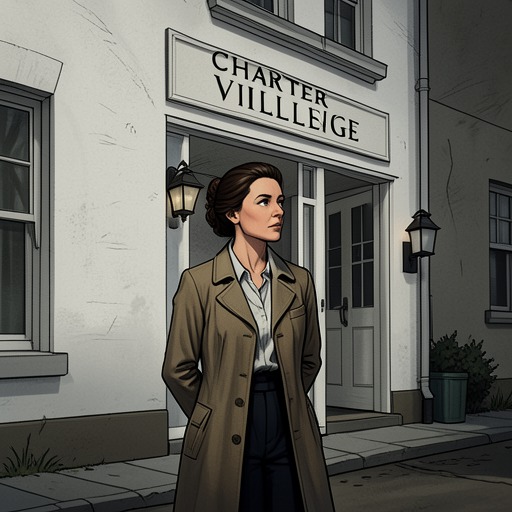
Remarkably Bright CreaturesCharter Village long-term care facility is a landscaped care community whose scale and comforts unsettle the bleak picture Tova Sullivan associates with growing old in an institution. It is also connected to the aftermath of Lars Lindgren’s death and, later, to Tova’s own consideration of a move. Its polished welcome makes it seem less like a place of decline than a possible next home, even as the application Tova carries away leaves that choice open.
Setting and Facilities
The facility sits among rolling green hills, reached by a long, winding driveway. Inside its campus, smaller roads branch toward signposted destinations: a memory center, tennis complex, acute care, clubhouse, and reception. The approach culminates at a circular drive bordered by maroon-brick columns dressed in ivy. To Ethan Mack, riding there with Tova, the setting looks more like a university or a private school than the grim institution he had imagined.
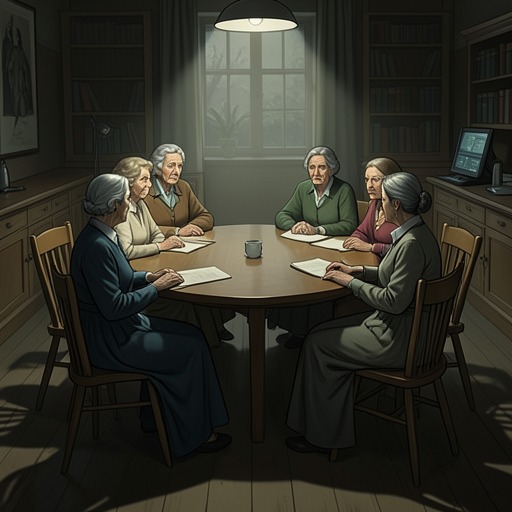
That impression is reinforced by the amenities he sees on the tour. There is a billiard room, a cafeteria with an extensive buffet, a pool and Jacuzzi, and room service; beds are made daily with six-hundred-thread-count sheets. These details make the place feel deliberately hospitable and affluent. Ethan, who lives on a union pension, finds himself half-convinced by the tour but recognizes that he could not afford to live there himself.
The residents appear happy to Ethan, a response that gives some credibility to Charter Village’s exuberant motto, “We Specialize in Happy Endings!” The slogan and the institution’s comforts stand in marked contrast to the associations of care homes with waiting, decline, and loss. The contrast does not prove what life there would be like for Tova, but it changes the terms on which she considers the possibility.
Connection to Lars Lindgren
Charter Village first reaches Tova through a phone message. A woman identifying herself as Maureen Cochran, calling from the facility, begins to deliver bad news; Tova’s water glass strikes the counter as she reacts. The call places the institution in the painful practical aftermath of loss, before Tova has any reason to consider it as a place for herself.
Later, Bruce LaRue introduces himself as an attorney for Lars’s estate and gives Tova an envelope. The document inside, a list of Lars’s belongings, is on Charter Village letterhead. LaRue says that Lars had personal assets and that they will need to meet to sort out the monetary matters. Tova insists that she does not know what her brother owned and again explains that they were not close. The facility is thus linked to the handling of Lars’s affairs, although the available account does not specify his precise status there or establish that he died on its premises.
Tova’s Visit and Possible Move
Tova visits Charter Village with Ethan, who accompanies her through the grounds and tour. An hour later, she emerges carrying a box. Ethan opens the car door for her, puts the box behind the passenger seat, and notices that she has also brought back a glossy page showing the community center and tennis courts. The materials are not merely a brochure: they are a folder and packet bearing the facility’s happy-ending slogan.
One page sits out of alignment. It is an application. Its presence makes the visit more consequential than a tour alone: Tova has taken home the paperwork that could turn consideration into a move. But the scene records an application, not a completed decision. The facility’s polished promises have made residence imaginable; they have not, by themselves, settled whether Tova will accept it.
Narrative Significance
Charter Village brings two different forms of vulnerability into the same setting. For Tova, it is at first associated with news and the belongings left after her brother’s death; later, it offers an organized, comfortable alternative to managing life alone. The transition from receiving a message from the facility to touring its campus makes that shift concrete without erasing the grief attached to it.
Ethan’s response helps frame the institution’s ambiguity. His first impression is shaped by assumptions about where old people go to wither, but the tour presents residents who seem content and a campus built around services, recreation, and comfort. His own inability to afford it exposes the limits of that appeal: Charter Village may look welcoming, but its comforts are also bound to cost. For Tova, the application in the folder is therefore both a practical possibility and a threshold, not a final resolution.