Daphne A. Cassmore
Remarkably Bright CreaturesDaphne A. Cassmore is known chiefly through the traces she left in other people’s lives: a child’s painful memory of being left behind, her sister’s assumption of custody, a six-dollar grocery check, and a name in a yearbook index. Her story changes when Tova Sullivan identifies her as the girl Erik Sullivan had been seeing before he disappeared, linking Cameron Cassmore’s broken family history to the mystery that has shaped Tova’s life.
Identity and Early Separation
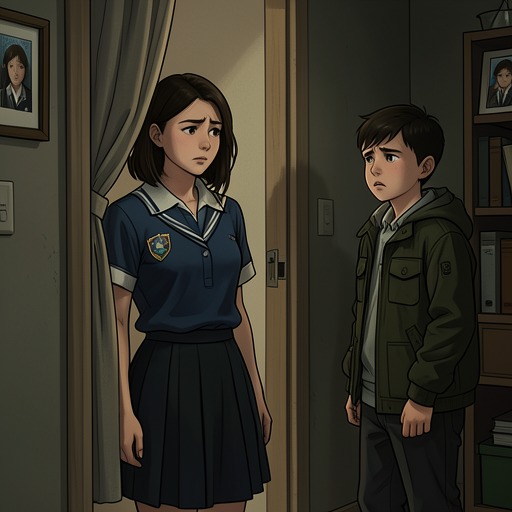
Cameron can barely remember his mother’s face. When he was nine, she told him to pack for what seemed like an ordinary weekend with his aunt, Jeanne Baker, where he often stayed overnight. Before he left, Daphne hugged him. Cameron remembers tears carrying dark trails of makeup down her face and how bony her arms felt. This time, however, she did not come to collect him.
The weekend stretched into a week, then a month, then a year. The account offers no explanation from Daphne for leaving or for what followed. Instead, the lasting record is Cameron’s recollection of a goodbye whose apparent brevity concealed a permanent change in his home life. His memory is physical and fragmentary: a hug, tears, thin arms, and the absence that followed.
Cameron’s anger gives that absence its own explanation. He refuses the small ceramic figures Daphne collected as a child, even though some bear the engraved name Daphne Ann Cassmore. When Jeanne offers them, he rejects them as worthless remnants of a mother who could not get clean long enough to care for him. That judgment belongs to Cameron’s hurt; the narrative supplies no further account of Daphne’s circumstances or recovery.
Custody and the Family That Raised Cameron
Jeanne applied for sole custody, which the court granted without contest. Cameron remembers a caseworker saying in a low voice that it was much better for him to be with family than to enter the system. A decade older than Daphne, Jeanne had never married or had children of her own. She called Cameron the unexpected blessing of her life and became his everyday family.
Cameron’s childhood with Jeanne was good, though she did not resemble the mothers of his friends. One remembered example is her appearance at his grade-school Halloween parade in a homemade Marge Simpson costume while he went as Bart. The comic mismatch captures a relationship that worked on its own terms: Jeanne’s care was not conventional, but it gave Cameron a stable home after Daphne’s disappearance from his daily life.
Their later disagreements show that care did not erase resentment or make them see Cameron’s future alike. When he argues that he was dealt a bad hand, Jeanne counters that the deal is never anyone’s fault, but that he controls how he plays it. Her challenge sits beside the childhood she provided; it neither cancels Daphne’s absence nor lets Cameron treat that absence as the only force determining his life.
Names, Records, and the Bad Check
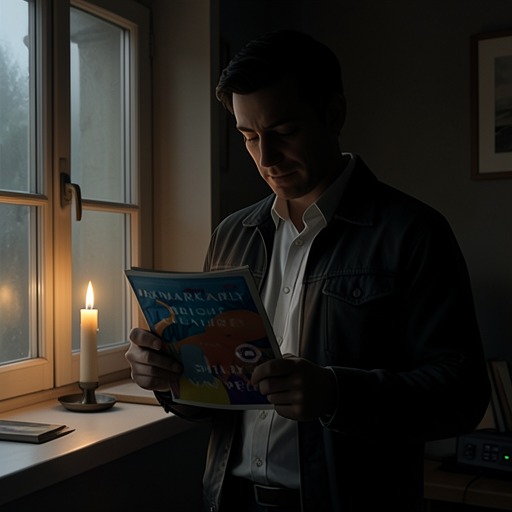
Daphne re-enters the story first as a name in records rather than as a person present in a scene. Searching a yearbook index, Tova finds one entry for Cassmore, Daphne A., with references to pages 14, 63, and 148. The discovery stops her short: she needs her glasses to read the tiny print and follows the index entries until she reaches the end. The singular listing gives her a concrete lead in a search previously directed toward Erik.
Another record carries a more ordinary, more humiliating trace. Ethan Mack remembers an old bad check for six dollars and change, posted under the cash register at the Shop-Way grocery store. Daphne Cassmore’s name was printed above the address. Ethan removed the checks when he took over the store because he did not want customers’ shame displayed as a warning, but he remembered their names. He later wonders what small grocery purchase might have preceded Daphne’s fall from the store’s good graces; the check establishes the low amount, not the circumstances behind it.
Ethan connects the name to Cameron through an ancestry website. The search leads from Daphne Cassmore, who later married and became Daphne Scott, to her half-sister Jeanne Baker, then sixty and living in Modesto, California. Jeanne’s online activity in collector and consignment communities fits Cameron’s complaints about her hoarding, helping Ethan recognize the family connection. The discovery turns what looked like an isolated store notice into part of Cameron’s history, though it still does not explain Daphne’s life after leaving him.
Connection to Erik Sullivan
Tova’s identification of Daphne as Erik’s girlfriend transforms the name from a clue about Cameron’s mother into a possible clue about Erik’s final summer. Tova tells Cameron that after his senior year of high school, Erik went to work at the ferry dock one July night and never came home. A boat went missing without anyone noticing, and the anchor rope had been cut. Tova says she never believed Erik had killed himself; learning that he might have been seeing a girl his friends barely knew gives her a new way to think about his disappearance.
Tova names Cameron’s mother as that girl. Cameron immediately asks how she knows, marking the difference between the revelation and a complete account of its proof. The disclosure is consequential, but the evidence here does not provide Tova’s answer to his question. What it does establish is a previously hidden connection between Daphne and Erik, and the possibility that their relationship bears on the unexplained events of that night.
The family link also becomes visible in Cameron himself. When Tova gives him Erik’s ring and tells him Erik’s full name was Erik Ernest Lindgren Sullivan, she sees how much Cameron resembles her son, though not in his eyes. She thinks those must be Daphne’s. The resemblance does not resolve the disappearance, but it gives the newly disclosed connection a human and immediate form: Cameron carries signs of both parents even though he grew up knowing little of his mother and nothing, until now, of his father.
Narrative Role and Unresolved History
Daphne’s character is assembled through indirect evidence: Cameron’s childhood memory, the objects he refuses, Jeanne’s custody and care, a publicized check, an index entry, and Tova’s account of Erik. Each trace answers one question while leaving another open. Her name links Cameron to Jeanne; her later surname identifies a path through family records; and Tova’s revelation links her to Erik’s last known summer. None of these traces supplies Daphne’s own account of leaving or of her relationship with Erik.
That absence makes Daphne more than a distant parent in Cameron’s history. Her disappearance helps explain the anger and instability through which he understands his childhood, while the possibility of her relationship with Erik reshapes Tova’s understanding of a loss she had long regarded as a suicide. The story brings these strands together without turning a name or a family resemblance into a full explanation: Daphne becomes the point where two incomplete histories meet.