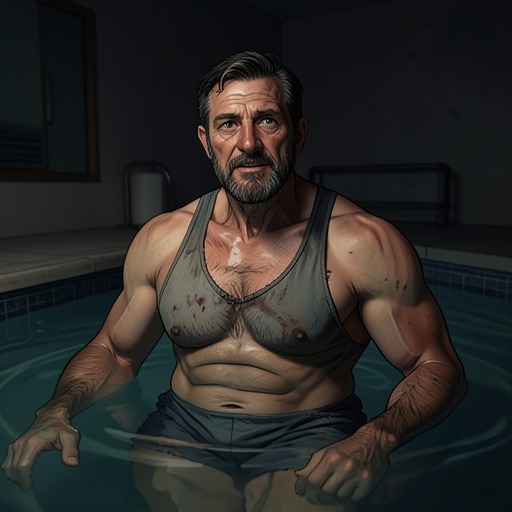
Marcellus’s freedom
Remarkably Bright CreaturesMarcellus’s freedom is both a physical return to the sea and a decisive change in Tova Sullivan’s life. After nearly four years confined in an aquarium tank, the Giant Pacific octopus is released by Tova into the night-black water. The sea gives him a home he had thought lost; the act of letting him go also helps Tova recognize what she can still choose after years shaped by bereavement and impending change.
Captivity, Memory, and the Sea
Marcellus’s return matters because the sea is already bound to Tova’s grief. At the pier, she imagines her missing son, Erik Sullivan, beneath the surface, holding the moonlit reflections for her. The image places her loss in the same deep, unknowable world that will become Marcellus’s refuge. For Tova, the sea is not simply scenery: it holds the remains and unanswered history of someone she mourns.
Marcellus has his own memory of that submerged past. When he recognizes a key Tova has lost, he recalls finding an identical copy as a young octopus, before his capture. It lay on a circular ring among human remnants sheltered under rocks: a sneaker sole, a vinyl shoelace, and shirt buttons. He understands that the objects must belong to the person Tova grieves. He wishes he could return not only the key but the rest of the underwater find. The episode makes his eventual return to the depths a homecoming to a place of memory as well as habitat: he has already encountered the sea’s traces of Tova’s loss, though he cannot restore what time has taken.
Tova’s grief is not confined to Erik. In a conversation with Ethan Mack, she recalls that her late husband, Will Sullivan, used to collect pens from restaurants and bank counters, and Ethan remembers Will as a regular at the deli. Tova’s warm response carries the ease of shared remembrance, but also the weight of a life marked by absence. This history helps frame the release: Marcellus becomes a living companion in the present, not a replacement for those Tova has lost.
Tova Chooses to Let Him Go
By the time Tova brings Marcellus to the water, his condition makes the urgency plain. She has been told he may have only weeks or days left. After grieving beside him, she squares her shoulders and decides to take him home. The journey is slow and conspicuous: a seventy-year-old woman, about ninety pounds, pulls a sixty-pound octopus in a yellow bucket along the boardwalk. His arms trail over the sides as though he were riding with the windows open. The image holds tenderness and oddity together; the release begins not as a grand rescue but as a difficult, practical act of care.
At the water’s edge, Tova tells Marcellus that he led her to her grandson, Cameron Cassmore. The discovery has altered what she imagined her future would be. She had been preparing to move to Charter Village, but, as she promises to make sure the young octopus who will replace Marcellus is well cared for, she realizes she cannot go. The promise exposes a change she had not fully acknowledged: her bond with Marcellus has drawn her back toward responsibility, affection, and a life still unfolding.
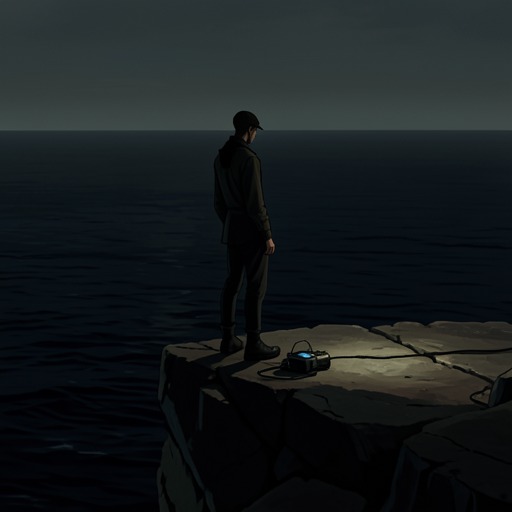
Tova says goodbye, recognizing that Terry Bailey saved Marcellus and that Marcellus, in turn, saved her. She tips the bucket toward the water, about three feet below. For a suspended moment, Marcellus keeps an arm wrapped around her hand while his body hangs between them. He releases her just before his weight could pull her down, and falls with a heavy splash into the dark water. The gesture gives the separation a physical shape: their contact lasts until the threshold of his return, then he must let go to reach the sea.
Day One of Freedom
Marcellus’s account of his first day free refuses an easy image of effortless escape. At first he sinks like an inert bundle, his arms no longer functioning. A twitch brings his limbs back to life. He is still dying, and does not present the release as a cure or a promise of a long future. He expects perhaps a day or two in which to experience the darkness and vastness of the sea again.
Once moving, he swims quickly away from the rocks and descends past a drop-off into depths untouched by light. He returns to the place where, as a juvenile, he found the key, and settles near the long-disintegrated remains of the son Tova loved. This destination joins the central strands of his freedom: his own early history in the sea, the evidence of Erik Sullivan’s disappearance, and Tova’s grief. Marcellus cannot solve the loss, but his return brings him physically close to the remains that connected him to her sorrow in the first place.
His description of the sea is notably calm. It feels comfortable and like home; he considers himself lucky and grateful. Those feelings are set against the years he spent captive, when he expected to die inside the tank’s glass walls. Freedom arrives late, with death still imminent, but its value lies in the change of place and experience itself. The sea does not erase his confinement or grant him a future beyond his limits. It gives him a final interval in the environment he had longed to explore again.
What Freedom Leaves Behind
Marcellus’s release does not end his concern for the aquarium’s next octopus. He knows Terry Bailey will clean and remodel his tank for a new exhibit, advertised to visitors as under construction. On his journey out, Marcellus stops at the young, badly injured octopus’s barrel. She is frightened, but he imagines that she will have something he lacked until the end: a friend. He trusts Tova to make her happy, drawing on the trust Tova has earned through caring for him and accepting his choices.
The ending thus makes freedom more than Marcellus’s private escape. Tova’s care follows the vulnerable creature who will take his place, while her decision not to move to Charter Village opens a future with room for her newly discovered family connection. For Marcellus, the final movement is outward and downward, away from glass and into the deep sea. For Tova, letting him go does not mean returning to the life she had before; it makes visible the bonds and responsibilities that can still draw her forward.