Simon Brinks
Remarkably Bright CreaturesSimon Brinks is a prominent Seattle real-estate developer and nightclub owner who becomes central to Cameron Cassmore’s search for his biological father. The evidence Cameron uncovers links Brinks to Cameron’s mother, Daphne Ann Cassmore, and gives the search a destination: Brinks’s office in Sowell Bay and, eventually, a reported summer estate in the San Juan Islands. In the available scenes, Brinks remains more a name, an image, and a looming possibility than a directly encountered character; that distance lets Cameron’s hopes and fears shape the portrait before any meeting can settle what their connection means.
Identity and Public Profile
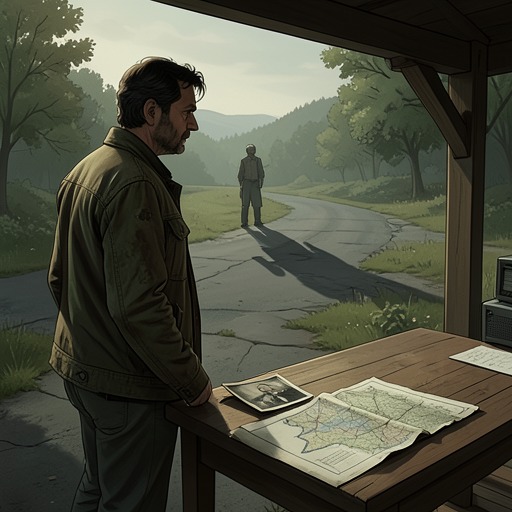
Cameron first finds Brinks in the scanned photographs of a high-school yearbook. One image shows Daphne on a crowded pier with a man’s arm around her. The man’s face is turned away and partly buried in her windblown hair, as if he is kissing her cheek, but Cameron recognizes him. The caption identifies the pair as Daphne Cassmore and Simon Brinks. In a moment of clammy-handed excitement, Cameron enlarges the image and searches the name, turning a private clue into the start of a public investigation.
The search results describe Brinks as a renowned Seattle real-estate developer and nightclub owner. A Seattle Times feature on his vacation home and a photo spread featuring his Ferrari reinforce Cameron’s impression that this is a man of considerable wealth and status. The information is concrete enough to make Brinks seem reachable through addresses and offices, yet his prominence also sharpens the distance between him and Cameron, who is hoping for money as much as an answer about his origins.
The Evidence of a Connection
The photograph is the strongest evidence available to Cameron in these scenes. It places Brinks physically beside Daphne in an intimate-looking pose, but it does not explain when the picture was taken, what their relationship was, or what followed. Cameron treats recognition of the man as a breakthrough, while the photograph itself leaves the essential family question unresolved. Brinks is therefore introduced through a clue that is vivid but incomplete: the image suggests closeness, while its caption supplies names rather than an explanation.
Cameron’s expectation is shaped by an old childhood game with Elizabeth Burnett. When they were young, they invented stories about finding his father and imagined someone as improbable as a pirate or a movie star. The real name is less fantastic but, to Cameron, potentially more useful. He imagines Brinks as someone who can be made to account for eighteen years of missed child support. Elizabeth, pregnant and unable to accompany him, encourages the trip in a lighthearted way; Cameron answers with confidence about the money he expects to recover. His stated aim makes the search practical and confrontational, even as its deeper question—whether Brinks is his father—remains unconfirmed.
Cameron’s Search for Brinks
The search brings Cameron to Brinks Development, Incorporated, an office in a modest commercial building off the highway in Sowell Bay. He drives there after finding the address, only to discover that the office is locked and its parking lot empty. The closed door supplies no answer about Brinks himself, but it changes Cameron’s investigation from online research into an attempt to reach him in person. Cameron considers whether the aquarium might provide another lead, and later asks someone there directly whether they know Brinks. The response is that the person does not know him personally.
Cameron also leaves repeated messages with the company. After several, John Hall, speaking from the Sowell Bay office, calls him back and acknowledges the messages. Cameron requests an appointment with Mr. Brinks, but Hall says that one is not possible at that moment. The exchange establishes a real barrier between Cameron and the man he hopes to find: a company representative answers, but the requested meeting does not follow. The reason for the refusal is not supplied, so it cannot be taken as evidence of Brinks’s knowledge of Cameron or of his willingness to meet.
By late July, Cameron finds another lead in an old magazine article on an obscure website. It reports that Brinks spends summer weekends at an estate in the San Juan Islands, described as a lavish Tuscan-style villa on a cliff above a strait. Cameron locates an address and calculates that the drive from Sowell Bay will take two hours each way. The discovery gives his search a new route, but also makes the next step a deliberate undertaking rather than a quick visit to a local office. He considers contacting Avery about the trip, while carrying Cameron’s class ring and rehearsing how the confrontation might go.
Narrative Role and Unresolved Stakes
Before any meeting can provide a response, Cameron imagines several outcomes. In his preferred version, Brinks recognizes him immediately, admits what happened, and accepts the photographic evidence. In the less hopeful version, Brinks denies the connection, invokes lawyers and DNA tests, and refuses to speak until the facts are proven. Cameron also considers a possibility that unsettles the simple financial logic of his plan: Brinks might want a relationship. Elizabeth believes that an encounter could awaken a paternal instinct, but Cameron doubts that real life will follow the reassuring pattern of a movie.
These competing expectations make Brinks important even while the evidence remains partial. The search results promise wealth; the photograph offers recognition without explanation; the locked office and unavailable appointment delay an answer; and the rumored island estate turns the possibility of a meeting into a test Cameron must choose to pursue. Brinks thus occupies the gap between a documented public identity and an unknown private history. In the scenes establishing him, neither paternity nor the outcome of Cameron’s search is confirmed. What is established is the force of the possibility: a name from a caption is enough to draw Cameron across the state and make him rehearse, in advance, the family revelation he hopes for and the rejection he fears.