Sowell Bay High School, Class of 1989 yearbook
Remarkably Bright CreaturesThe Sowell Bay High School, Class of 1989 yearbook turns a familiar family archive into a new lead in Tova Sullivan’s search for what happened to Erik Sullivan. Its index supplies a name—Daphne Ann Cassmore—and three page references, but no resolution. Tova carries the book from her attic into the next stage of her life, keeping it even as she decides to leave the house and the questions bound up with it.
An old archive reopened
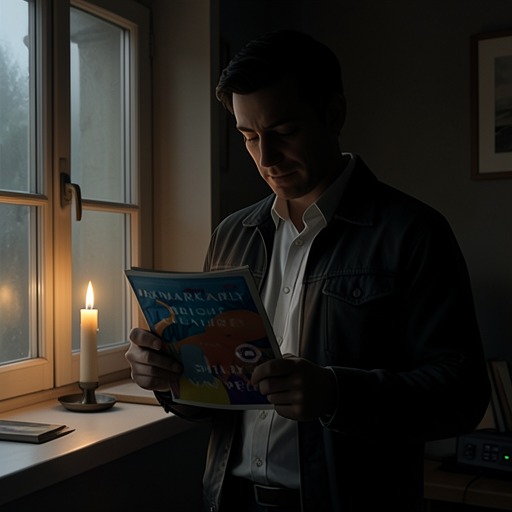
Tova finds the yearbook on the bottom row of the last shelf by the attic window, among piles of linen and china she has been sorting. The discovery interrupts her practical task: groceries, including two pounds of Rainier cherries, remain abandoned on the kitchen counter, and her pocketbook has been thrown down instead of hung by the door. The book draws her away from the ordinary arrangements of the house and back toward an earlier search.
Thirty years before, Tova had pored over this same volume looking for something—anything—connected to Erik. She and Will Sullivan also returned to it occasionally over the intervening decades, when nostalgia surfaced. Tova knows every photograph of Erik between its covers by heart. That familiarity makes the change in her purpose distinct: this time, she is not searching for her son in the photographs. She is looking for someone else.
The name in the index
The search is physical as well as informational. The index’s print is so small that Tova needs her reading glasses; her fingers fumble in the breast pocket of her blouse before she can put them on. She reads down the columns, following the entries to the end of the Zs, and finds just one listing: Cassmore, Daphne A., with references to pages 14, 63, and 148.
The narrow result gives the discovery its force. The yearbook does not explain who Daphne was to Erik or what she witnessed; it offers a name and directions back into its pages. The contrast with Tova’s earlier searches is decisive: the book once held only the familiar photographs of her son, but now its index points toward a person beyond the family’s remembered record. In the larger search, that person matters because Daphne was the last person to see Erik alive.
A clue carried forward
Later, as Tova packs for her planned move to Charter Village, she puts the yearbook into a half-full box of books she intends to keep. The choice preserves the volume not as a household necessity but as the object that led her to Daphne. Its pages also hold a photograph of the young woman, whose smiling face Tova remembers from the yearbook. She wonders whether trying to find Daphne was a fool’s errand, yet cannot dismiss the attempt: she expects that faces resembling the photograph will continue to catch her attention in crowds.
The book therefore accompanies a search that Tova knows may never yield an answer. She has resolved to stop letting one summer night in 1989 shape every part of her life, but she does not discard the volume or pretend the question has vanished. Looking out at the water before leaving the house, she wishes it could tell her what happened. Even the truth, she recognizes, would not bring Erik back. The yearbook can direct her toward the last witness; it cannot restore what has been lost.
Another copy, another search
The yearbook also appears in Simon Brinks’s bar, where a battered hardcover copy rests among the high-school material he uses for storage. When Simon brings it out, dust puffs from the cover. He presents his own class ring alongside Cameron Cassmore’s, while the book offers a likely source for the photographs someone scanned and posted, including the image of Simon and Daphne on the pier.
These two appearances give the yearbook a reach beyond Tova’s attic. In her hands, it is a private record repeatedly consulted through grief and then searched for a new name; in Simon’s, it belongs to a store of shared school history connected to the photographs that helped Cameron pursue his family questions. The old volume does not settle either search by itself. Its indexes, pages, and images make the past newly legible, while leaving the people who read them to reckon with what the record can—and cannot—say.