Sowell Bay's aquarium
Remarkably Bright CreaturesSowell Bay's aquarium is the setting where Tova Sullivan’s quiet, painstaking night work brings her into an unlikely friendship with Marcellus, a giant Pacific octopus held in its exhibits. For Tova, the aquarium is a workplace she tends after hours; for Marcellus, it is a glass enclosure that separates him from the sea. Their encounters make the building more than a backdrop: it is the place where routine, captivity, and an eventual return to open water meet.
Setting and Night Work
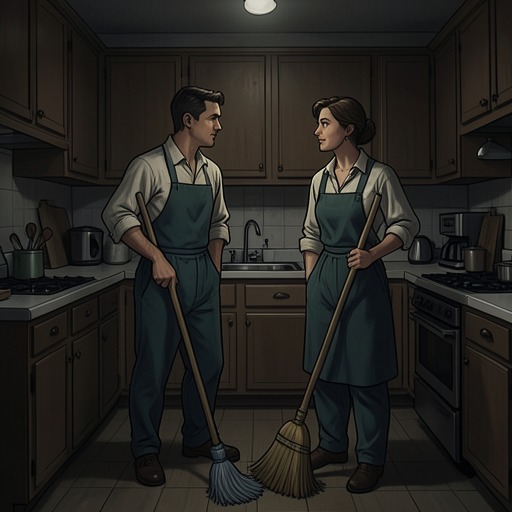
At seventy, Tova is the aquarium’s oldest employee. Each night she mops the floors, wipes the exhibit glass, and empties the trash. The work is not presented as a duty anyone expects her to perform perfectly; she persists because she believes she ought to try, and because having something to do matters. Her pay is fourteen dollars an hour after taxes and deductions. Every two weeks she retrieves a direct-deposit stub from her break-room cubby, then leaves the stubs unopened in a shoebox on top of her refrigerator while the money accumulates in an account at Sowell Bay Savings and Loan.
The aquarium’s after-hours spaces give this routine its own atmosphere. Tova moves through a long, empty hallway under soft blue light, with the old ferry dock next door. Rain striking the skylight is backlit by the dock’s security light; outside, the weather has been persistently gray. Inside, the work is intimate and practical: chairs at a small lunch table need straightening, fingerprints need wiping away, and a clump beneath the table must be inspected rather than assumed to be discarded clothing. The building is quiet enough for Tova to notice what a daytime visitor might miss.
Exhibits and Encounters
Tova treats the inhabitants of the exhibits as presences to acknowledge, not simply displays to pass on her rounds. She greets a sculpin and nods to the wolf eels, despite finding their appearance unsettling. The largest eel emerges from a rocky cavern with its characteristic underbite and jagged teeth. Tova’s manners toward it carry a trace of humor, but also establish the patience she brings to the aquarium’s animals.
The giant Pacific octopus is her favorite exhibit. She leans close to the glass and looks for Marcellus, who can be difficult to spot among the rocks. His orange coloring may be only a sliver in view, and he sometimes remains still while visitors knock on the glass and leave without seeing him. Tova imagines those visitors as impatient; her own practice is to wait. Their relationship begins in that small difference in attention: she returns, looks carefully, and speaks to him even when he does not respond.
As time passes, the aquarium’s glass does not keep Marcellus in view as reliably as its arrangement suggests. Tova becomes accustomed to finding his exhibit empty and seeing him instead among the sea cucumbers next door, which appear to be a favored snack. On another night he watches from an upper corner while she sprays and wipes fingerprints from the front glass. He unfurls his arms and floats toward her, holding her gaze. Their private familiarity changes the meaning of the routine cleaning: the glass she polishes is at once a surface she maintains and a barrier between two beings who recognize one another.
A Place of Captivity and Discovery
The aquarium also becomes the site of a discovery that unsettles the ordinary order of Tova’s rounds. While straightening the lunch-table chairs, she sees a brownish-orange clump tucked into a corner beneath the table. She thinks it may be a sweater left behind by Mackenzie, who works at the admission kiosk, and kneels to retrieve it. Then the clump moves, and a tentacle becomes visible. The moment turns an overlooked patch of floor into evidence that the octopus has left the expected confines of his exhibit. The aquarium’s rooms and tanks are connected in practice by Marcellus’s movement, even when their occupants and human staff are expected to remain in their proper places.
The building’s significance is sharpened by what its occupant remembers from the sea. Marcellus recalls finding a copied key attached to a circular ring among remnants of human belongings on the seafloor: a sneaker sole, a shoelace, and buttons gathered under rocks. He understands that the key must belong to the person Tova mourns. The aquarium holds him apart from the place where he found this evidence, but his memory lets him connect the enclosed present to the submerged past. The sea is not merely scenery beyond the exhibits; it contains objects and histories that the aquarium’s orderly displays cannot explain.
From the Aquarium Toward the Sea
Tova’s bond with Marcellus eventually carries them beyond the building. When she takes him toward the waterfront in a yellow bucket, the contrast is plain: a seventy-year-old woman weighing about ninety pounds pulls an octopus of roughly sixty pounds along the boardwalk. Marcellus trails an arm over each side of the bucket as though feeling the breeze. The journey leads toward Sowell Bay Jetty, where the tide has gone far out and moonlight lies across shallow pools on the exposed beach.
After his release, Marcellus swims away from the rocks and descends into the dark depths. He returns to the kind of seafloor where, as a juvenile, he found the key and the remains of the lost belongings. For nearly four years, he had expected to die within the aquarium tank; freedom is therefore not an abstract contrast to the building but a change in where his remaining life can unfold. Sowell Bay's aquarium is consequential precisely because it shelters the connection between Tova and Marcellus while also embodying the captivity from which he must finally depart.