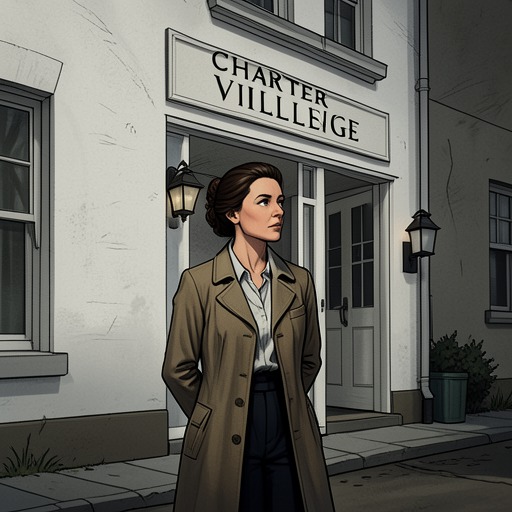
Tova Decides to Move to Charter Village and Sell Her Home
Remarkably Bright CreaturesTova Sullivan’s decision to move to Charter Village and sell her home turns private fears about aging into practical action. The choice begins with an imagined future of falls, hospital forms, and nobody left to manage the paperwork; it becomes real through an application, a quiet announcement at Will Sullivan’s grave, and the sorting of the home’s contents. The move is not yet complete, and the sale remains under negotiation, but Tova has crossed the threshold from considering a change to preparing for one.
The prospect of dependence
The immediate provocation is news about Mary Ann Minetti, who can no longer live independently and has become dependent on others. Tova thinks of Mary Ann’s daughter taking her in, and of other friends whose families have arranged places for them. These examples make the future feel less hypothetical: everyone, Tova recognizes, eventually has to go somewhere. Her thoughts move from other people’s arrangements to her own lack of an obvious helper.
Tova has already experienced the labor of managing a household crisis alone. After Will’s cancer, hospitalizations, and treatments, she spent late nights at the kitchen table handling paperwork, insurance appeals, and arrangements. His death was comparatively straightforward for him, she reflects, but what followed was exhausting for her. Now she wonders who will return that care when her own time comes, or whether the forms will simply be left without an heir to deal with them.
The house makes that anxiety tangible. Its narrow stairs and uneven driveway are potential hazards; even a casserole dish or a slick kitchen floor enters her imagination as the beginning of an accident. She pictures being found on the kitchen floor, taken to hospital, and confronted again with admission forms and decisions. The thought is not only about physical frailty. It is also about being alone with the administrative consequences of needing help.
From possibility to declaration
The decision arrives first as a small opening in that chain of worry. Tova remembers the application packet she picked up at Charter Village and allows herself to consider filling it out. The movement is deliberately modest: she does not yet announce a completed move, but she stops treating the possibility as something to set aside. The application gives a concrete form to a future she has been trying not to picture.
Later, Tova drives into downtown Sowell Bay for a day full of tasks. After a realtor’s tour, she goes to Will’s grave. Nearby, two women speak to their deceased family member as if he were still with them. Tova has never been able to speak aloud to Will in that way; she doubts that his body beneath the ground can hear her. Yet when the women leave, she remains with the headstone and tells him that she is selling the house. The statement is brief, but it makes the decision public to the person whose absence is bound up with the home. She touches the stone, though the gesture does not bring the tears she seems to be seeking.
That evening, after supper, she arranges the application and the documents she has collected. The sequence matters: Tova has spoken the decision at Will’s grave, then turns to the ordinary papers that can carry it forward. What had begun as an anxious thought now has a destination, a file, and work to be done.
Telling others and negotiating the sale
Tova’s friends do not all know about the plan when it first comes up at their gathering. Sandy Hewitt mentions it, prompting Janice Kim to ask what she means. Tova ends the uncertainty herself: she confirms that she is selling the house and has applied for a suite at Charter Village in Bellingham. The silence that follows, and Mary Ann’s startled response, show that Tova’s announcement changes how the people around her understand her future. It also makes the plan harder to keep as a private possibility.
The property begins to move toward sale when realtor Jessica Snell reports an offer ten thousand dollars above the asking price, before the open house has taken place. Snell explains that Tova could wait or counter to take the offer off the market. Tova writes the numbers in the margin of a partly finished crossword and chooses to counter. The unfinished puzzle registers a shift in attention: completing it has seemed less important, while decisions about the house now occupy her.
After the call, Tova expects that the buyers will accept the counter and that a contract will be signed. This is her expectation, not a completed sale. She warms cold coffee and goes outside, where Cat joins her on the garden bench. The cat’s presence immediately raises another practical uncertainty: Tova wonders what will become of him and whether he can return to living outdoors. The decision to leave therefore reaches beyond the building and its paperwork; it also raises the question of how to handle the familiar life gathered around it.
Sorting a life into categories
In the attic, Tova begins sorting the possessions accumulated in the house. The stacks of towels and the clutter remind her of Will, who kept receipts, old advertisements, magazines, and scraps of notes, then squared them into piles and regarded the result as tidy. Tova dislikes piles, but now she has made a system of her own: three categories that divide what remains into different futures.
The smallest category is for Charter Village. It includes a couple of Erik’s old toy cars, a handful of photographs, and what remains of her mother’s porcelain tea set. Tova imagines using the set for coffee from time to time, even though it has gone unused for decades. The objects she chooses are modest, but they carry distinct ties to family and memory. They are not simply the contents of a room; they are the things she can picture accompanying her into a smaller home.
The trash category is harder. Tova puts away photographs and memorabilia that were carefully saved, then recognizes that there may be nowhere for them to go. Janice has suggested a storage unit, but Tova questions the point when, as she sees it, there is no one left to want these things. Her friends have offered help, and Tova plans to have Barb Vanderhoof, Janice, Janice’s son Timothy, and some of his friends assist with sorting and hauling. She would rather trusted people handle the family heirlooms than have strangers descend on them; ordering pizza is her way of welcoming the help, even as she considers it indulgent with casseroles already in the freezer.
The move remains unfinished at this stage: the application has been assembled, an offer has prompted a counter, and the attic is being divided into what will go, what will be discarded, and what remains to be sorted. The house is more than a property to list. Tova’s father built its cedar bones by hand, and Will’s habits and the family’s stored objects still shape its rooms. Leaving therefore requires both practical preparation and a reckoning with what can be carried forward. By beginning the work, Tova does not erase those attachments; she gives them a limited, deliberate place in the life she is preparing to enter.