Tova’s Home
Remarkably Bright CreaturesTova’s Home is the three-level house Tova Sullivan grew up in and later remained in, though she had never intended to spend her adulthood there. Built by her father, it holds the physical traces of her Swedish family’s earlier life and the memories of her childhood with Lars Lindgren. It is also where the ordinary details of family life became inseparable from Erik Sullivan’s disappearance, and where Tova eventually begins to reckon with the limits of living alone.
Architecture and Childhood
Tova was eight when her father built the house. Its three levels gave distinct purposes to domestic space: the middle floor was for living, the lower level was a cellar dug into the hillside, and the top floor was an attic. The cellar stored apples, turnips, and cans of lutefisk; the attic held the trunks her parents had brought from Sweden, filled with belongings that did not quite fit their new American life.
Those trunks contained embroidered linens, inherited wedding china, wooden boxes, and brightly painted figurines. On rainy afternoons, Tova and Lars climbed the ladder to play beneath the attic’s bare rafters. They spread lace-trimmed tablecloths for imaginary picnics and made chipped bone cups part of a pretend tea service, with Dala horses as guests. The attic therefore survives in memory not simply as storage but as a childhood world assembled from family keepsakes. Its contents connect the children’s play to objects their parents had carried across the Atlantic.
The house’s material details also register the labor of its construction. Its cedar mantel has smooth corners hand-sanded and stained by Tova’s father, while Tova thinks of the house’s basic structure as timber he cut with his axe. She associates that work with Swedish craftsmanship and durability, imagining the house as something that could stand for centuries. The permanence she attributes to the building stands in contrast to her increasingly uncertain sense of how long her own body will remain dependable.
Family Life and Erik’s Disappearance
The house records not only Tova’s childhood but also her married life with Will Sullivan and her life as Erik’s mother. On a Wednesday, after Tova returned from exercising, she and Will made love in their bedroom in the fading sunlight. Her green leotard was left over the arm of a Charleston chair in the living room rather than put in the hamper. The next morning, the Sowell Bay Police came to the house after Tova and Will reported that Erik had failed to return from his late-night shift at the ferry ticket booth.
As detectives spoke, Tova kept looking at the leotard. She still believed Erik might be sleeping at a friend’s house or might simply have forgotten to call; in her thoughts, even a good son could do that. The abandoned garment became an unofficial part of the record of that morning: a remnant of the previous day’s intimacy left visible in a room where the family was confronting the possibility that Erik was missing. Its ordinariness sharpened the rupture between the life the house had held and the news arriving at its door.
The garment was eventually moved to the hamper and laundered, though Tova cannot remember doing it. After Erik’s disappearance was confirmed and he was declared dead, the episode slipped from memory along with many other details. The Charleston chair remained. Tova had it reupholstered years later in cheerful blue-and-green paisley, but the new fabric did not dislodge its association with the loss. She regarded the chair as somehow complicit, and decided it would be the first thing to go when she moved. In this way, the house’s objects retain emotional histories even when their surfaces are changed.
Age, Independence, and Leaving
The house’s sturdy construction does not protect Tova from the practical vulnerabilities she associates with growing older. Standing by the mantel, she considers the narrow stairs and uneven driveway as possible hazards, along with an accidental fall involving a casserole dish or a floor slick with cream and potatoes. These are concrete features of ordinary domestic life, but for Tova they raise urgent questions about what would happen if she were injured at home. She imagines being found on the kitchen floor, taken to the hospital, and faced with admission forms that someone else would have to complete.
That fear is shaped by her experience after Will’s death. His cancer involved hospitalizations and treatments, but the paperwork, insurance appeals, and arrangements were also burdensome. Tova spent hours alone at the kitchen table trying to sort them out. Looking ahead, she wonders who would manage such work for her, or whether it would fall into an empty space without an heir to take it on. The home that has sheltered her thus becomes the place from which she measures the practical costs of remaining independent.
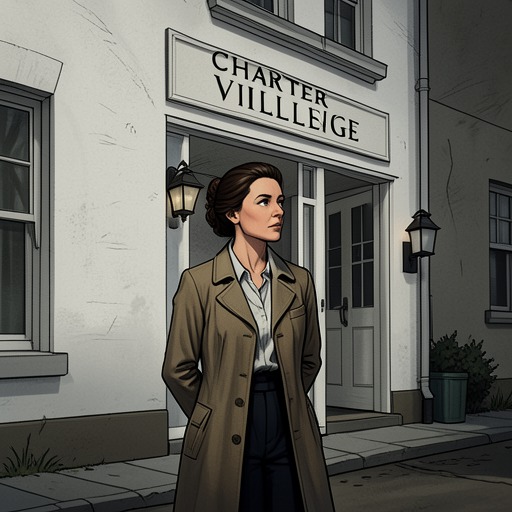
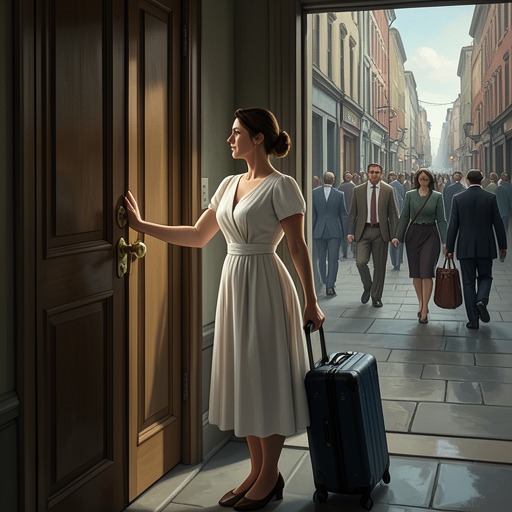
Tova begins preparing to leave the house and pursue a move to Charter Village. She calmly gives a realtor the explanation she has rehearsed and leaves with an appointment for a preliminary walkthrough that afternoon. The appointment marks a concrete step toward putting the house on the market, not the completion of a sale. Her departure has a particular weight because the house was never part of the adulthood she had planned, yet it has held her family’s history for most of her life. Moving means confronting not only the building’s upkeep and her own safety, but also the rooms and objects in which childhood, marriage, and bereavement have accumulated.