Will Sullivan’s death (2017)
Remarkably Bright CreaturesWill Sullivan’s death in 2017, after pancreatic cancer, is presented through its aftermath as much as through the illness itself. For Tova Sullivan, bereavement meant not only losing her husband but also carrying the paperwork, arrangements, and questions about aging and dependence that his death brought into view.
Illness and Death
Will’s final illness involved cancer, hospitalizations, and treatments. Tova later describes his death as relatively straightforward for Will himself, while making clear that the process around it was awful. The distinction matters: the dying was not the only burden. Medical care and its administrative demands extended the ordeal into the life of the person left behind.
Ethan Mack tells Cameron Cassmore that Tova’s husband died of pancreatic cancer a couple of years earlier, describing Will as a decent man. The news reaches Cameron as basic information about Tova that he had not known; learning it stings, underscoring how much of her private history remains unspoken even to someone close to her. The account places Will’s death in 2017, the year inscribed on his memorial.
The Work Left to Tova
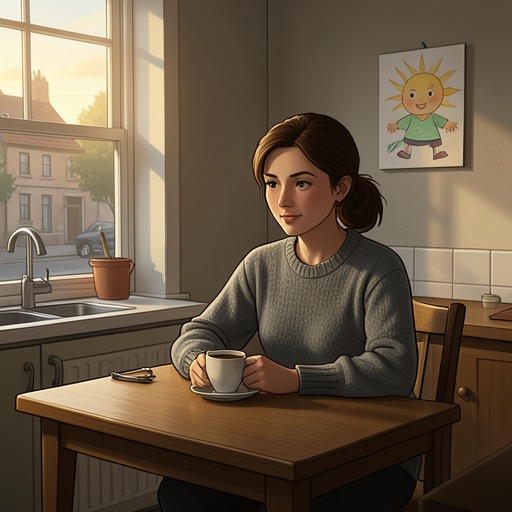
During Will’s illness and after his death, Tova spent hours alone at the kitchen table sorting paperwork. The tasks included insurance appeals and arrangements, a practical burden that she remembers as nearly as terrible as the hospitalizations and treatments. The image of her working through documents late at night gives the loss a second register: grief arrives alongside forms that still have to be completed.
Years later, that experience informs Tova’s unease about her own future. Considering how illness and aging can leave someone unable to live independently, she wonders who would repay the effort she once gave Will, or whether her own paperwork would simply pass into an heirless void. Her questions about narrow stairs, an uneven driveway, and a possible fall are concrete extensions of the administrative solitude she knew at the kitchen table. Will’s death has therefore become part of how she measures the risks of living alone and the prospect of needing care.
Memorial and Family Loss
At Fairview Memorial Park, Tova kneels beside Will’s polished stone, warm in the July sun, and traces its engraving. The inscription gives his dates, 1938–2017, and identifies him as husband, father, and friend. When Tova submitted the epitaph, the coordinator suggested using more of the package’s 120-character allowance. Tova had used only half; to her, the spare wording suited a simple man.
Erik Sullivan’s marker stands beside Will’s, although Erik’s body never left the sea. Tova had not wanted a headstone for her missing son; Will insisted on one. She is troubled both by the mismatch between the memorial and Erik’s fate and by the incorrect form of his name on the stone: his mother’s maiden name, Lindgren, should have been his second middle name. She even imagines hurling the marker off the pier, though she knows she cannot do so. Will’s choice to commemorate Erik thus remains present in Tova’s grief, bound to the absence that neither stone can resolve.
Continuing Aftermath
Tova’s recollections of Will’s death sit within a later life still organized around work, household routines, and the decisions of aging. As she prepares to leave her home for Charter Village, she makes coffee on her stove for what she believes will be the last time there, having polished the appliance the night before even though she expects it to be replaced. The moment does not erase the loss or resolve her worries; it shows how care persists in ordinary tasks even as a familiar life is about to change.
Will’s death is consequently both a bereavement and a point of reference for Tova’s own vulnerability. Its most enduring traces are not only the grave and the illness, but the late-night paperwork, the questions about who will help her in turn, and the family memorials that keep his decisions beside the unresolved loss of Erik.