
Comedy Against Despair
Requiem for a DreamThis thread traces how jokes and performance create fellowship, then lose their power to protect the characters from suffering.
increasing Bearing strength in each event
 decreasing
Bearing strength in each eventdecreasingThe Partners’ Banter

The Partners’ Banter
A shared comic language
Harry and Tyrone tease one another about money, work, sex, and their future. Their insults are familiar rather than hostile, and they repeatedly answer jokes with laughter.
Humor creates belonging
The banter makes their precarious lives feel manageable and confirms their partnership. It also helps them avoid speaking plainly about their vulnerability.
The Morgue Laughter
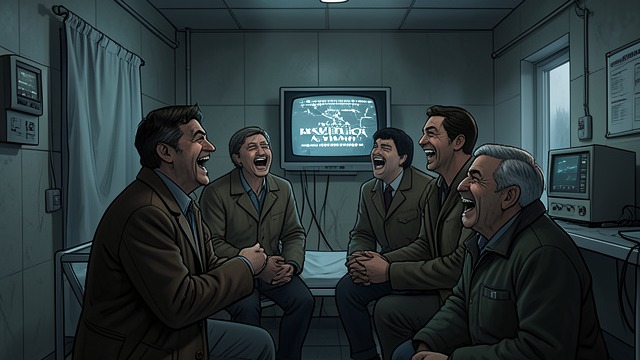
The Morgue Laughter
A group ritual
Users trade jokes while music plays in the Bronx County Morgue. Even the bleak setting becomes a place for shared pleasure and recognition.
Relief inside danger
Their laughter briefly softens the scene’s physical and emotional risks. The warmth is genuine, but it is built around the ritual of using heroin.
The Television Destroyed
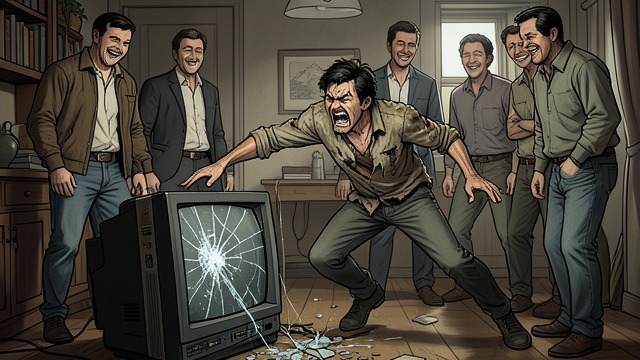
The Television Destroyed
A comic performance escalates
Tony Balls argues with a television set and eventually shoots it, while the others laugh at his increasingly theatrical rage. The destruction becomes a grotesque group spectacle.
Laughter masks instability
The scene is funny to the participants, yet its violence reveals how drugs distort ordinary surroundings. Their shared amusement does not mean they are safe or in control.
The Old Addict’s Stories
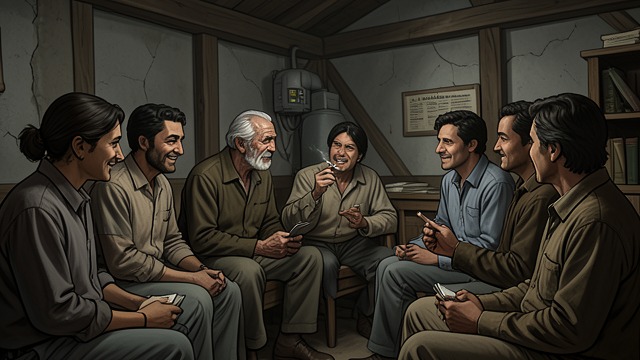
The Old Addict’s Stories
Jail becomes a stage
An older user entertains the cell with stories of drug use, theft, and prison. Tyrone laughs with the group and enjoys the temporary sense of company.
The joke carries a warning
The old man’s comic persona also describes a life governed by habit and repeated arrest. Tyrone resists recognizing himself in the stories even as the similarities accumulate.
Silence in the Camp
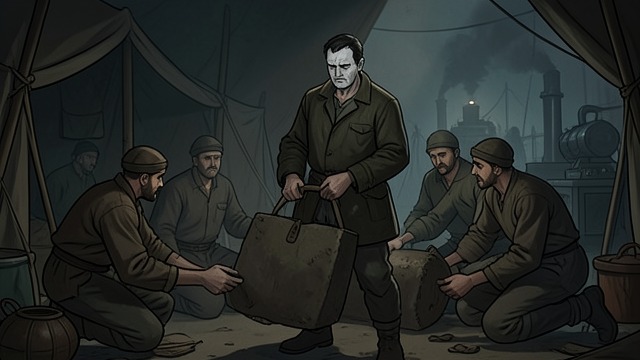
Silence in the Camp
Laughter falls away
Tyrone faces racist abuse, withdrawal, and forced labor in the Southern camp. His former joking confidence cannot answer the guard’s power or relieve his physical pain.
Fellowship survives in fragments
Other prisoners help him stand and endure the work. The solidarity is quieter than the earlier banter, but it becomes more meaningful as humor fails.
During their early street journeys
During an early gathering at the morgue
During Tony Balls’s high at the loft
During Tyrone’s night in jail
During Tyrone’s first weeks of hard labor
