Ada
Requiem for a DreamAda is Sara Goldfarb’s next-door friend, hairdresser, and most consistent companion as Sara’s hopes of appearing on television grow into a consuming fantasy. Their friendship is built from ordinary acts of attention: sharing tea, watching the set together, discussing prizes, and tending Sara’s hair. When Sara’s health deteriorates, Ada recognizes changes that Sara refuses to acknowledge, tries to get her to seek help, and later visits her in the hospital with food. Her role gives the novel a measure of care that persists even when Sara can no longer return it in a familiar way.
Identity and Friendship
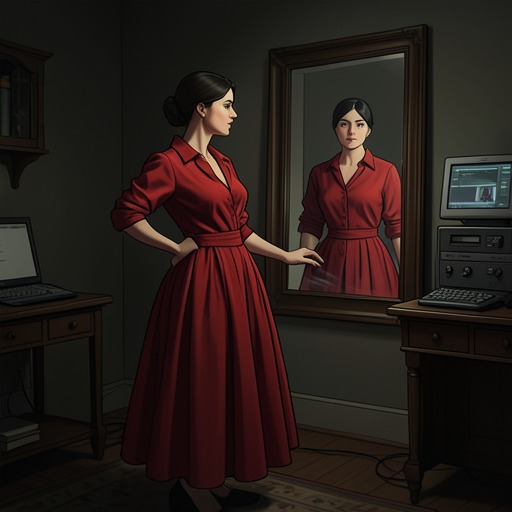
Ada lives next door to Sara and is close enough to be drawn into the news of Sara’s supposed television appearance almost immediately. Sara visits her in the Sara Goldfarb’s red dress and gold shoes associated with Harry Goldfarb’s bar mitzvah, holding the dress closed at the back because she cannot zip it. She tells Ada that she has been invited onto television. Ada initially looks astonished and asks whether Sara is serious, then welcomes her into the apartment. Their conversation unfolds with both women still attending to the program on the television: they know when a scene ends and anticipate the commercials, and they arrange themselves so they can keep watching as they talk. Ada is a listener and companion, but television is also a shared presence that continually interrupts and shapes their attention.
The friendship is not presented through grand declarations so much as a succession of familiar, practical gestures. Ada makes tea, helps Sara with her appearance, and spends time discussing what might happen next. In these early scenes, she participates in Sara’s excitement by taking the imagined occasion seriously. The television invitation gives Sara a renewed sense of purpose, and the two women’s conversations and rituals become part of the daily life organized around that expectation.
Hair, Television, and Shared Expectations
Ada has dyed her own hair for twenty-five years and is experienced at turning people red, even if she cannot guarantee precisely which shade. When Sara wants her hair to match her anticipated appearance on television, Ada strips and dyes it at the kitchen table, wrapping a towel around Sara’s neck and working slowly while they watch television. The process takes much of the day. Sara complains about the odor and worries that there will be no time to sit in the sun; Ada tells her to relax and imagine how she will look when the work is finished. The effort becomes one of their recurring projects, joining physical grooming to Sara’s imagined future in front of an audience.
The results do not quite match Sara’s idea of red. Looking at the mirror, she challenges Ada over whether the color is really red or closer to orange. Their exchange turns a disappointment into comic banter, but it also shows the distance between the transformation Sara wants and the one Ada can produce. Ada continues the process rather than abandoning it. On another visit, she applies more dye while the two speculate about the prizes available on television shows. A car and luggage sound useful to Sara, who imagines trips to Miami and the Fountainbleau; a swimming pool seems tempting until Ada points out that it would not fit in the apartment without consequences for the rent. Their talk makes the fantasy concrete, even as it remains detached from what Sara actually has.
As Sara begins dieting and takes Diet pills, Ada continues to help with her hair and to share the routines surrounding television. Sara checks the mailbox for news from McDick Corp., while the women discuss possible shows and prizes. The contrast between these ordinary preparations and Sara’s increasing fixation sharpens over time: the hair treatments continue, but the promised appearance on television never arrives. Ada’s presence offers companionship within the ritual, not evidence that the invitation is real.
Concern as Sara’s Health Declines
Sara’s physical and mental changes become harder for Ada to ignore. When Sara is found clinging to a light pole at an intersection, unable to cross amid the traffic and noise, Ada and Rae each take an arm and help her back to Ada’s apartment. Sara trembles, holds a glass of tea in both hands, and stares ahead. Ada jokes that she had thought Sara was merely restless, but now wonders whether something is wrong. She suggests that Sara see her doctor. Sara replies that her appointment is not for two days; Ada challenges the idea of waiting for a scheduled visit when Sara already feels unwell.
At the doctor’s office, Sara describes things as confused and strange and suddenly turns at the warning to look out. The doctor gives her another supply of capsules and a calming medication rather than addressing her condition as Ada had urged. Ada is not present for that consultation, but her earlier response stands in contrast to the medical handling of Sara’s symptoms: she had noticed the crisis in the street and pressed for attention before Sara’s next appointment. The evidence does not make Ada a medical expert; it shows her registering distress and trying, within the limits of their friendship, to get Sara help.
Later, Ada sees how far Sara has changed. While touching up the roots of Sara’s hair, she remarks that the Sara Goldfarb’s red dress fits, but that Sara herself looks too thin and tired. She urges Sara to eat and offers to make soup. Sara rejects the food, insists that she is fine, and says she can feel that the television people have found her card. Ada is worried enough to stop attending to the television and look directly at her friend. Sara nevertheless leaves to make another call, holding to the belief that this time the response will come. Ada cannot persuade her to eat or to doubt the expected invitation.
Visits and Lasting Significance
Sara continues wearing the Sara Goldfarb’s red dress and gold shoes, and Ada continues touching up her hair. When Ada raises the possibility that something may have happened to the show, Sara reacts with her whole body and refuses the suggestion. Friends sometimes bring food, but Sara remains unwilling to eat, talking instead about appearing on television and watching quiz shows so she will be ready to compete. Ada’s care persists alongside the fantasy, even as the ordinary practices that once connected the two women—conversation, tea, and grooming—can no longer bring Sara back to a shared understanding of events.
After Sara is institutionalized, Ada and Rae visit her in the hospital. They recognize her, but do not recognize the friend they see: Sara’s bones protrude, her hair hangs lifelessly, and her clouded eyes do not seem to see them. Ada brings a large shopping bag of familiar foods, including lox, cream cheese and bagels, blintz with sour cream, danishes, pastrami, chopped liver on rye with mustard and onions, and hot tea. Sara stares, tries to smile, and takes a large bite of a sandwich, making a clacking sound as she chews. When mustard and spittle run from the corners of her mouth, Rae gently wipes them away. Ada and Rae remain with Sara for an hour before leaving; outside, they wait for a bus in tears and embrace.
Ada’s arc is defined by continuity rather than rescue. She helps Sara prepare for the television future, notices when her body and behavior become alarming, offers food and advice, and finally brings the foods Sara had once imagined and refused. At the hospital, the old shared rituals survive only in altered form: Ada still brings tea and attends to her friend, but Sara can barely respond. The visit makes visible both the durability of their attachment and the distance illness has opened between them.