Harry Goldfarb and Marion relationship
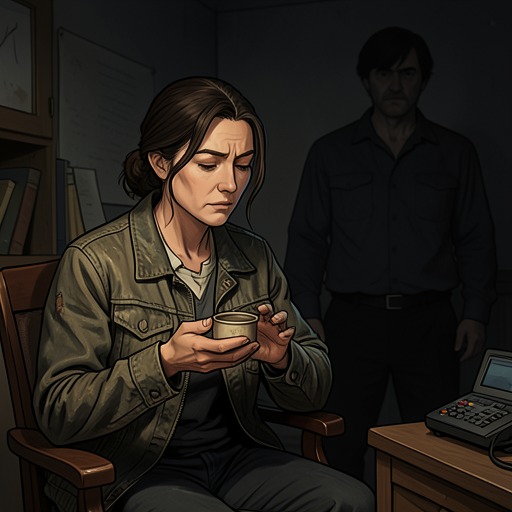
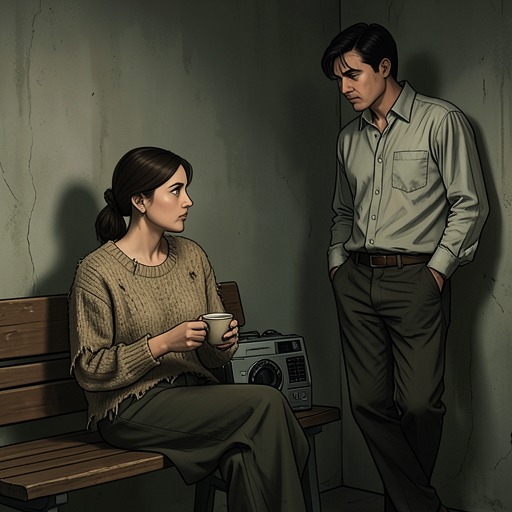
Requiem for a DreamHarry Goldfarb and Marion’s relationship is both an intimate refuge and a shared project increasingly consumed by heroin. They offer one another recognition and tenderness that each has missed elsewhere, and imagine building a life around art, a coffee house, and travel. Yet their plans grow less concrete as drug use becomes the organizing fact of their days. Their bond persists through that narrowing, but it cannot protect either of them from its consequences.
Recognition and Intimacy
Marion tells Harry that praise from other people leaves her untouched, even when it is sincere, because it seems directed at her appearance rather than at the person she feels herself to be. She has been called a raven-haired beauty, she says, as if beauty could cancel pain, loneliness, or ambition. Harry’s attention feels different to her: she believes he sees her inner self, and his touch—stroking her head and caressing her cheek and neck—makes that recognition physical as well as verbal. She describes their closeness as something she has never experienced with anyone else. Harry responds that she makes him feel good, and he shares her sense that their feelings matter more than empty compliments.
Their intimacy is not perfectly secure. When Marion says she is going to dinner and a concert with the psychiatrist who has been paying her fifty dollars a week, Harry sinks into a jealous sulk. Marion teases him for being jealous, then hugs and kisses him until his resistance gives way to laughter. The scene shows affection working as a repair: she reassures him through playful closeness, and he eventually holds her and joins in. It also reveals how easily unspoken insecurity enters their relationship, even while they are able to answer it with warmth.
A Future Drawn Together
The couple’s shared ambitions give their intimacy a practical shape. Marion imagines a coffee house where artists and writers gather, her paintings hang, and Harry helps make a life beyond the conventional domestic pattern she rejects. She sketches designs while they talk. In one plan, the room has hanging plants, a small performance stage, an open-air garden with grapevines and an aviary, and walls built to protect paintings. They also imagine a location in San Francisco, where they could be near the city’s restaurants, mimes, music, and art. Their plans extend to trips to Europe, and the act of drawing them makes the future feel close enough to inhabit together.
For Marion, art carries an earlier memory of purpose. In Naples, looking toward Capri from a hillside restaurant, she had felt alive and certain that she had a reason to exist. She painted through the summer and fall, but the inspiration faded with winter. After traveling farther south and returning to Italy, she gave away her paintings, equipment, and books; revisiting the restaurant could not rekindle the earlier sense of possibility. Her imagined future with Harry offers a new setting for artistic life, but it does not erase this history of inspiration lost.
The couple’s domestic fantasy is specific and playful. Marion rejects suburbs, a white picket fence, Sunday barbecues, a Cadillac, and the expectation that they will visit her family at Passover. In their place she pictures a home on the west side of the Village, neighborhood bars, shopping on Bleecker Street, and provolone hanging in the kitchen. Her list gives their future a shared identity, defined as much by what they refuse as by what they want. But the plans remain vulnerable: the coffee house and art recur as promises, while their ability to act on them diminishes.
Heroin and the Shared Enterprise
The relationship also becomes a working partnership in heroin. When Harry and Tyrone C. Love learn from Brody that good heroin will cost more than they have, Harry proposes borrowing the extra hundred dollars from Marion. She agrees, treating the money as an investment now that she is working again and needs a gallery. Harry promises they will repay her that night and move toward the coffee house. His language of business and their artistic future sit side by side: her savings help fund a drug deal, while the deal is framed as a step toward the life they have planned.
After buying the heroin, Harry and Tyrone carefully mix it with milk sugar and divide it into bags. They each take fifty out to sell. Harry calls Marion to report that the operation has gone well, and she allows them to use her telephone number selectively, for people they know. The two men then return to the couple’s shared dream: they take heroin, stretch out on the couch, and work with Marion’s sketch pad and pencils to complete a floor plan for the coffee house. Their planning is real and detailed, but it takes place alongside drug use and proceeds from the dealing that has begun to entangle their future with the habit they mean to escape.
Later, after Harry leaves the business, he and Marion use heroin twice a day, sometimes more, smoke a great deal of marijuana, and occasionally take pills. The sketches come out less often. They spend long stretches lying around, making vague plans, and trusting that everything will remain all right because it feels all right in the moment. Marion continues to describe the life she wants, but the conversation increasingly replaces action. Their intimacy remains affectionate; their shared attention to the future, however, is being displaced by the immediate reassurance of getting high.
Dependence and Diverging Risks
Winter sharpens the change. Marion sometimes picks up a sketch pad, but her hand moves while she feels detached from the drawing. Attempts to restore enthusiasm for the coffee house come intermittently; most of the time, she and Harry use heroin, watch television, or listen to music. Harry goes out mainly to find drugs. Dealers repeatedly disappear, their remaining money dwindles, and they can no longer buy enough to sell and cover their own use. The couple’s dreams do not vanish in a single break; they recede while the practical conditions of addiction close in around them.
The waiting for heroin makes their dependence newly visible to both of them. When Harry is on the phone trying to learn whether Tyrone has found drugs, Marion asks to ride along, ostensibly for fresh air. They struggle to maintain casual conversation while each measures the delay and waits for news. A feeling they are hooked pushes through their efforts to dismiss it; still, they tell themselves they could stop and that the situation will straighten out. When they finally reach Tyrone’s apartment and see that heroin is available, their relief breaks the strained calm. The relationship is now joined not only by plans and affection but by a shared cycle of anticipation, denial, and relief.
That dependence changes the terms of Marion’s intimacy with Harry. When their supply is precarious, she goes to Big Tim’s apartment to obtain heroin in exchange for sex. Harry dislikes the prospect of her having sex with another man, then argues himself into accepting it as her choice and as a necessary way to get drugs. He rubs the back of her head and tells her he is all right with it. The reassurance is tender, but it does not remove the unequal pressure of the exchange: Marion needs the heroin, and the arrangement gives Big Tim control over the conditions under which she receives it.
At Big Tim’s apartment, Marion encounters a setting unlike the one she had anticipated: a vast living room on the twenty-second floor, French doors opening toward a balcony over Central Park, Coltrane playing, and drinks and hash offered before the exchange. As the drugs and alcohol take effect, she feels temporarily at home in the room. When the sexual demand becomes immediate, she is repulsed and becomes sick; after vomiting, she is frightened that Big Tim may refuse her heroin. She returns, composes herself, and complies. The scene marks a painful contrast between the mutual tenderness she associates with Harry and a transaction in which heroin is the condition of her participation.
Separation into Consequence
Big Tim later offers Marion a share of heroin for attending a party where five other women will provide entertainment before men arrive. She accepts because the amount promises relief from the immediate problem of obtaining drugs. Afterwards, alone on her couch watching television, she remembers being unprepared for what the other women were expected to do and disturbed by how easily she had done it. Once she has her share, however, heroin dissolves her unease. She tells herself the supply will last and that more is available. The drug restores the feeling of security, but only by making the conditions of its acquisition easier to live with.
Harry’s path breaks away from hers through arrest. While he and Tyrone are traveling south, Harry’s injured arm is painful, and a gas-station attendant and mechanic treat them with open hostility. Later a police officer identifies them as New Yorkers and attacks Harry, including striking him and dragging him by the injured arm. At the station, Harry asks for medical care and is told he will have to wait. He and Tyrone are eventually assigned to a work gang; Tyrone is also subjected to racist abuse and brutal treatment. These events do not resolve Harry and Marion’s relationship so much as expose the gulf between their shared plans and the dangers now governing their separate lives.
The relationship’s central contradiction is that its tenderness is genuine while its future becomes increasingly fantastic. Harry and Marion can recognize one another, comfort one another, and draw an elaborate place where their hopes might take form. They also help build a daily life in which heroin takes priority, and Marion’s body becomes part of the means by which she obtains it. By the time she sits alone watching television and Harry is in custody, their imagined shared world has not been fulfilled; it has been overtaken by the addiction through which they once sought to make the future feel possible.