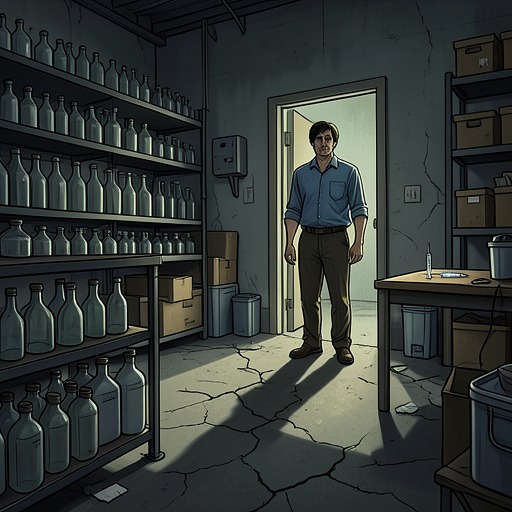
Harry and Tyrone descend into the street-level heroin scramble
Requiem for a DreamHarry Goldfarb and Tyrone C. Love’s descent into the street-level heroin scramble begins when their already precarious drug business is overtaken by scarcity. As winter closes in, they stop trying to build a profitable operation and struggle instead to secure enough heroin for themselves. The crisis turns drug use into a daily contest for supply, deepens their dependence, and draws Marion Silver into increasingly costly exchanges for the drug.
From dwindling prospects to scarcity
Winter arrives abruptly after a brief run of clear, comfortable autumn weather. Marion sometimes tries to draw, but her hand seems to move without her attention; the plans she and Harry once had for a coffee house also lose force. Their days increasingly revolve around heroin, television, or music, with occasional trips to the movies becoming less appealing in the bad weather. The approaching season narrows their world even before the supply runs short.
Harry goes out mainly to find heroin, and the people they can buy from keep disappearing from the trade. The plan to obtain a pound of pure product has long been abandoned; even buying bundles becomes difficult. When they do get some, they often use most of it themselves and cannot sell enough to cover their own needs. The money they once believed they had dwindles. Harry and Tyrone debate competing explanations for the shortage, including gang conflict and a large seizure, but neither can establish what is happening. They hold on to the expectation that heroin will return because so much money is involved, while recognizing that speculation does nothing to solve the immediate problem.
The shortage changes the scale of their ambition. They no longer think in terms of acquiring uncut weight or making money; they try to find enough for the next stretch of time, including a supply to wake up to. Their telephone rings with calls from people seeking heroin, while their own attempts to sell sometimes bring in money and sometimes leave them consuming nearly everything they obtain. The familiar business has contracted into uncertain, short-lived access to the drug.
The first night without heroin
One night, after promised supplies fail to arrive, Harry and Marion go to sleep without heroin in the house. They have never before expected to wake up without some available. A small reserve of used cottons remains, but they decide to save it for morning through sheer effort of will, aided by sleeping pills and marijuana. The reserve becomes a measure of how far their circumstances have changed: what had once been discarded after use is now something to ration against withdrawal.
Their sleep brings little relief. They sweat and shiver, feel pain and nausea, and cannot clearly distinguish being asleep from being awake. Panic grows until Marion bolts upright, gasping. Harry turns on the light and offers the possibility of using the saved cottons. The night shows the bodily force behind their continued pursuit: even when they try to delay a fix, fear and withdrawal press them back toward heroin. After they use, the previous night’s terrors and the day’s anxieties dissolve, and they sit with Tyrone and Alice, listening to music and sharing the temporary warmth of being together.
A city shaped by the shortage
The scarcity spreads beyond the private rooms where Harry and Marion try to preserve their supply. In the streets, people search through snow and sleet, while hallways fill with shivering, sick bodies. Fires burn in deserted buildings where people try to stay warm long enough to find heroin. Getting a bag does not guarantee safety: buyers fear robbery on the way home, and the value of the drug can make a small quantity worth risking a life over. Taxis avoid some neighborhoods, deliveries stop, and services are withdrawn as the crisis makes whole sections of the city feel besieged.
Violence escalates alongside need. The police put more personnel on the streets as robberies increase; people breaking store windows to take television sets are shot, and some bodies freeze on the ice before they can be removed. A person may steal heroin and still be attacked before getting it into a vein. The narrative presents the shortage not as a mere interruption in a business but as a worsening environment in which hunger, cold, dependence, and fear compound one another.
Harry and Tyrone become more deeply involved as they follow supply into dangerous buildings. They travel together because going alone makes a person vulnerable to being robbed of both drugs and life. At first they keep to the edges of the devastation; as their need intensifies, they venture farther into it. Their movement from tentative visits to more assured, urgent searches registers the shrinking space left for other priorities. They still have some awareness that they are taking risks, but that awareness is pushed aside by the immediate demand for heroin.
Deception, danger, and Marion’s exchange
The men are repeatedly robbed of money and sometimes find only a couple of bags. They may inject what little they have rather than take it home to Marion and Alice, telling themselves that staying near the action could let them find more and bring the women a proper share. Back at their homes, they lie about what happened. They also distinguish themselves, in their own minds, from people reduced to selling someone else’s glasses or retrieving water from a toilet to prepare heroin. Yet the boundaries they insist they will not cross grow easier to ignore as the scramble tightens its hold.
A killing makes that erosion immediate. As Harry and Tyrone walk with others toward a supplier, a man emerges from a doorway, presses a gun to the connection’s head, kills him, and takes the heroin. The group scatters. They look briefly at the dying man as blood pumps from the wound, then flee; his frozen body is found eight hours later. The drug supply is not simply scarce but exposed to sudden lethal violence, and witnessing that violence does not end the search.
Marion’s choices are also shaped by the shortage. On the way to meet Big Tim, she is apprehensive but focuses on receiving the heroin he has promised and on avoiding withdrawal the next morning. Harry feels relief that they will not have to scour the cold streets for this supply, while struggling with the fact that Marion is exchanging sex for it. He tries to accept the transaction as her choice, even as his reaction exposes the strain between their intimacy and the need that governs them.
Big Tim receives Marion in a large apartment on the twenty-second floor, with a view over Central Park. He offers her drinks and hash before the sexual exchange begins. The intoxicants initially leave her feeling warm and at ease; when the encounter turns to oral sex, she is repulsed and becomes sick. She returns after vomiting, still frightened and intent on obtaining the heroin. The scene makes the bargain’s uneven terms concrete: Marion’s immediate need sustains her participation even when her body recoils from what is required.
Big Tim later arranges for Marion to attend a party where she and five other women will share a portion of heroin as entertainment for men who arrive afterward. Once home, Marion recognizes that she had not understood what she would be expected to do with the women and is disturbed not only by what happened but by how readily she did it. Receiving her share makes the ordeal feel worthwhile to her in the moment; after using, the heroin dissolves her disquiet. Alone on the couch in front of the television, she imagines that she can always obtain the drug and always feel this way. Her confidence is another consequence of the scramble: a temporary supply feels like lasting security, even as it binds her more tightly to the system that made the exchange necessary.
The logic of the scramble
The episode’s central reversal is that Harry and Tyrone’s search for heroin no longer serves a business or a plan for a different life. It consumes their money, narrows their movements, and determines what they tell the women they love. The supply crisis draws them from the fringes of danger toward its center, while their dependence supplies a ready excuse for each choice. They can recognize the damage and still explain it away, believing that they remain free even as the next fix gives the orders.
The shortage also connects private dependence to a wider collapse in the streets. Withdrawal, cold, insecure shelter, theft, and violence become parts of the same struggle, while the promise of relief repeatedly resets it. Marion’s exchange and the men’s increasingly hazardous searches are different consequences of that pressure: in each case, obtaining heroin brings temporary warmth or reassurance, but it does not restore the plans or safety that scarcity has taken away.