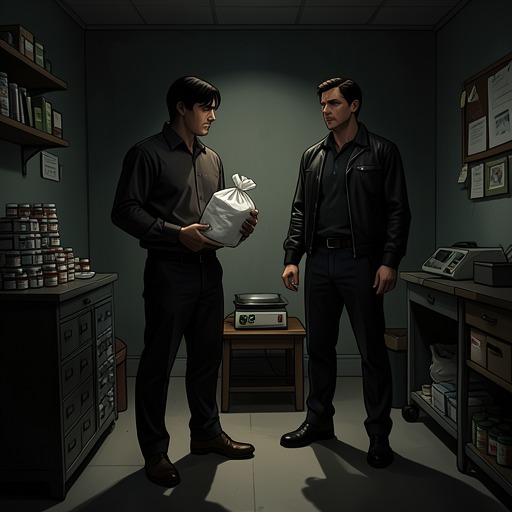
Harry and Tyrone take newspaper-loading jobs
Requiem for a DreamHarry Goldfarb and Tyrone C. Love take newspaper-loading jobs as a reluctant, improvised way to finance a heroin deal. Their work briefly turns physical effort into a promise of money, but the plan is compromised from the outset: they rely on stimulants to get through the shift, postpone starting, and discover that payment will come too late for the immediate purchase they hope to make. The episode makes labor look both unusually exhilarating and stubbornly unhelpful to their ambitions.
A plan built around the next deal
Harry and Tyrone want several hundred dollars to buy heroin from Brody, cut it, and increase the amount available to sell. They describe the transaction as a business arrangement and insist they will avoid getting strung out themselves. Harry also rejects robbery: he is willing to pawn the television belonging to his mother, Sara Goldfarb, but does not want to commit a holdup or go to prison. When the pair cannot identify an easy way to raise the money, Tyrone remembers men who gather around four or five in the morning to load newspaper trucks. He does not know their wages, but has noticed that they wear good clothes and drive attractive cars. The job is not an appealing end in itself; it is a possible route to the capital they want.
Their reluctance is practical as well as emotional. They dislike the prospect of work, especially beginning before dawn, and Harry finds the required wake-up time nearly impossible to imagine. They nevertheless agree to see what is happening at the loading site. Harry plans to tell Sara that he has a job so she will make sure he gets up; he and Tyrone calculate that they will have to rise around four. Their joking handshake and promise that each will get the other out of bed turn the proposal into a shared commitment, though not yet a dependable routine.
Delay, preparation, and Marion’s help
The first attempt is postponed. At Marion Silver’s apartment, the three eat a substantial meal, drink wine, smoke, and settle into a deep sense of well-being. Once Harry explains that he and Tyrone intend to work briefly, save enough to buy Brody’s heroin, and cut it for resale, Marion listens seriously and agrees that the plan makes sense. Her reservation is that the two men may not get to the job so early, or keep going once they arrive. Rather than abandon the idea, she offers dexies and downers from a supply she says she has through doctors who write prescriptions for her.
Harry and Tyrone decide to wait until the following night. Their intended preparation exposes the conditions attached to the plan: they expect to take dexies before working and carry more with them because they do not think they can manage the job without them. Marion hustles them out early when they finally go, helping ensure that they are among the first to arrive. The delay and the assistance matter together. The job requires a schedule and sustained effort, but the men approach both through the same drug-centered habits that shape their plans for making money.
The loading shift
Even though Harry and Tyrone arrive early, there are so few other workers seeking employment that everyone is put to work. They have taken another dexie before leaving and feel quick and ready. During a hot, humid night, they throw bundles of newspapers into trucks, sweating as they work. Instead of merely keeping pace, they toss the bundles, laugh, talk, and move from one truck to another to help. Their energy makes the labor feel like a game; the other workers watch them as they do what seems to be the work of six men.
One worker warns them to slow down. If they race through the loading, management may come to expect that pace every night, making the job harder for everyone. Harry and Tyrone accept the warning and say they do not want to bring pressure down on the other workers. The exchange gives their brief employment a social dimension: the men at the site are not simply rivals for wages but people trying to preserve a tolerable arrangement of work. They offer Harry and Tyrone cold beer and explain that they come regularly and want things to stay as they are. Harry drinks half a can and remarks on how good it tastes, even as he notices that it cuts through the blotter in his mouth.
When the trucks are finished, Harry and Tyrone buy another dozen cans of beer and share them around while they wait for more trucks. Wine is passed later. The alcohol softens the sharpness of the dexies, and the pair continue working for a couple of extra hours, pleased by the amount they imagine they will earn. Their enthusiasm is real, but it is chemically sustained and quickly directed back toward calculating how soon the job can pay for the heroin deal.
The first wage and the limits of the plan
The crucial setback comes when Harry and Tyrone learn that they will not be paid that night. Their checks will arrive at the end of the week. The delay separates labor from the immediate reward they expected: after a night of exertion, they have no cash with which to buy Brody’s heroin. Tyrone reacts with frustration, while Harry tries to recast the waiting period as useful. If the money comes all at once, he argues, they will be less likely to spend it before they have enough for the purchase. The rationalization restores their agreement, but does not make the deferred pay any less of an obstacle.
Harry tells Tyrone to go home and rest with the downers Marion provided; they assume that a couple more nights will bring them closer to the needed sum. They slap hands again and leave the newspaper plant before the early-morning rush and sunlight. The scene ends not with a completed deal but with another promise to continue. Their first night shows that they can work hard and cooperate with other workers, yet neither effort nor apparent success gives them immediate control over the money. The job becomes one more stage in an attempt to turn labor into drug capital, while the stimulants, delayed wages, and continuing dependence complicate the distance they hope to keep from addiction.