Harry repeatedly pawns Sara’s television
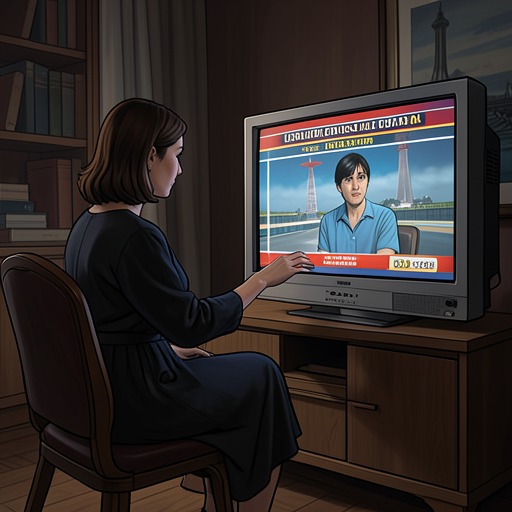
Requiem for a DreamHarry Goldfarb’s repeated pawning of Sara Goldfarb’s television turns a household object into the center of a recurring struggle over money, trust, and attachment. He removes the set for cash; Sara later redeems it and returns it to her apartment, where she chains it to the radiator. The cycle gives Harry a resource to exploit and leaves Sara repeatedly paying to restore the source of comfort and imagined possibility around which her days are organized.
The theft and the chain
On one occasion, Harry locks Sara in a closet while he disconnects the Television set. When he tries to move it, a bicycle chain linking the set to the radiator jerks tight and nearly tips the television from its stand. Sara has kept the set chained in place, but she does not explain this before Harry starts pulling. From the closet, she eventually tells him that the chain is meant to deter robbers, not trap him. He treats the restraint as an accusation and complains that she is trying to make him feel guilty; she remains inside the closet, and the key slips out beneath the door. Harry retrieves it, opens the door, and later unlocks the chain so the set can be taken away.
The episode makes the practical safeguard part of the conflict. Sara’s chain expresses her awareness that the set may be taken, while Harry experiences it as an impediment to his immediate purpose. His anger focuses on the disruption and on the possibility of damaging the television or radiator; Sara’s protection does not prevent the removal. The television leaves the apartment again, and the recurring transaction begins with a confrontation inside the home.
Moving the set and pawning it
Harry’s partner, Tyrone C. Love, waits in the hallway while Harry gets the television out of the building. The two men then have to push it three blocks to the pawn shop. Tyrone steadies the set and watches for obstacles; Harry pushes and steers. They negotiate curbs and worry about the television being stolen, knocked over, or toppled by rough ground or a failing table. The labor is painstaking and shared, in sharp contrast to the ease with which Harry has treated the set’s removal as a way to get cash.
At the shop, Abe Rabinowitz inspects the television and its table before paying. He complains that he cannot carry the furniture himself and notes that Harry has brought a friend to help. Harry jokes with him, presses him to hurry, and signs the book when Abe hands over the money. Abe counts it repeatedly before completing the transaction. The scene establishes that pawning the set is not a one-time expedient: the shopkeeper recognizes the television and Harry’s mother, and the same object passes through this counter again.
Sara redeems the television
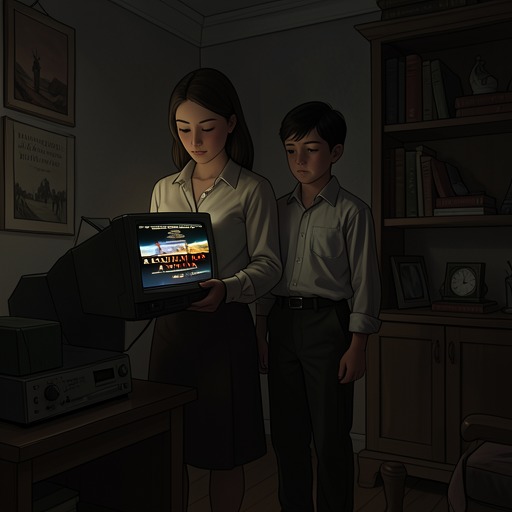
Later, Sara arrives at Abe’s shop with two neighborhood boys to help push the television and its stand home. She has only three dollars with her and gives the money to Abe, who enters the payment in a small book labeled with her name and the television. Its many pages record years of money given to Harry for the set and payments Sara has made after redeeming it. The ledger turns the repeated action into a visible history: each return home has been purchased through another payment, and the pattern has persisted over several years.
Abe asks why Sara does not tell the police that Harry keeps taking the television. She refuses. Harry is her only child and her only living relative, she explains, and she fears that criminal punishment or confinement would expose him to people who might make him worse. She continues to imagine him as a good boy who will eventually settle down with a suitable young woman. Her refusal protects Harry from the immediate consequence Abe proposes, but it also leaves the cycle intact: the television can be taken again, and Sara will once more have to decide whether to recover it.
The television as a daily necessity
Once the boys have left, Sara chains the television to the radiator again, adjusts its antenna, and returns to her viewing chair. She watches commercials and a soap opera, attending closely to smiling families, clean homes, food, health, and domestic happiness. The set is not simply an object she wants back from the pawn shop. It supplies the scenes through which she imagines a more secure life for Harry and herself, and she gives up meals to afford its return. On one evening, a television dinner and the reassuring image of a happy couple make her glad to have the set, even as checking her money shows that she will have to go without lunch for several days.
The same reliance on television deepens beyond ordinary viewing. As Sara’s fantasies become increasingly vivid, figures from the screen appear to step into her shabby apartment and inspect it with disapproval; the imagined audience and cameras make her feel exposed and ashamed. Later, she wears her red dress and gold shoes, keeps the television on, and rehearses an imagined public success as a quiz-show contestant. The set that Harry repeatedly removes and Sara repeatedly redeems is thus also the screen through which she pictures recognition and a different future.
A cycle without resolution
The repeated pawning links Harry’s pursuit of money to Sara’s hope of keeping her family life intact. Each removal interrupts her access to the television; each redemption restores both the set and the conditions for her habitual viewing. Harry and Tyrone’s joint effort to transport it, Abe’s ledger of advances and repayments, and Sara’s return to the viewing chair give the pattern distinct stages, from extraction to repayment to renewed attachment.
Sara’s chaining of the television acknowledges the risk without breaking the arrangement. Her reluctance to report Harry, his readiness to take the set, and her willingness to sacrifice necessities to recover it sustain a loop in which the object changes hands but the underlying conflict remains. The television is at once collateral, a source of cash, and Sara’s daily access to an alternative life; its repeated disappearance and return expose the cost of preserving that private refuge.