Heroin addiction and withdrawal
Requiem for a DreamHeroin addiction and withdrawal are portrayed as a cycle that narrows life to the next supply, the next injection, and the effort to avoid becoming sick. For Harry Goldfarb, Tyrone C. Love, and Marion Silver, heroin brings warmth or relief that lasts only briefly; its absence turns ordinary time into anxious waiting and bodily distress. As the supply tightens, the need for a fix shapes how they handle money, treat one another, and put their bodies at risk. The novel’s account moves between the intimate rituals of use and the exposed misery of withdrawal, showing dependence not as an isolated habit but as a force that steadily displaces other purposes and attachments.
The Cycle of Use and Relief
Heroin use becomes organized around injection and its immediate effects. Harry and Marion shoot up together at home, then drop their drug-injection equipment into a glass of water. When Marion is trembling too much to inject herself reliably, Harry ties her up, rubs her arm until a vein rises, and helps guide the needle. Once the drug takes effect, the cold and panic recede; after a shortage-driven night in the streets, the warmth makes Marion feel secure again. The relief is real, but temporary: soon the two are discussing how much they have left and how to obtain more.
The recurring argument over how much to use reveals the cycle’s practical trap. Harry says they need to sell some of their supply to raise money for the next purchase. Marion, frightened by the prospect of being left without a morning shot, wants to keep it all. Their decision to use more than they can comfortably spare is not presented as a single misunderstanding: they have repeated the same routine many times, and the immediate desire to get high repeatedly overrides the later need to replenish their supply. Harry’s suggestion that Marion take pills and hot chocolate instead of injecting exposes the limits of substitution. Both understand that these alternatives will not satisfy the particular compulsion to shoot up.
Need, Deception, and Relationships
Dependence corrodes trust even between people who share drugs and hardship. During the street scramble, Harry and Tyrone hold back some of their money from each other, each claiming to have less than he does. Later, when they are both searching for a connection in the snow and sleet, one may deny having anything to spare even as the other is visibly sick. The withholding is a small act of self-protection, but it makes their partnership less dependable precisely when they most need one another.
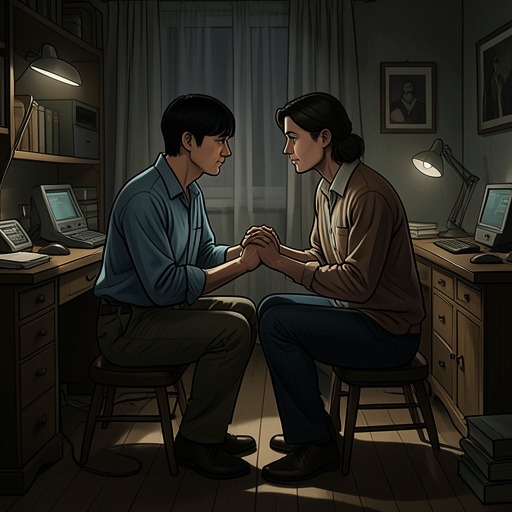
Harry and Marion’s relationship is similarly caught between care and resentment. He helps her inject when her hands shake, and later, after she has injured her arm trying to shoot up, he again prepares the injection and lets her take control of the dropper. Yet they also blame each other over using the last of their supply and over who must go out to find more. Marion’s increasing fear of being without heroin becomes its own pressure on the relationship: she asks whether Harry’s prospective source will sell, and whether what he obtains will last. Her plea for a more secure supply leads toward a transaction with Big Tim, who has heroin but will not sell it. Harry tells himself that Marion is free to make her own choice, while recognizing his discomfort with the arrangement; his reasoning does not remove the economic pressure that makes the offer seem necessary.
Scarcity and the Cost of Procuring Heroin
As the shortage intensifies, obtaining heroin becomes a repetitive street ordeal. Harry and Tyrone search through freezing weather, moving between possible connections and trying not to miss the person who may have drugs. They sometimes find a supply within hours; at other times they spend the night looking. Around them, thousands of sick users are also trying to get drugs or money for drugs. Abandoned buildings hold people who have died or are dying, but Harry and Tyrone keep their attention on the search, then use and sell what they can before beginning it again. The dead bodies mark the danger of the surrounding crisis, while the men’s continued searching shows how completely immediate need has overtaken attention to anything else.
For Marion, scarcity also changes what she is willing to do for a supply. At Big Tim’s apartment, the opulence of the room and the view contrast with the desperation that has brought her there. After smoking hash and drinking chartreuse, she is expected to exchange sexual acts for heroin. She becomes nauseated and frightened during the encounter, but returns to Big Tim after vomiting because she still needs the drug. Later, at a sex party, the presence of other women and the ease with which she participates trouble her; once she receives her share, heroin quickly suppresses that disquiet. These episodes show both her active efforts to secure a supply and the constraints imposed by dependence: the exchange offers immediate access, but the drug then makes it harder for her to hold onto the meaning of what she has done.
Withdrawal and Physical Collapse
The most sustained picture of withdrawal comes after Harry and Tyrone are arrested in the South. Their last fix is already a couple of hours behind them when Harry realizes he cannot get more. With more than twenty-four hours without sleep, a painful gangrenous arm, and the effects of both uppers and heroin, he deteriorates rapidly. His tongue dries against the roof of his mouth; his knees buckle when he tries to stand; nightmares begin before he is asleep. He slides to the floor as his infected arm swings in front of him, while his pain and exhaustion give way to delirium.
Tyrone’s withdrawal takes a different but equally punishing form. He suffers stomach cramps and diarrhea in the filthy cell, tries to clean enough of the toilet to use it, and vomits when the stench overwhelms him. Chills, sweating, nausea, and repeated cramps leave him doubled over and then collapsed against the steel wall. The cell’s squalor intensifies the bodily ordeal, while the two men remain wrapped in separate pain rather than able to comfort one another.
Their vulnerability is compounded by the guards’ violence. When Harry is taken from the cell, a guard twists his infected arm behind his back until he screams and passes out. Tyrone reaches toward him and is struck and kicked before being cuffed. By the time they are brought before a doctor, Harry’s arm is green and foul-smelling, and he is stumbling in delirium. Withdrawal here is not simply the aftermath of a private habit: it unfolds alongside infection, confinement, and abuse, leaving the men with no control over either their supply or their treatment.
What Addiction Displaces
The novel places this cycle beside earlier possibilities for connection and purpose without claiming that a single loss explains dependence. Tyrone remembers his mother, who sang and comforted her children, and Harry recalls his own mother warming him after cold winter walks and having hot soup ready. These memories bring tenderness into a later scene of heroin use, but the warmth they evoke is distinct from the brief physical relief the drug provides. In the same conversation, the men share these recollections while preparing for another night’s work, a juxtaposition that holds companionship and dependence together rather than resolving one into the other.
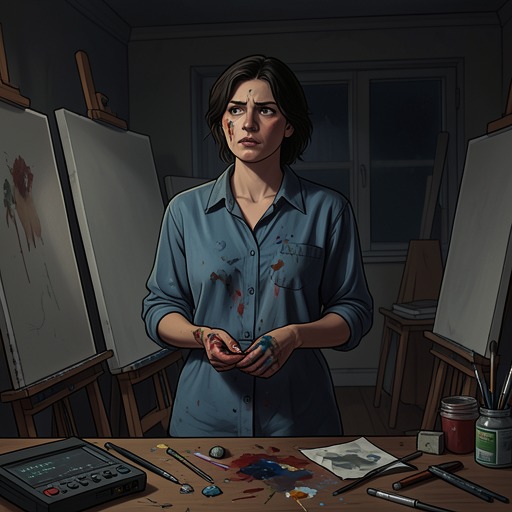
Marion’s remembered life in Italy makes another kind of loss visible. In Naples, looking toward Capri, she recalls discovering a sense of purpose and spending summer and fall painting. When inspiration faded, she traveled farther south, gave away her paintings and equipment, and returned to the United States unable to recover that earlier feeling. Later, her sketch pads and pencils and her plans for a coffee house occasionally return to mind, but she pushes them aside to focus on her stash. Her drug use therefore occupies space once held by creative work and future plans, even as those memories continue to surface.
The distinctions between these experiences matter. Sara Goldfarb repeatedly struggles to recover her television after Harry pawns it, but that recurring conflict concerns her attachment to television, not heroin use. The book sets different forms of compulsion alongside one another without making them interchangeable. In the heroin cycle, the recurring pattern is especially stark: use offers a short-lived refuge, scarcity renews fear, and the effort to secure the next supply carries further costs. The men’s arrest makes that pattern bodily undeniable, while Marion’s transactions and her abandoned artistic ambitions show how it reaches beyond withdrawal into the relationships and purposes it gradually displaces.