Heroin withdrawal
Requiem for a DreamHeroin withdrawal in Requiem for a Dream is the ordeal that exposes how thoroughly heroin has organized Harry Goldfarb and Marion Silver’s lives. When their supply falters, abstinence is not an abstract resolution but a mounting bodily crisis: they try to stop, reinterpret their distress as temporary, and return to the drug for immediate relief. The cycle makes dependence visible precisely as they insist they can still choose when to quit.
Scarcity and Failed Attempts to Stop
The pressure begins with a shrinking supply. Harry and Marion are accustomed to having heroin in the house for the next morning, even when getting more has become difficult. As their business yields less, they use much of what they obtain themselves; their telephone rings with requests, but there is not enough to meet demand and reliably keep them supplied. On a night when promised heroin does not arrive, they face an unfamiliar prospect: waking with nothing in the house.
Their first attempt to stop is framed as resolve. Marion, Alice, and Harry go to sleep intending not to use. The next day, they rise around noon, smoke marijuana with their coffee, watch television, let the hours pass, and attend to the runny eyes and noses that accompany their discomfort. By midafternoon, they tell themselves they have proved they can manage without heroin. The shortage, they decide, is no reason to panic; they return to using. The crucial reversal is not that the discomfort has disappeared, but that they recast a few hours of abstinence as proof that they remain in control.
A week later, another attempt collapses even sooner. Harry and Marion wake early with panic in their stomachs, burning eyes, and running noses. Before they are dressed, they are back to using. They explain the relapse by saying that this is the wrong time to stop: they have too much to do and feel unwell. Quitting is postponed until their circumstances are better, while an occasional taste is presented as a way to get through the present. Their justification keeps the idea of stopping alive even as each new crisis defeats it.
The Body Without Heroin
The withdrawal episode after the missed supply gives that crisis its most sustained physical detail. Harry and Marion have only saved cottons available. They try to preserve them for morning through an exertion of will, aided by sleeping pills, downers, and marijuana. Their sleep is shallow and difficult to distinguish from wakefulness. They sweat, feel freezing, and experience pain at the backs of their heads and in their stomachs; nausea keeps threatening to erupt, though there is nothing to bring up. Their anxiety intensifies until it fills their chests and seems to cut off their air.
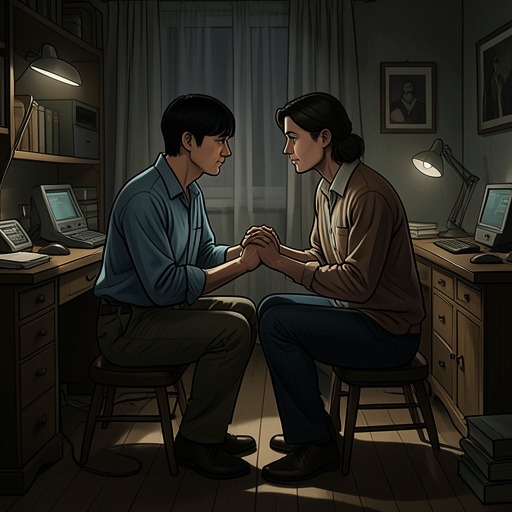
Marion finally bolts upright, gasping. Harry turns on the light and asks if she is all right. She says she must have had a bad dream, but her body is still heaving with each breath. The suggestion that they use the saved cottons arrives as a shared permission: they have made it only partway through the night, and each can feel that the other has helped authorize giving in. What began as a game of saving the cottons has become, in their minds, a lifeline. They get up to divide them, rationalizing that they are using earlier than planned because the other has effectively suggested it.
The scene’s force comes from the gap between their explanations and what their bodies show. They say they could stop, only not now; they call the return to heroin an occasional taste, though panic and physical distress have already shaped the decision. The drug brings relief, but that relief also strengthens the cycle: the more unbearable abstinence feels, the more persuasive the promise of immediate ease becomes.
Relief, Ritual, and Denial
Heroin use is presented not only as an answer to discomfort but as a repeated domestic ritual. Harry and Marion prepare the cooker, heat and stir the solution, draw it into a dropper, and inject it. The sequence gives them something to do together and makes them feel part of a shared routine; afterward, they feel whole, safe, and invulnerable. Against the pain and disorientation of withdrawal, that promised wholeness helps explain the drug’s pull without making the consequences less stark.
Scarcity exposes the dependence that the ritual had helped conceal. Harry and Marion wait for calls, monitor the television as time passes, and try to appear casual when the phone rings. When Harry learns that Tyrone C. Love has returned with heroin, the room’s tension dissolves. Marion says she could use fresh air and goes with Harry. On the ride, both try to dismiss the recognition that they are hooked, turning instead toward the anticipated warmth of using. At Tyrone C. Love’s home, they eventually ask about the supply and take bags. Their return is driven not by a settled plan but by the relief of knowing heroin is available again.
Dependence and Its Consequences
For Marion, fear of being sick in the morning becomes part of the circumstances surrounding her sexual exchange with Big Tim. On the way to his apartment, she is apprehensive but reassures herself that he will provide the heroin he promised. She has already used with Harry, which makes the prospect of doing what is required seem bearable. During the encounter, she becomes physically repulsed and vomits; afterward, she is frightened that Big Tim may be displeased and that she may not receive the drug. She returns to him and completes the act, motivated by the heroin she expects to obtain.
At the later sex party arranged by Big Tim, Marion is disturbed both by what she has done and by how easily she did it. Once she gets her share and uses, the disquieting feelings dissolve. The sequence does not make withdrawal the only cause of her choices, but it shows how dependence narrows the immediate horizon: fear of being sick, access to heroin, and the prospect of relief govern decisions that carry their own emotional cost.
Withdrawal thus functions as more than a temporary interruption between doses. It repeatedly tests Harry and Marion’s claims of control, turning an intention to quit into delay, negotiation, and relapse. Their bodily distress is real, but so is the social and emotional world organized around securing heroin, using it together, and finding brief warmth in its effects. Each return eases the immediate crisis while making the next attempt to stop harder to sustain.