Love
Requiem for a DreamLove in Requiem for a Dream is a source of recognition, tenderness, and imagined possibility, but not a guarantee of rescue. The book presents love as a way of seeing the human being beneath degradation or appearance; it also places that hope among dreams that can be overwhelmed by addiction and suffering. Richard Price’s introduction emphasizes the compassion with which Hubert Selby Jr. renders people at the margins, while a scene between Harry Goldfarb and Marion Silver gives that compassion an intimate form: each feels seen by the other and imagines a different life becoming possible.
Humanization and Compassion
Richard Price connects the book’s emotional force to Selby’s capacity for love understood as forgiveness and compassion. In his account, Selby’s characters include people who are lost, depraved, cold-blooded, or seemingly insensate, yet the writing humanizes them rather than treating them as beyond sympathy. That act of recognition extends from the characters to the reader: to feel for those who might otherwise be dismissed is part of what the book asks its audience to experience.
Price describes Requiem for a Dream as tracing the destruction of four people, three young and one older. Their attachments are not confined to other people: they are also addicted to drugs, to hope, and to childish visions of heaven on earth. This range makes love a complicated part of the book’s emotional landscape. The longing for a better life can be genuine and affecting even when the dream sustaining it is fragile. Price warns that foreseeing the characters’ suffering does not spare the reader from experiencing it; compassion persists alongside the knowledge of degradation and loss.
Love as the Book’s Central Concern
The filmmaker’s account of adapting the novel identifies love as its principal subject, more specifically the consequences of love going wrong. While working through the story’s structure, he found that events expected to bring a character something good instead brought something bad. He consequently understood the character arcs as inverted: the decisive opposing force was not Sara Goldfarb, Harry, Tyrone C. Love, or Marion, but addiction itself. He described the book as showing addiction triumphing over the human spirit, and imagined the film as a monster story in which the monster has no physical body and lives inside the characters’ heads.
That framing clarifies the precariousness of the novel’s loving relationships without reducing their tenderness to falsehood. Love can give people a language for hope and a reason to imagine change, while addiction acts as an opposing force with consequences the characters cannot simply wish away. The contrast is central: the book can make a moment of intimacy feel expansive and sincere, even as its larger account insists that sincere feeling does not ensure safety or a happy outcome.
Recognition Between Harry and Marion
In their conversation, Harry tells Marion that she is the most beautiful woman he has ever seen. What matters to Marion is not the compliment alone, but that it comes from him. She explains that praise from other people has meant little, even when it may have been sincere, because she feels they respond to her appearance rather than to her inner self. She has been treated as a beautiful body whose beauty is supposed to settle every question of pain or unhappiness. Her mother, too, has treated beauty as if it should make everything all right.
Harry’s attention gives Marion a different experience. As he strokes her head and caresses her cheek and neck, she says that she feels he recognizes a real person within her. For her, love means being seen as someone with feelings, needs, and a mind, not as a beautiful object. Her comparison with a painting sharpens the distinction: beauty on the outside cannot answer the needs of a living person. She believes that Harry’s words carry meaning because she feels his understanding behind them.
Their understanding is mutual, though expressed through different hopes. Harry says Marion could make his life worthwhile and give it a reason beyond the streets. He does not want to spend his life hustling or become a floating crap game; he wants to become something, even if he has not yet worked out what. Marion wants to be loved for who she is, while Harry imagines her presence helping him become who he wants to be. Their closeness briefly joins those desires.
Shared Dreams and Their Limits
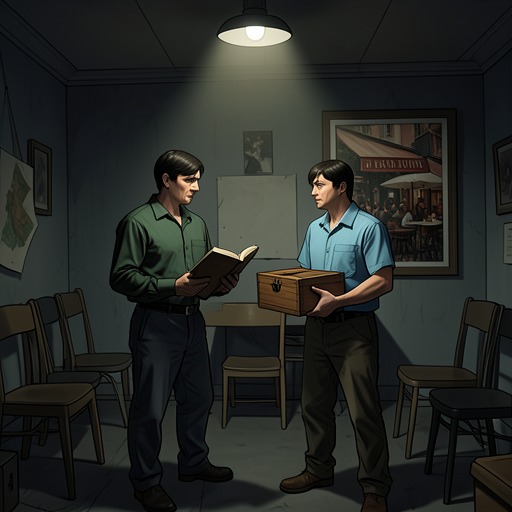
Harry gives their shared hope a concrete shape: a coffeehouse-theater with food, pastries, and coffees, hot chocolate, and teas from around the world, alongside evening performances and mime. Marion eagerly adds paintings by young artists, sculpture, and poetry readings. They discuss beginning locally and perhaps opening another place in San Francisco once the first succeeds. The plan is still tentative, and Harry says that they first need money; nevertheless, their exchange turns a vague wish for a different life into a project they can picture together.
The scene’s physical tenderness and imagery enlarge that possibility. They kiss and hold one another; Marion feels loved, necessary, warm, and alive, while Harry feels real and substantial, as though loose pieces are beginning to fall into place. Though they remain on the couch, their shared feeling becomes an imagined landscape of sky, stars, moon, a hill, woods, and a flower-studded field. The darkness seems to recede as they hold to each other and to each other’s dreams. This is not presented as a change in their circumstances: it is a moment in which intimacy makes an alternative to those circumstances feel imaginable.
Immediately afterward, the narrative turns to Sara Goldfarb waking refreshed from what may have been a beautiful dream. She imagines birds, switches on the television, and checks for her television papers, though the mailbox is empty. The transition places the lovers’ shared vision beside another character’s hope for a changed life. In both cases, longing has emotional force; the contrast does not make the feeling unreal, but it underscores how much depends on dreams whose fulfillment is uncertain.
Thematic Significance
Love in the book is neither merely romantic feeling nor a simple cure for suffering. In Price’s account, compassion is the means by which Selby makes people who seem unlovable visible as human; in Harry and Marion’s exchange, love is the experience of being recognized and the shared imagining of work, art, and a future beyond the streets. Yet the adaptation’s account of addiction as the characters’ enemy places a limit around that hope. The novel’s tenderness matters precisely because it does not erase the danger surrounding it. Love can momentarily make people feel whole and give their dreams form, while the larger story asks what happens when those hopes meet forces they cannot master.