Marion buys art supplies to resume drawing
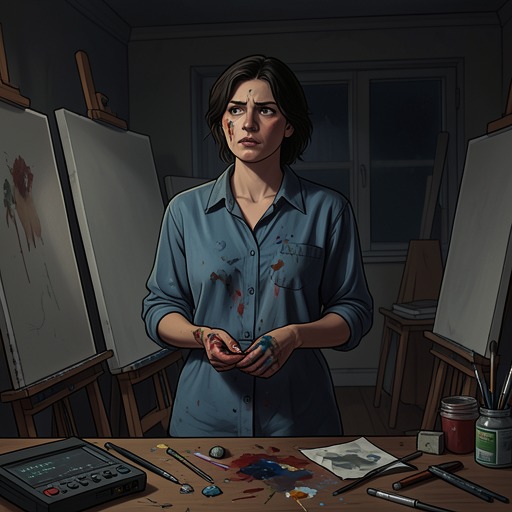
Requiem for a DreamMarion Silver’s purchase of drawing supplies marks a deliberate attempt to return to art after a long estrangement from it. The materials are modest—sketch pads, pencils, charcoal, a sharpener, and fixative—but the decision carries the weight of a larger recovery: she is trying to regain a way of seeing that once gave her life direction. Her renewed ambition is vivid and specific, yet it remains a beginning rather than a completed artistic return.
The memory behind the purchase
After Harry Goldfarb and Tyrone C. Love leave the apartment, Marion tidies the cups and coffee pot and sits listening to music. An unfamiliar but welcome feeling leads her back to memories of Italy, especially the light she experienced at a restaurant on a hill in Naples, looking toward Capri. She recalls the Mediterranean colors, the warmth of the sun, and the music of Vivaldi, Gabrieli, and Monteverdi. In that setting, she first felt fully alive and recognized a purpose: to paint and dedicate her life to doing so.
The memory gives her present desire a history. Through that summer and fall, she painted throughout the day and walked streets where even stones and pebbles seemed to possess life and meaning. She spent evenings with young artists, poets, and musicians, when conversation and argument made life feel immediate and tangible. The scene she remembers is not simply a picturesque past; it is the period when artistic work connected her to a sense of purpose and to the world around her.
That connection later failed. As winter came, her inspiration seemed to drain away, and a blank canvas became only stretched material rather than a painting waiting to be made. She traveled farther south, to Sicily and North Africa, trying to follow the sun back to the feelings she had lost. Returning to Italy did not restore them: she gave away her paintings, equipment, and books, then spent a week at the Naples restaurant looking toward Vesuvius, Capri, the bay, and the sky. Wine and sunlight could not rekindle the vanished feeling. Her return to the United States was a return, in her memory, to a dulled life.
Choosing materials and a medium
Against that history, the shopping trip supplies a practical form to Marion’s renewed purpose. She buys sketch pads, pencils, charcoal, a sharpener, and a spray can of fixative. She considers pastel chalks but does not choose any of the available ones; she can look for them later. The selection is a working kit for drawing, not a complete studio setup, and its incompleteness reflects the early, tentative stage of her return.
Marion has no intention of buying oils before she has a studio. For now, she wants to work in watercolor, a medium whose delicacy and fragility appeal to her. She imagines painting a single rose, either standing in a slender vase of translucent blue Venetian glass or lying on velvet, with only a hint of shadow. The image is carefully specified but still imagined: the purchase equips her to begin sketching, while the rose remains a possible subject rather than a reported finished work.
She also imagines browsing downtown art-supply stores, touching and smelling canvas, stretcher strips, easels, and brushes without needing to buy them yet. That anticipated browsing makes the return larger than the immediate purchase. She wants to re-enter the physical world of artistic materials, but she distinguishes between what she can use now and what must wait until she has a studio.
Recovering the artist’s eye
Marion describes sketching as a way to reanimate eye and hand. As she walks, she feels an urge to draw what she sees and attends to the shapes of noses, eyes, and ears; the planes of faces and the curves of necks; and, especially, hands. Her attention to hands is grounded in a long-standing artistic interest. As a child, she saw Michelangelo’s Creation and was struck by the image of God giving life to Adam through the attitude of two hands. She later tried to carry that expressive relation into her own work.
Her aim is not merely to copy appearances. She wants the attitude of a human or other subject to communicate something about the painting, allowing her inner feelings to reach the canvas and her sensitivity to be seen and felt. This account clarifies why the supplies matter: the pads and pencils are tools for recovering a particular kind of attention, one that seeks meaning in gesture and form rather than treating what is visible as inert material.
A renewed purpose, not a completed return
When Marion remembers leaving Italy, she shivers at the return to what she calls the dulled brilliance of her life. In the apartment, however, that memory gives way to joy. She feels that the past is over and that her life once more has a reason, a direction, and a need for her energies. She and Harry imagine recapturing the blues of the sky and sea and beginning a new renaissance together. The art supplies belong to that hopeful projection: they turn an inward conviction into an immediate, practical intention.
The scene also places her artistic revival beside the couple’s drug-centered routine. Harry and Tyrone work nights while using stimulants, and Harry returns in the morning to spend hours making love to Marion before taking sleeping pills she has supplied. Marion’s preparations for art therefore occur within a precarious domestic life rather than after it has been resolved. The purchase establishes renewed desire and a possible discipline—sketching, observing, choosing a medium—but the evidence does not show her completing a painting or restoring the life she remembers. Its significance lies in the change from bare canvas as a dead surface to the renewed possibility of looking, drawing, and making.