New York City's heroin shortage
Requiem for a DreamNew York City's heroin shortage begins as a threat to Harry Goldfarb and Tyrone C. Love's modest dealing business and grows into a citywide emergency organized around the need to secure the next dose. As supplies become weaker and harder to find, the partners lose the distinction between selling and using; for Marion Silver, scarcity narrows the available choices until obtaining Heroin becomes the immediate measure of what she can endure. The shortage is not merely an interruption in commerce: it makes dependence visible as a force that reshapes daily routines, relationships, and the streets themselves.
From Profitable Supply to Diminishing Returns
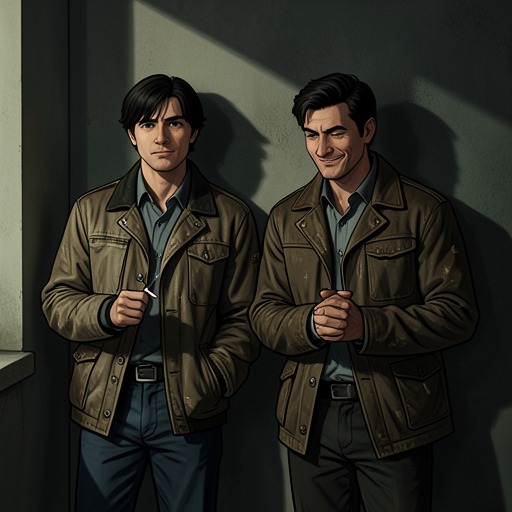
The first blow is a decline in quality. Brody tells Tyrone that the Heroin he can obtain has been cut, and that no one can secure uncut weight. The explanation he has heard links the change to a robbery: men took several keys from the Jefferson brothers, tried to sell quickly, and used dynamite in the process; the Jeffersons retaliated. Whether or not this account explains the broader disruption, it signals that the reliable supply on which Tyrone and Harry counted has changed. The new product cannot be cut by more than half if it is to remain usable, and their first injections do not bring the rush they expect.
Their response reveals how thoroughly the business is entangled with their own dependence. They use more of the product to test it, and joke that the poor quality will save them milk sugar. By the time they have taken what they want, less remains for sale. The proceeds barely exceed expenses, but they tell themselves that they have money put away and may soon be able to buy by the weight, find dynamite again, and build toward a pound of pure Heroin. That imagined recovery keeps the operation alive in their minds even as the supply has already begun to undermine its purpose.
Scarcity Becomes Daily Routine
The possibility of restoring the business recedes as winter sets in. Harry goes out mainly to find Heroin, and each source seems to disappear for one reason or another. They abandon the pound-of-pure plan and then the hope of buying uncut weight; even bundles become rare. When they do obtain some, they increasingly use it themselves rather than sell enough to cover their own costs. Their savings, once a reassuring reserve, dwindle until they feel they have almost nothing.
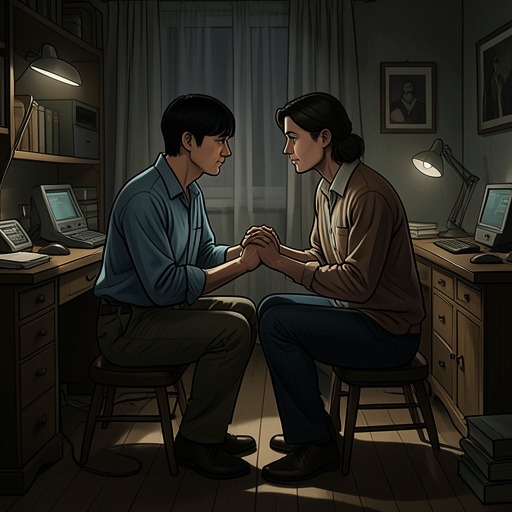
The shortage also changes the texture of life at home. Harry, Tyrone, and Marion spend much of their time using Heroin, watching television, or listening to music; Marion sometimes tries to draw, but her hand moves while the rest of her seems detached from the task. They continue, occasionally, to discuss their plans for a coffee house, but the projects no longer organize their days. Instead, the process of preparing injections becomes a domestic ritual: opening the bag, adding water to the cooker, fitting a collar to the dropper, heating and drawing up the solution, and finding a vein. The familiar sequence makes them feel whole and safe, yet its repetition also shows how completely their routines have narrowed around the drug.
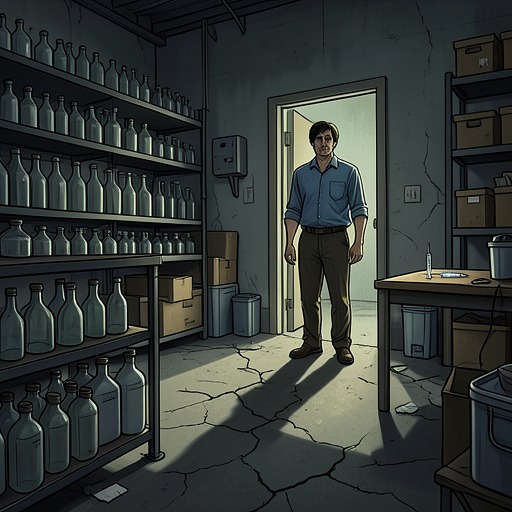
The explanation for the shortage remains uncertain. Harry and Tyrone hear competing accounts, including a fight between Italian and Black gangs and rumors of a large seizure from a ship. Each story sounds plausible, but none changes what they can obtain. Their practical knowledge is reduced to the immediate fact that supply is failing. They hope the city will return to its former condition because money is involved, but that confidence cannot make Heroin appear.
Withdrawal and the City Under Siege
Eventually the shortage reaches their most basic expectation: that there will be Heroin in the house when they wake. One night, promises from several sources lead nowhere. They have no supply, only saved cottons that they consider using; through effort, sleeping pills, and marijuana, they decide to keep the cottons for morning. Sleep offers little relief. They shake and sweat, feel cold, and experience pain and nausea that intensify their panic. When Marion bolts upright gasping, Harry turns on the light and asks whether she is all right. They consider using the saved cottons, and the prospect of withdrawal has already displaced the ordinary calculation of whether to take a dose.
What happens inside their room is part of a wider collapse. The streets fill with people searching for anything they can obtain, including in snow and sleet. Sick, shivering figures crowd hallways; small fires burn in abandoned buildings where people try to keep warm long enough to find Heroin. Getting a supply is only one danger. A person who succeeds must also carry it somewhere safe, since others may break in to steal it, with violence on either side of the encounter. The narration describes a city becoming more savage with each passing day, its deserted buildings resembling a battlefield and its neighborhoods like places under siege.
Scarcity produces violence without making the drug a simple commodity: when dependence has made it feel necessary, each dose becomes a fiercely contested means of temporary survival. Robberies increase, police presence grows, and people are shot while trying to steal television sets. Bodies fall, are searched for anything useful, and may be left to freeze. The account expands from the streets into the people themselves: the enemy is described as operating within bodies and minds, consuming the will even as the craving drives people toward actions they do not want to become. The citywide crisis thus makes private dependence legible as a public condition, not an isolated misfortune.
Marion's Exchange Under Conditions of Scarcity
The shortage also changes what obtaining Heroin asks of Marion. On the way to Big Tim's apartment, she is apprehensive but concentrates on the promised supply and on avoiding being cheated. Harry feels relief that they will not have to search the cold streets, alongside discomfort at the thought of Marion having sex with Big Tim. He argues himself toward accepting her choice as her own, while still reaching over to rub the back of her head. The moment keeps both sides of the arrangement in view: Marion acts to secure drugs, but the circumstances that make the exchange necessary are shaped by their dependence and the diminishing supply.
Big Tim receives Marion on the twenty-second floor of a large apartment building, in a spacious home overlooking Central Park. The scale of the setting differs sharply from the cold streets and scarcity that have brought her there. He offers drinks and hash; she takes them while trying to steady herself, and the drugs and alcohol ease her immediate concerns. When the encounter turns toward sex, her response changes: she becomes repulsed, feels sick, and goes to the bathroom to vomit. She is trembling and afraid, but returns because she still needs the promised Heroin. Her actions are neither presented as uncomplicated freedom nor reduced to passivity; the scene shows a decision made within dependence, with the drug as both the object of the bargain and the force that makes completing it seem possible.
At the later gathering arranged by Big Tim, Marion is unprepared for what she will be expected to do with the other women. She is disturbed not only by the experience but by how easily she has gone through with it. Receiving her share of the Heroin nevertheless makes the ordeal seem worth it to her, and after returning home she uses the drug to dissolve her unease. She tells herself that the supply will last and that she can have more whenever she wants. The shortage has made that promise especially powerful: temporary relief is recast as dependable access, even as the circumstances of acquiring it show how precarious that access is.
Significance
The shortage operates through successive losses: weaker product, diminished earnings, disappearing sellers, depleted savings, and finally nights without a dose. Each stage narrows the characters' horizon from a future business or shared project to the immediate effort to obtain enough for themselves. Harry and Tyrone's remembered ambitions persist in talk, but their daily conduct increasingly serves the next injection; Marion's exchange likewise converts a relationship and a promised supply into a means of avoiding sickness.
By moving between the partners' domestic rituals, Marion's constrained bargain, and the violence of the streets, the narrative gives the shortage both intimate and collective scale. Scarcity does not simply remove Heroin from circulation. It intensifies the dependence that makes its absence dangerous, organizes people around the search for it, and exposes how quickly the hope of control can become a routine of survival.