New York street heroin shortage crisis
Requiem for a DreamNew York street heroin shortage crisis transforms addiction from a recurring private need into a citywide contest for access, money, and survival. Rumors promise that heroin will soon return, but the prospect of relief brings its own price: inflated costs, exposed relationships, and desperate choices. As the shortage persists, Harry Goldfarb and Tyrone C. Love pursue supply through the winter streets while Marion Silver obtains heroin through sexual exchanges, each narrowing the distance between getting through the day and losing what had once made life seem worth living.
Rumor, price, and expectation
The crisis first takes shape as word moving through the city. A story spreads that Harlan Jefferson has arranged for heroin to be released for the Christmas season because, as the rumor has it, he is a good Baptist who would not want people to go without. The account is not confirmed, but its persistence makes it believable to people who need it to be true. Expectation becomes a temporary resource: the possibility of supply gives street users a reason to endure another day.
The promised release comes with conditions that expose the distance between hope and access. Buyers are told to arrive at ten the following night in a vast area of deserted, crumbling buildings, to purchase at least half a piece for five hundred dollars. The price makes a small, familiar purchase impossible; users who can usually scrape together money for a couple of bags must suddenly find hundreds of dollars. Harry and Tyrone have seven hundred dollars between them, yet still cannot see how to cover the added cost and remain in business. Rather than ending the scramble, the rumor intensifies it, sending people hustling for money and considering purchases from those who manage to buy in bulk.
The shortage in the winter streets
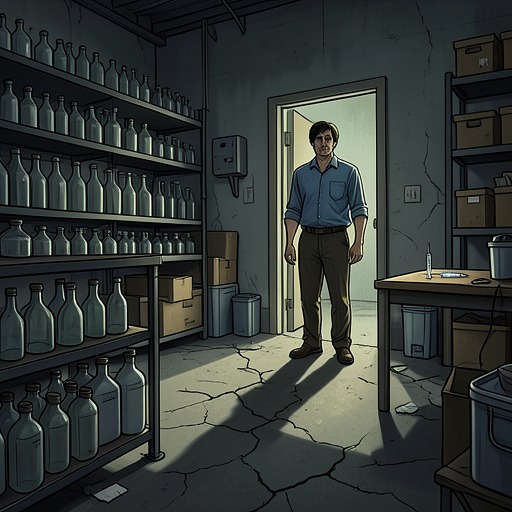
When the expected relief fails to end the shortage, the crisis settles into a punishing routine. The radiators click without warming the rooms, and people return to scuffling for only enough heroin to get straight. Harry and Tyrone spend hours outside in snow and sleet, stamping their feet and turning their backs to bitter wind. At one waiting spot, they will not risk entering a coffee shop because they might miss the seller; they also fear that lingering among other people could attract police attention. The search requires them to move and remain still at once: walking enough to find a connection, but not so far that they lose it.
The danger extends beyond exposure to the weather. Tyrone and Harry hear that police are active across the streets and avoid spending too long with anyone who might be carrying drug-injection equipment. When they eventually find a possible seller, rumors give wildly different estimates of the available supply, from a piece to a truckload, while also warning that the man will not sell it. The uncertainty keeps them waiting and negotiating in a market where even knowing that heroin exists does not mean it can be obtained.
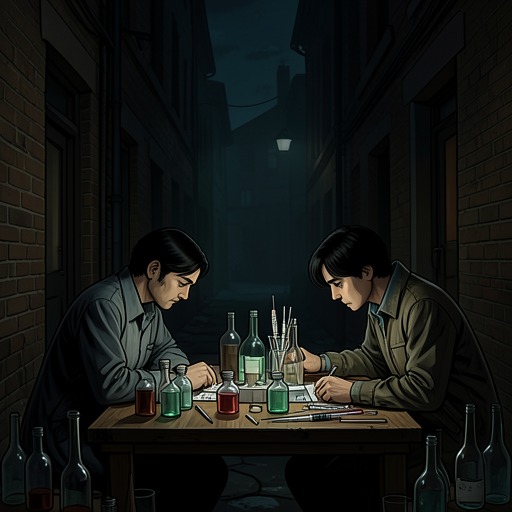
As the shortage continues, their partnership is corroded by the need to preserve individual reserves. Each holds money back while telling the other that it is all he has. If one is sick and asks for a taste, the other may claim to have nothing and imitate the symptoms of withdrawal to conceal what remains. They roam the streets in freezing conditions, sometimes missing a connection repeatedly and sometimes finding heroin within hours. When they do obtain it, they cut the bags as much as possible, use what they need, and begin searching again. Scarcity turns cooperation into guarded calculation without eliminating their dependence on one another.
The streets around them show the cost of the same cycle on a larger scale. Thousands of sick users search either for heroin or for money to buy it. Some who finally obtain drugs leave to get high but do not survive the attempt; dead bodies lie in the hallways and debris of abandoned buildings. Harry and Tyrone ignore them and keep moving. The narrative places the search, the bodies, and the repeated return to the streets in one unbroken pattern: even death does not interrupt the market’s demand on the living.
Bargaining with the body
The shortage also changes what obtaining heroin requires of Marion. When a Christmas supply is rumored, Harry proposes borrowing several hundred dollars from Arnold, Marion’s former therapist, and insists the money can be repaid within a day. Marion understands what Harry avoids spelling out: she may have to have sex with Arnold to secure it. Harry’s urgency overrides her hesitation. He argues that she can handle the encounter and treats the immediate need for heroin as decisive, leaving her to bear the bodily and emotional cost of the plan.
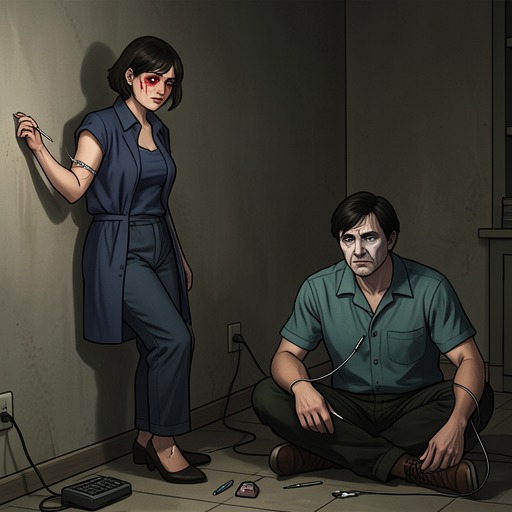
Later, as the shortage sends Harry and Tyrone back to the streets, Marion obtains heroin from Big Tim. On the way to his apartment, Harry tries to make himself accept what is about to happen, telling himself that Marion is free to do what she wants and that the arrangement is simply a way to get drugs. His insistence does not remove the conflict; it registers it. He resents the exchange even as he helps make it possible, while Marion is concerned that Big Tim will keep his promise and give her heroin.
The apartment’s scale and comfort sharpen the contrast with the cold search outside. Big Tim receives Marion on the twenty-second floor of a large building, in a living room with French doors overlooking Central Park. He offers her chartreuse and hash before the sexual exchange begins. The drugs and alcohol make the encounter temporarily easier, but when Big Tim makes clear what he expects, Marion feels a sudden repulsion and becomes sick. She returns from the bathroom frightened that the opportunity may be lost. Her need for heroin leads her to continue; the scene presents this as a decision made under dependence and scarcity, not as evidence that the discomfort has disappeared.
At the sex party Big Tim arranges, Marion is also unprepared for what she will be expected to do with the other women. Afterwards, she is disturbed both by the experience and by how easily she performed it. Yet once she receives her share of heroin, she decides the exchange was worth it, and the drug immediately dissolves her unease. The temporary relief is inseparable from the cost: access is secured, but each successful transaction makes the next one seem more possible and the old resistance easier to suppress.
From local scarcity to a search for supply
Harry and Tyrone eventually imagine bypassing New York’s street-level scramble. While waiting in wet snow, they hear the repeated claim that major dealers are in Florida, sitting in the sun with heroin withheld to drive the price up. The story offers them both an explanation for their hardship and a possible route out. Harry proposes going directly to the source, arguing that they could buy heroin before others arrive and then set their own price. Tyrone questions the plan: Miami is unfamiliar territory, a long drive, and potentially dangerous. Harry counters that the cold streets are already dangerous and that nobody else has thought of the opportunity.
The proposed journey is therefore not simply a business idea. It grows from repeated exposure to scarcity: waiting in the cold, hearing that large supplies are being held elsewhere, and believing that access to a larger source could end the daily scramble. The plan converts helplessness into action, but it also extends the same logic that governs the crisis. Harry imagines escaping the people who control the local supply by becoming a dealer with control over supply himself.
What the crisis reveals
The shortage is sustained in part by stories that cannot be verified: a charitable Christmas release, hidden reserves in Florida, and the promise that a particular connection is holding heroin. The novel does not make rumor equivalent to fact; it shows how need makes uncertain reports consequential. People act on them, gather money, wait in exposed places, and reorganize their relationships around a supply that may not appear.
Scarcity also reveals how differently the characters can pay for access. Harry and Tyrone risk money, police attention, cold, and increasing distrust of one another. Marion’s means of obtaining heroin involve sexual bargaining and direct bodily vulnerability. Her earlier memories of feeling alive while painting in Italy, and the abandoned sketch pads that sometimes come back into view, make that reduction especially stark: the aspirations remain faintly present, but the stash repeatedly displaces them. The crisis is not only a shortage of drugs. It is a narrowing of available choices, in which temporary relief demands more money, concealment, exposure, and compromise, and then renews the need that made those costs seem unavoidable.