Quiz-show application
Requiem for a DreamThe Quiz-show application gives Sara Goldfarb a tangible reason to believe that television fame is approaching, but it never delivers the confirmation she wants. She returns the paperwork after a caller tells her she will be a contestant, then waits for the promised details of a show and an appearance date. As those details fail to arrive, the application becomes less a completed step toward a real broadcast than the paper center of a widening gap between Sara’s expectations and her life.
The Application and Its Promise
The application enters Sara’s story as an official-looking form associated with a phone call. When Harry Goldfarb challenges her use of diet pills, she explains that she has received a call, been sent an application, and returned it; she treats the paperwork as proof that she is going to be on television. Her confidence is connected to a specific personal image: she will wear the red dress she wore at Harry’s bar mitzvah, the dress her late husband, Seymour Goldfarb, admired. The application thus joins a hoped-for public appearance to private memories of family and a time when that dress marked an important occasion.
The form’s promise also gives Sara a target for her dieting. She says the dress has shrunk and that she is losing weight to fit it, while Harry warns her that the pills are dangerous. Sara answers that they have already taken off twenty-five pounds and insists that appearing on television matters. In her imagination, the application does not merely invite her to compete; it confirms that she can become visible, admired, and a source of pride to her son. The document seems to make that future official even though it supplies no information about which show will feature her.
Waiting for a Reply
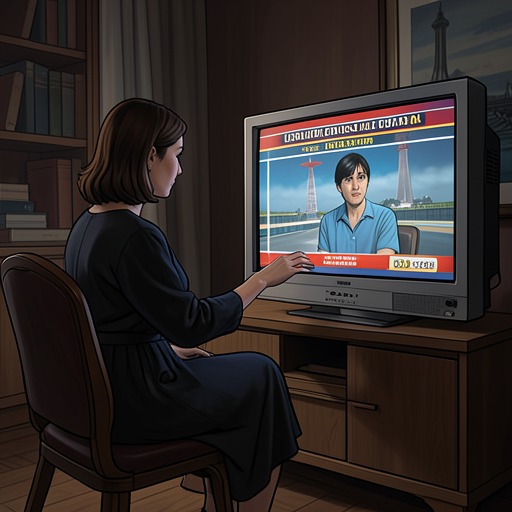
Sara’s expectation is sustained by delay rather than fulfilled by a scheduled appearance. She checks the mailbox carefully but receives no reply from McDick Corp. She nevertheless continues dieting and imagines telling people about the television opportunity. Later, even after she can zip the red dress closed, she still does not know what show she is supposed to appear on. She pictures inviting the ladies to watch on the set Harry gave her, and imagines preparing the foods he likes and welcoming his fiancée. The application’s silence leaves room for these imagined scenes to grow more detailed.
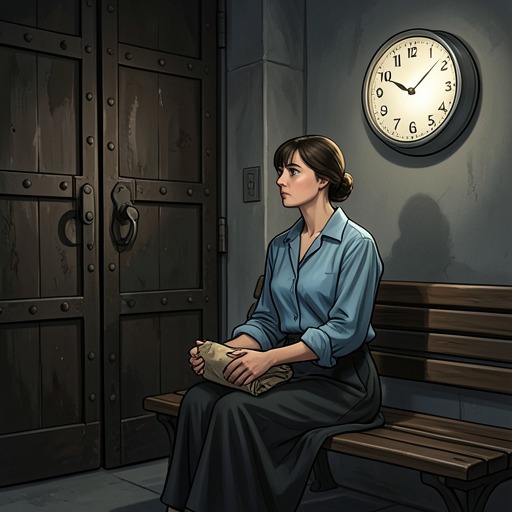
The missing information becomes a practical preoccupation. Sara calls McDick Corp. twice a week and receives the same answer: her application is being processed and she will be notified. The staff begin to recognize her repeated calls, but their private amusement does not reach her as confirmation or rejection. She spends money on coffee while eating very little, and increasingly turns to coffee as she waits for the promised news. The application therefore has consequences beyond the paperwork: its unresolved status helps organize her time, spending, and attention around a future that remains unspecified.
The Phone Calls and Uncertainty
When Sara finally calls to ask for Lyle Russel, the company cannot identify him in its directory. Her effort to trace the supposed television opportunity sends her through several transfers. She explains that a caller told her she would be a contestant and sent papers, which she returned a month earlier, but the people answering cannot tell her what show she will be on. The call produces no schedule or clear resolution. After she gives her name and address, an employee says the company will check and be in touch; Sara continues speaking even after the connection has ended.
That exchange leaves the application’s status uncertain. The employee eventually suggests that Lyle Russel may have been one of the company’s phone solicitors, but Sara still receives no definite account of what the original call meant or what will happen to her submission. She takes the promise that the company will be in touch as reassurance. The difference between the modest response she receives and the importance she attaches to it is stark: the paperwork is being treated as an inquiry to check, while Sara regards it as her route onto a stage.
From Paperwork to Television Fantasy
As the promised answer remains absent, Sara’s relation to the application shifts from waiting for ordinary correspondence to imagining herself already on television. She tries to watch quiz shows long enough to learn their format and picture herself crossing the stage, but cannot sustain the attention. In her imagined appearances, she answers questions with ease, receives presents, gives them to someone needy, and is applauded. She pictures photographs in the newspaper and her name on the news. The imagined broadcast supplies what the application does not: a complete public identity and an audience that recognizes her.
The widening fantasy becomes frightening as well as gratifying. Sara imagines television personalities and crowds entering her shabby apartment, inspecting it, and exposing its condition to millions of viewers. The application’s promise of public recognition is turned inside out: instead of being admired on a program, she feels displayed and shamed in her own home. Her fear that people are watching her accompanies the proud scenes in which she sees herself applauded, making the expected appearance a source of both exaltation and threat.
Narrative Role and Significance
The application’s importance lies in the contrast between its limited material facts and the expansive future Sara builds around it. The paperwork has been sent and returned; the caller has promised a television opportunity; the company has not named a show or supplied a date. Yet each unanswered interval allows Sara to invest more of herself in the expected appearance. The red dress, her dieting, the repeated calls, and the imagined applause all gather around the application as if it were evidence that the future has already been arranged.
Television has prepared Sara to trust such imagined endings. At home, she watches advertisements and soap-opera scenes that offer orderly domestic happiness, and a medical drama in which a mother’s fear is resolved by the doctor’s successful care. She takes comfort in the expectation that everything will turn out well. Against that habitual reassurance, the application offers no ending at all. Its unresolved promise exposes the distance between television’s ready-made resolutions and the uncertainty of Sara’s actual circumstances. The form remains an ordinary piece of correspondence, but in her life it becomes the fragile hinge between wanting to be seen and believing that the promise of an audience has already been made.