Sara Goes to Madison Avenue and Is Taken to Bellevue Hospital
Requiem for a DreamSara Goes to Madison Avenue and Is Taken to Bellevue Hospital is the point at which Sara Goldfarb’s television fantasy becomes a public medical emergency. Believing that someone at McDick Corp. has deliberately prevented her from appearing on a quiz show, she leaves her apartment in freezing sleet and reaches the company’s Madison Avenue offices. There, soaked, disoriented, and unable to be reassured, she is taken by ambulance to Bellevue Hospital. The journey exposes the distance between the triumphant future she imagines on television and the physical and institutional crisis unfolding around her.
The fantasy behind the journey
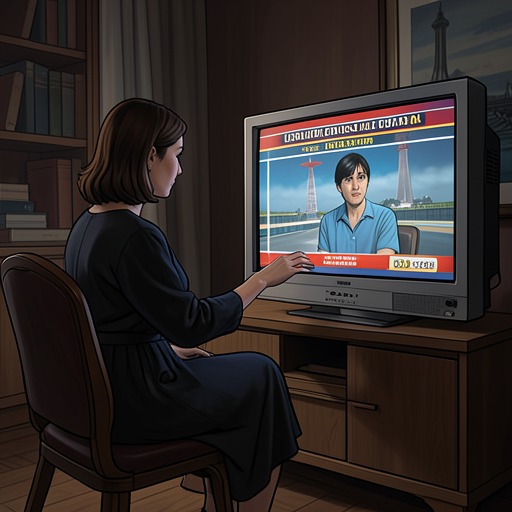
Sara’s conviction grows from a life organized around the television set. Its advertisements and domestic dramas supply her with models of beauty, family happiness, and abundance; even when she must skip lunch to keep the set, the television dinners and cheerful couples on screen make that sacrifice seem worthwhile. She imagines a future in which she appears on a show, wins prizes, gives them to people in need, and is celebrated by the public. The screen does not merely entertain her: it furnishes the script through which she interprets her hopes for herself and for Harry Goldfarb.
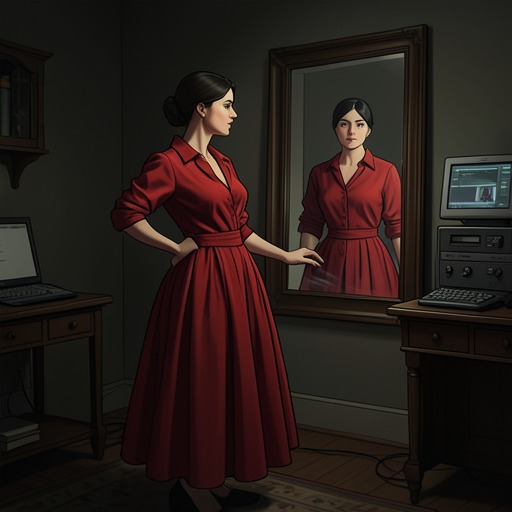
That imagined future has already begun to invade her apartment. In a recurring vision, Little Red Riding Hood and a television announcer leave the screen and inspect her shabby rooms with disapproval. Sara feels exposed and ashamed as the imagined audience follows them through the apartment; changing channels cannot change the picture. The episode makes visible how thoroughly the television’s promise of public recognition has turned into fear of public judgment. By the time Sara sets out for McDick Corp., she is no longer simply waiting for an invitation. She believes the company has interfered with her rightful place on television and that she must go there to discover who is responsible.
The trip to Madison Avenue
On the morning of her journey, Sara turns on the television, makes coffee, and takes her purple, red, and orange pills. After calling McDick Corp. and hanging up in confusion, she sits with her heart pounding so hard that she fears it will cut off her breath. She interprets the call as evidence that someone at the company is keeping her off television and has probably destroyed her card. The suspicion is not confirmed by anyone at the company; it is the explanation Sara constructs from her confusion and conviction that she belongs on the show.
She dresses for the trip as if the television appearance were imminent. Over Sara Goldfarb’s red dress she puts on sweaters and a heavy coat, wraps scarves around her head and neck, and squeezes her feet into the gold shoes over heavy wool socks. She presses through the cold and sleet without slowing down, then rides the subway describing her anticipated appearance and charitable purpose to fellow passengers, who continue to read or look out the window. At the Madison Avenue building, she reaches the reception area and asks why the operator is not putting through her calls and demands to see Lyle Russel. Her wet hair, sunken eyes, unsteady movements, and incoherent speech make the crisis apparent to the staff, even as Sara continues to insist that she is waiting to learn which show she will appear on.
Staff members try to soothe her and persuade her to go home. Sara refuses to leave without an answer. She sinks into a chair, sobbing that she does not want the prizes for herself and wants only to appear with Harry and her imagined grandson. Someone brings hot soup and helps her into a small office while a doctor is called. When ambulance attendants arrive, Sara speaks as if she were already walking across a stage and mistakes the situation around her for part of her television world. She asks for Seymour to collect her at the beauty parlor. The attendants help her to the elevator and ambulance, and she is taken through the weather and traffic to Bellevue.
Hospital admission and competing diagnoses
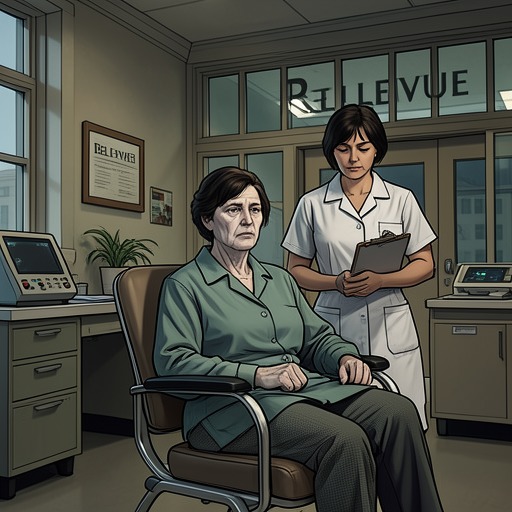
At Bellevue, Sara’s delusion isolates her from the crowded corridors and the suffering of other patients. She is wheeled through the hospital, examined briefly, and sent for psychiatric assessment. A doctor reads the admitting report, hears her try to explain the show and Harry, and labels her paranoid schizophrenic, recommending further examination and indicating that shock treatment is warranted. She is eventually placed in a bed in the locked ward, among patients visibly affected by heavy tranquilization, restraint, and distress.
A young medical resident examines Sara more carefully. He notices the flesh hanging from her upper arms and the hollows around her eyes and neck, asks about her recent weight loss, and listens to her heart. Sara connects her weight loss to wearing the red dress on television. In the course of the patient questioning, she tells him about the diet pills, her doctor, Seymour, Harry, and the television. He responds patiently and arranges for her to be transferred from psychiatric care to the medical service. A nurse then remarks that Dr. Reynolds has again recommended shock treatment and that the diet pills are the problem she sees in Sara’s case.
The resident’s assessment is later described by Dr. Spencer, who tells department administrator Dr. Harwood that Sara was disoriented, had been taking diet pills and Valium, and had not eaten a decent meal in many months. He says her condition is medical rather than psychiatric and that rest, nourishment, and time to clear the stimulants and depressants could restore her without shock treatment or psychotropic drugs. Dr. Harwood acknowledges that Dr. Reynolds’s orders have authority and refuses to intervene, even though Dr. Spencer argues that the proposed treatment is dangerous and unnecessary. The disagreement turns Sara’s admission into more than a mistaken first diagnosis: the hospital’s hierarchy obstructs the alternative treatment her resident believes she needs.
Consequences and significance
The journey converts a private fantasy into an encounter with institutions that read Sara in sharply different ways. At McDick Corp., staff see a visibly ill woman where she imagines a contestant awaiting her opportunity. At Bellevue, the first assessment treats her confusion as psychiatric illness and points toward shock treatment, while the resident connects her condition to weight loss, pills, and inadequate food. The distinction matters because the diagnosis determines what kind of care she receives, and Dr. Harwood’s refusal to back Dr. Spencer prevents the medical interpretation from simply correcting the initial one.
The red dress and gold shoes carry the imagined television future into the storm and the hospital. Sara wears the outfit as proof that the appearance she anticipates is near, but the soaked, wrinkled dress becomes part of the staff’s view of her acute distress. Her offer to give away the prizes and help the poor persists even as she is taken away from the company she believes has wronged her. The scene thus joins her sincere hopes for recognition and generosity to the delusion, physical deterioration, and institutional decisions that leave those hopes unfulfilled.