Sara's drugged and incapacitated state in the psychiatric hospital
Requiem for a DreamSara Goldfarb’s drugged and incapacitated state in the psychiatric hospital is not a single symptom but a worsening condition produced and sustained by the care imposed on her. Although Dr. Spencer identifies diet pills, Valium, and months without a decent meal as medical causes of her disorientation, Sara remains under psychiatric treatment: tranquilized, force-fed, and subjected to electroshock. Her body’s inability to comply is repeatedly mistaken for resistance, until institutional routines reduce her to a silent, immobile patient and finally carry her into a state hospital.
Diagnosis and Institutional Conflict
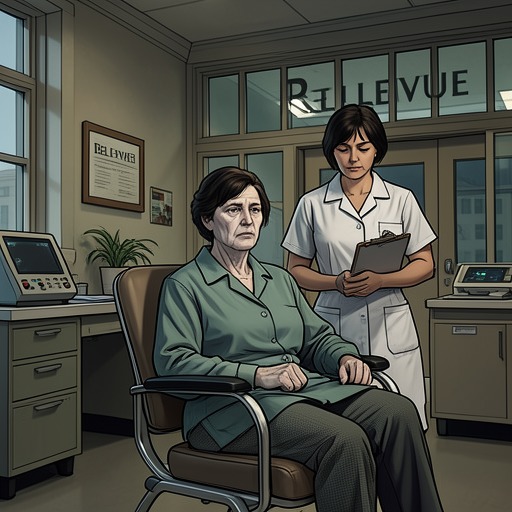
Sara enters the hospital completely disoriented. Dr. Reynolds diagnoses her as paranoid schizophrenic and recommends possible shock treatment. Dr. Spencer’s examination produces a different account: Sara has been taking diet pills and Valium and has not eaten a decent meal in many months. He orders her transferred to medical, arguing that rest, proper food, and the removal of the stimulants and depressants would allow her to recover.
The disagreement becomes consequential because Dr. Reynolds countermanded Dr. Spencer’s transfer order and issued a standing instruction that his orders be ignored. When Dr. Spencer appeals to Dr. Harwood, he explains that he has treated six of Dr. Reynolds’ patients with the same symptoms and causes medically, without shock treatment or psychotropic drugs, and that they recovered in less than a month. His account gives a concrete alternative to the hospital’s psychiatric approach, but it does not change Sara’s treatment.
Dr. Harwood frames the dispute as a matter of hierarchy and departmental stability. He says Dr. Reynolds is Dr. Spencer’s superior and insists that Spencer is powerless over his decisions. Even if Spencer is right, Harwood reasons, a few unnecessary shock treatments are less damaging to the department than conflict that might disrupt its operation. The contrast is stark: the patient’s health is set against administrative calm, and Harwood explicitly refuses to make Sara’s welfare the deciding consideration. The harm that follows is therefore presented not simply as the product of Sara’s illness, but as the result of a treatment system that receives a medical explanation and nevertheless proceeds as before.
Sedation and the Loss of Agency
Thorazine repeatedly blankets Sara in numbness just as she begins to approach a moment of clarity. Her limbs feel heavy and burdensome; exhaustion burns in her stomach, while her tongue is so thick and dry that speaking becomes painful. Her eyes seem pressed down, and what she can see is blurred, as if through a veil. She lies in bed, drifting between sleep and brief, confused efforts to sit up. The description makes the medication’s effects physical and immediate: awareness flickers, but her body cannot reliably answer it.
Eating becomes another ordeal. Unable to swallow or explain what is happening, Sara makes groans rather than words. Staff lift her and put food into her mouth; when it dribbles out, they hold her nose and close her mouth to force her to swallow. Her fear intensifies as she struggles to breathe and to obey a body that no longer has the energy to do what is demanded. The food cuts the corners of her mouth and gums. After several days, the approaching food cart itself makes her cringe in terror.
Dr. Reynolds interprets this incapacity as noncooperation. Looking at her chart, he tells Sara that she is not cooperating and suggests that her behavior is an attempt to obtain special treatment. She tries to lift an arm, raise herself, and explain that she cannot move or speak, but only inarticulate sounds come out. He closes the chart and orders another shock treatment for the next morning. The gap between what Sara experiences and what the institution records is central to her condition: signs of profound impairment are treated as misconduct, and that interpretation authorizes further intervention.
Electroshock and Coercive Care
Sara goes passively to her first shock treatment, unable to understand clearly where she is or where she is being taken. A brief possibility of orientation is repeatedly erased by another dose of Thorazine. On the way to treatment she is strapped into a wheelchair; her head falls forward as she is moved through corridors and an elevator. At the procedure room, blurred faces, lights, restraints, and equipment register through her confusion as danger, though she cannot effectively resist.
The treatment is narrated through Sara’s bodily terror. She is stretched onto a table and strapped down, with something attached to her head and something placed between her teeth. Electricity passes through her body; she feels herself stiffen and jerk against the restraints, while pain fills her head and ears. She cannot yell, plead, pray, or make a sound. The sequence refuses to make shock treatment an abstract clinical procedure: for Sara, it is an experience of being conscious enough to fear what is happening but too incapacitated to escape or communicate.
The same powerlessness continues around food and basic bodily needs. When staff stop trying to feed her by mouth, they strap her into a wheelchair and insert a rubber hose through her nose into her stomach. Sara retches and gags; her hands are tied to the chair when she reaches for the tube. The restraints remain tight against her wrists and chest. Unable to speak through the hose or summon help, she struggles for hours against her bladder and bowels. When she loses control, a nurse condemns her and leaves her sitting in the chair. Two days later, Sara is still restrained, her head hanging and her tears marking her gown, awaiting another shock treatment. The supposed management of her care has become a sequence in which distress elicits more restraint rather than recognition of what she needs.
Institutionalization and Aftermath
After completing the series of shock treatments, Sara sits on the edge of her bed and stares through gray windows at gray sky, ground, and bare trees. She sometimes shuffles to the nurses’ office and stands watching from the wall. When a nurse asks whether she wants something, Sara can barely manage a response; she crouches, struggles to shape her face into a smile, then returns to her bed. The effort to smile is one of the few actions she can still attempt, but it does not restore contact: the nurse sends her back and resumes her work.
A judge signs the order committing Sara to a state mental hospital. The transfer is rendered as a chain of waiting and procedures: she is awakened early, taken to the basement, moved through lines, given clothes, and put on a bus. She stares ahead as familiar streets pass, then is led through cold, damp tunnels into a crowded ward. There she stands still, staring at gray walls among people who shuffle, sit, squat, stand, and stare. Her world has contracted from the corridors of the hospital to the repeated routines of transport, waiting, medication, and observation.
Ada visits with food, including lox, cream cheese, bagels, blintz, danishes, pastrami, chopped liver, and hot tea. Sara stares, tries to smile, and takes a large bite of a sandwich, chewing with a clacking sound as mustard runs from the corners of her mouth. Ada and her companion recognize that the woman before them is Sara, yet they cannot reconcile her appearance with the friend they knew: bones protrude, her hair hangs lifelessly, and her eyes seem clouded and unseeing. They wipe her mouth and sit with her, but the visit cannot bridge the distance created by her condition. When they leave, they cry together.
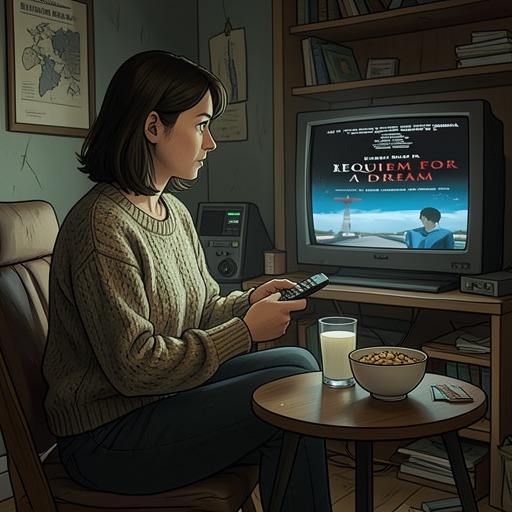
The medication routine continues inside the state hospital. Sara shuffles along with the others, receives Thorazine, and is watched swallowing it before she can leave. She wraps her arms around herself and enters the television room, where some patients already sit with their heads on their chests while others laugh or cry. Sara stares at the screen. The television, once an object of concentrated attention in her home, remains in her field of vision, but the attentive viewer has become one more medicated figure in a room of patients. Her incapacitation thus ends not in recovery, but in institutional custody, diminished connection, and a life organized around sedation and enforced dependence.