Seymour Goldfarb
Requiem for a DreamSeymour Goldfarb, Sara Goldfarb’s husband and Harry Goldfarb’s father, is already dead when the novel’s present action unfolds. He has no independent scenes; instead, he persists through Sara’s recollections, the family identity she invokes, and the conversations she imagines sharing with him. In those moments, he represents both the happiness she associates with her marriage and the absence that makes her present life feel lonely.
Identity and Family
Sara remembers Seymour as the person with whom she shared years of joy and the parent who, with her, wanted the very best for Harry Goldfarb. Her references establish a family history whose surviving members have been separated by death and distance: Seymour is gone, and Harry has left home. Sara’s married name, Mrs. Seymour Goldfarb, remains part of how she understands herself, even as she tries to imagine a new life on television.
The details of Seymour’s life are sparse. Sara recalls that he became sick and died not long after seeing her in the red dress at Harry’s bar mitzvah. The text does not identify his illness or give a fuller account of his death. His significance comes instead from the memories and meanings Sara attaches to him: a husband, a father, and the absent center of a family she continues to imagine as intact.
Marriage in Sara’s Memories
As Sara prepares to begin her diet, her thoughts move from the prospect of television to recollections of Seymour and their years together. She remembers Harry as a baby, prays for both her husband and son, and recalls the delight of caring for her child. Her memories then widen into a shared past with Seymour: the summer before the wedding, Mardi Gras, her first visit to Coney Island, the sun, and a ride on the carousel.
That excursion remains vivid through several senses. Sara remembers the sun and the sound of the carousel, and feels that the day was somehow different from other days they had spent together. She also recalls Seymour grabbing her and saying things that the narration does not specify. The memory conveys intimacy without supplying a precise exchange; the marriage is rendered through Sara’s warmth, laughter, and sense that many days together had their own distinct character.
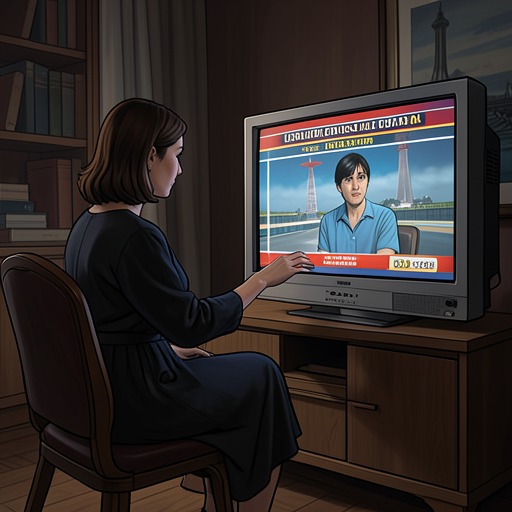
These recollections are not simply a record of the past. In bed, Sara addresses Seymour as if he could share her excitement about appearing on television. She tells him that her hair will be made nice, that she may remain on the program for a long time, and that the opportunity feels like a new life. Her imagined confidant makes the future she anticipates seem connected to the marriage and family she has lost.
The Red Dress and Family Memory
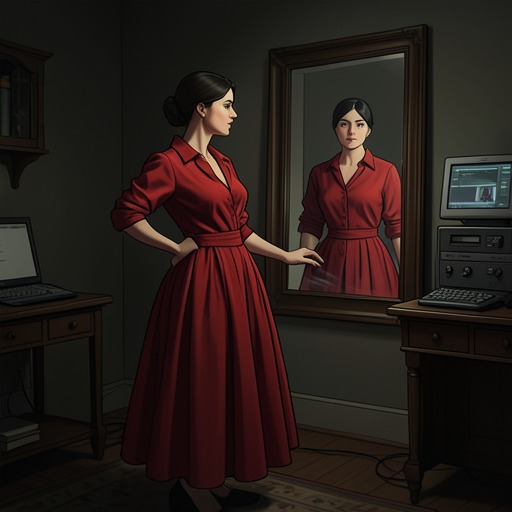
The red dress binds Seymour’s memory to a particular family occasion. Sara tells Harry that Seymour saw her wearing it only once: at Harry’s bar mitzvah. She remembers that he liked the dress, and the occasion joins her husband’s attention to her pride in their son. Now she hopes to wear it on television, so a garment from the family’s past becomes part of the future she is trying to construct.
For Sara, the dress is more than a measure of weight loss. She explains to Harry that television gives her a reason to get up in the morning, to lose weight, to smile, and to believe that tomorrow can be all right. Her desire to fit into the dress therefore gathers several attachments together: Seymour’s remembered approval, Harry’s bar mitzvah, and the hope of being seen and valued again. The evidence does not show Seymour encouraging her present plan; it shows Sara carrying his remembered regard into it.
Absence and Imagined Conversation
Seymour also appears as the person Sara addresses when she cannot accept what is happening around her. After Harry removes the television set, she sits with her eyes closed, rocking, and insists to her dead husband that the loss is not happening. She casts the interruption as a commercial break and assures him that the program will return and everything will work out. The language of television turns into a refuge in which she can speak to Seymour and postpone confronting the loss of the set.
That scene contrasts with the tenderness of her earlier memories. There, recalling Seymour brings back the carousel, their marriage, and the joy of raising Harry; here, the same imagined relationship helps Sara deny an immediate disruption. In both cases, Seymour is not shown answering her. The one-sided address reveals how she uses memory to sustain an absent family presence, whether to savor happiness or to reassure herself when reality becomes difficult to bear.
Legacy in Sara’s Present
When Harry visits, Sara names the loneliness Seymour’s death has left behind. She says she is alone, that Seymour is gone and Harry is gone, and that she has no one to care for. Cooking matters to her because it would mean making food for someone: she imagines preparing borscht and stuffed fish for Harry and his fiancée if they visit. Her account makes domestic care a continuing expression of attachment, while also showing how little opportunity she feels she has to practice it.
Sara’s hope that Harry will return for dinner briefly gives that care a future. She is glad that he has a partner and a business, and tells him that his father and she always wanted the best for him. The reunion does not restore Seymour or the family life Sara remembers, but it lets her speak from the shared identity of Harry’s parents. Seymour’s narrative presence thus remains consequential without becoming independent of Sara: he is the remembered husband who gives her past its warmth, the missing person who sharpens her isolation, and the family bond she invokes as she tries to imagine that life can still turn out well.