Television-fame fantasy
Requiem for a DreamTelevision-fame fantasy is the future Sara Goldfarb builds around the possibility of appearing on a quiz show: a future in which losing weight, wearing her red dress, and being seen by others make ordinary life worth enduring. The imagined broadcast first supplies companionship and purpose, then turns into a spectacle of scrutiny that deepens her fear and shame. Its force comes not from any confirmed television appearance but from how completely Sara organizes her life around one she expects to happen.
Television as a model of happiness
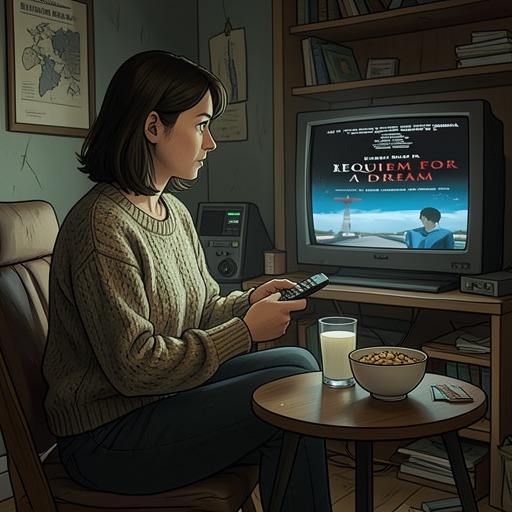
Before the quiz-show hope dominates her days, television gives Sara ready-made scenes through which to imagine family life. Watching commercials and a soap opera, she studies people brushing their teeth, a thin and wholesome-looking wife, and a husband delighted by a spotless kitchen and dinner. She silently recasts these images as advice and reassurance: Harry Goldfarb should eat more, find a nice Jewish girl, and settle down. When the television couple shares a meal, Sara is happy for them, even though she has to go without lunch for several days to keep her own set. The television is both entertainment and an object she sacrifices for, while its domestic stories fill the room with a version of happiness she lacks.
The imagined quiz-show future grows out of that habit of treating television as a guide to how life can turn out. Sara pictures the show bringing prizes, public attention, and a reason to dress up; most important, it offers a goal around which she can arrange her days. When Harry visits, she explains that winning is not the point. The prospect gives her a reason to get up, lose weight, fit into the red dress, and smile about tomorrow. Her account makes the fantasy more than a wish for prizes or celebrity: it answers the loneliness she names when she says that Seymour is gone and Harry is gone from her daily life. She has no one to cook for, and the possibility of television recognition promises a role and an audience in place of the intimate life she misses.
The promised appearance and its daily rituals
Sara’s expectation becomes a social event even before any appearance is confirmed. She checks the mailbox, stays on her diet, and waits for information about which show she will be on. Outside, a dozen neighborhood women can gather around her to ask about it. She takes the place of honor they keep for her, looks up and down the street for the mailman, and responds to their questions with regal gestures. When the mailman says there is nothing for her, she does not abandon the expectation; she continues telling her friends how soon she will fit into the red dress. Their attention gives the anticipated appearance a public life of its own, although no letter arrives to make it real.
Her diet-pill routine intensifies this sense of forward motion. After taking a red pill with coffee, Sara feels energetic and young, imagines cleaning the apartment, then brings her chair outside to tell the women about her newfound lightness and freedom from hunger. She bounces up and down among them, embraces the woman who recommended the doctor, and keeps watching for the mailman. The neighbors’ concern that she sit down and rest briefly interrupts her excitement, but not her conviction that news is coming. The ritual binds the fantasy to visible changes in her body and behavior: pills, coffee, weight loss, the red dress, and the anticipated letter become parts of one project.
From anticipation to a private spectacle
The uncertainty becomes more threatening as the early energy gives way to physical distress. Sara experiences tremors, an unpleasant coating in her mouth, and a warning voice she cannot quiet by taking more coffee or another pill. Desperate to learn what show she is supposed to be on, she calls McDick Corp. and asks for Lyle Russel, the man she believes contacted her. The operators cannot find anyone by that name and repeatedly transfer her between departments. Sara cannot supply the name of the show or explain the call clearly. As the questions continue, she sweats, struggles to speak, and feels she is sinking into her chair. The call exposes the gap between the invitation she believes she received and the information the company can verify; it does not give her the confirmation she is seeking.
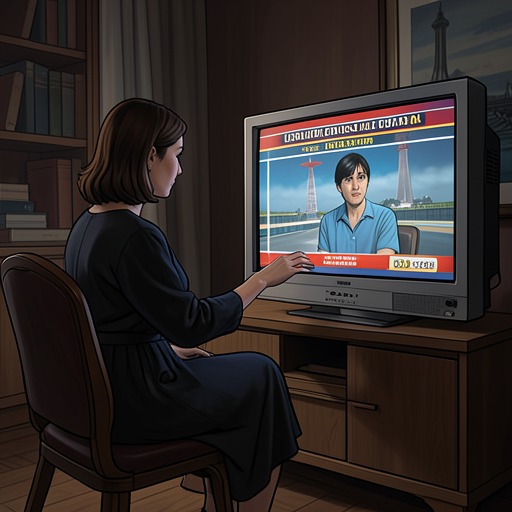
In the days that follow, the imagined broadcast enters her viewing room. Sara dresses in the red dress and gold shoes, watches quiz shows, and tries to picture herself crossing the stage to meet an applauding audience and announcer. Then the boundary between screen and apartment breaks down in her experience: a little red-clad figure and the announcer seem to step out of the television and inspect her shabby furnishings. Their looks and gestures register as condemnation. When a crowd and television cameras appear in the vision, cables stretch across her floor and the apartment seems to shrink around her. Sara imagines millions of people watching her attempt to change the channel, so that the hoped-for public appearance has reversed into public exposure. Instead of being welcomed for her answers, she believes she is being seen in her loneliness and poverty.
The breakdown culminates with Sara kneeling against the set, crying in the dress she wore at Harry’s bar mitzvah and pleading to be allowed on the show. The dress connects this imagined future to an earlier family occasion, while her posture makes the television both the object she clings to and the source of the judgment she fears. The longed-for audience does not offer recognition or rescue in this scene; it magnifies her shame.
Recurrence and significance
The fantasy persists after that collapse. Sara continues to wear the red dress and gold shoes, declines food brought by friends, and watches quiz shows as though studying for a real competition. In the version she sees on screen, she stands poised, answers questions, receives gifts, and gives the presents to someone needy; newspapers and television news cover her, while people in the street chant their affection. This imagined public generosity makes her a celebrated figure rather than the lonely woman she fears others will judge. Yet each morning she also closes the shades, peeks through the drapes, watches the refrigerator, and listens at the door for people she suspects may be spying on her. The fantasy of being loved by a mass audience runs alongside the fear of being watched without consent.
Television-fame fantasy therefore changes in function without losing its central promise of being seen. At first, television supplies domestic ideals and happy endings; the quiz-show prospect gives Sara a reason to diet and a story to share with her neighbors and Harry. As reliable confirmation fails to appear, the same screen becomes the stage for intrusive visions of exposure and disgrace. Her imagined fame cannot resolve the loneliness that first made it meaningful. Instead, the gap between the applauding audience she expects and the condemning audience she imagines turns hope into a source of distress.