Tyrone Is Sentenced to Hard Labor and Abused by Southern Guards
Requiem for a DreamTyrone Is Sentenced to Hard Labor and Abused by Southern Guards marks the point where Harry Goldfarb and Tyrone C. Love’s search for drugs becomes captivity under a punitive, openly racist authority. Arrested in the American South, they are mocked, beaten, and sentenced to three months on a work gang; Harry’s infected arm deteriorates while Tyrone endures heroin withdrawal under the guards’ control. Their confinement makes physical vulnerability a tool of punishment and turns a hoped-for return to New York into a struggle to survive each day.
From the Road to Arrest
Earlier, Harry and Tyrone’s journey south had already exposed their fear of being conspicuous. On a bus in the Bronx, Tyrone pulled Harry away from a seat near the driver, warning him that their behavior might draw attention and get them lynched. They made their way to the rear, apologizing as they passed other passengers, then tried to defuse the tension with jokes between themselves. That nervous performance foreshadows how little control they will have once their suspicions meet the hostility of the people who hold power over them.
At a gas station, Harry asked for fuel and the men’s room. The attendant claimed the restroom was out of order, while a mechanic stared provocatively and spat. Harry’s pain and confusion began to give way to rage, but Tyrone opened the car door and urged him to cool down. Harry got in rather than answer the provocation. The two men recognized the hostility as the South’s racial climate and drove on, worried about finding enough gas and trying not to lose their composure. The episode shows Tyrone’s restraint as practical self-protection: a confrontation could make an already dangerous journey worse.
The danger soon becomes explicit. A police officer entered the room where Harry was being held and demanded to know where he came from. When Harry answered that he was from the Bronx, the officer used racial slurs, said that local authorities did not want New York drug users there, and struck him hard enough to knock him down onto his injured arm. The officer then grabbed that arm and dragged Harry to the car, where Tyrone was already handcuffed. At the station, Harry asked to see a doctor; the booking officer laughed off the request and told him there might be a doctor on Monday. The delay leaves Harry’s worsening condition in the hands of a system that treats his pain as a joke rather than an emergency.
Sentence and Medical Neglect
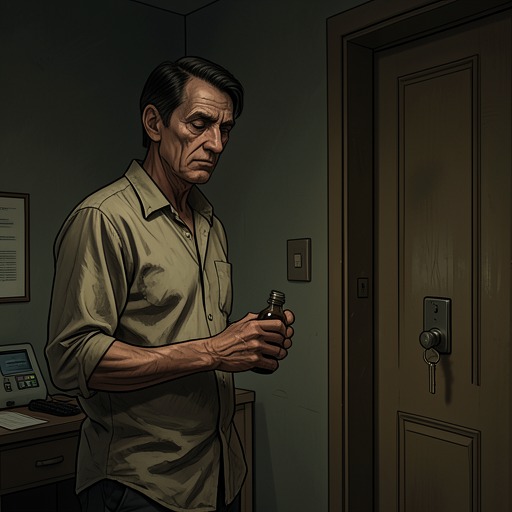
By Monday morning, Harry’s arm was turning green and giving off an odor. When a guard twisted it to handcuff him, Harry screamed and collapsed. Tyrone reached toward him and was struck with a club, kicked while on the floor, and warned not to raise his hands to a guard. The men were dragged to court, where Tyrone was offered a few weeks on a work gang if he pleaded guilty to vagrancy. He asked what had happened to their money: they had had more than a thousand dollars, but the report showed none. The unexplained loss compounds their powerlessness, as does the gulf between the brief sentence described during the plea and the punishment that follows.
The court-appointed representative told Tyrone that he and Harry would be examined by a doctor before being sent to the camp. Instead, both received three months on the work gang. In the jail’s back room, prisoners queued in chains while a doctor and guards joked, laughed, and drank Coke. The doctor asked each prisoner whether he could hear and see, then approved him for camp. When Tyrone stood before him, the doctor and guards mocked his injuries and demanded that he address them deferentially. Tyrone was furious, but understood that resistance could invite worse violence; sick and barely able to move, he concentrated on serving his time and getting home.
Harry’s examination exposed the severity of his arm without changing the humiliating routine. A guard pulled up his sleeve; Harry yelled and collapsed, only to be hauled upright again. The doctor ridiculed the smell and appearance of the infection, while the guards laughed. They said Harry should be taken to a hospital, but treated the remark as another joke and doubted he would live through the week. The scene makes the medical neglect concrete: an obviously deteriorating injury is visible to the people empowered to respond, yet their first reaction is mockery.
Work-Camp Abuse and Withdrawal
At the camp, Tyrone’s sentence becomes a daily ordeal shaped by withdrawal and forced labor. For weeks he feared he might die, while at other moments he feared he would not. Cold nights, aching bones, cramping muscles, and short, broken sleep preceded twelve-hour days with the work gang on a highway. At five in the morning a guard roused him by dumping him onto the floor, then sent the prisoners out to work. His illness did not suspend the labor; it made each day’s work harder to endure.
During the first week, cramps, diarrhea, and repeated retching left Tyrone weak, sometimes producing only bitter bile. When he fell from exhaustion, a guard laughed and taunted him, pushed his chin with a foot, and hauled him upright. The guard made clear that Tyrone was despised as a New Yorker and threatened him while he was too sick to defend himself. He even invited Tyrone to attack him, pointing to the back of his own head and pretending to offer an opening. Tyrone wanted to strike back, but could barely move through his spasms and knew the guard was waiting for an excuse to shoot him. The provocation was therefore not a fair contest: the guard controlled both the violence and the consequences of resisting it.
Other prisoners offered limited, practical help. One helped Tyrone to his feet and warned him not to take the guard’s bait, since the man could shoot him. With assistance from a few prisoners, Tyrone struggled through the workday. As time passed, the guards left him alone to work and serve his sentence, but that relative reprieve did not undo the conditions that had brought him close to collapse. His survival depends in part on fellow prisoners’ support and on suppressing the rage the guards continually provoke.
Consequences and Narrative Significance
The passage briefly places the men’s punishment beside Marion Silver’s separate effort to obtain heroin. After participating in the sexual gathering arranged by Big Tim, Marion returns home, takes her share, and lets the drug dissolve her unease. Her belief that there will be more heroin to come sharply contrasts with the enforced deprivation and bodily suffering of Harry and Tyrone. The parallel does not erase the difference between their circumstances; it shows how access to the drug offers Marion temporary relief while the men’s arrest has cut them off from it and subjected them to institutional control.
Tyrone’s nights bring a different kind of contrast. In an exhausted dream, he is a sick little boy held by his mother, soothed by her warmth and song and persuaded to take medicine. The imagined comfort briefly gives shape to safety and care, but pain drags him awake. For an instant the memory of his mother’s embrace remains; then it disappears into blackness, and he hears only his tears. The dream does not change the camp or release him from labor. It reveals how thoroughly his present has displaced the warmth he longs for, while the help of fellow prisoners remains the only care available in waking life.
Harry and Tyrone’s sentence thus grows beyond a legal penalty into a combined assault on health, dignity, and agency. Harry is carried toward medical treatment only after guards have handled his infected arm roughly and joked about his likely death; Tyrone is made to labor through withdrawal while guards exploit his weakness and racialize their hostility. Their arrival in the camp does not resolve the danger created by arrest: it extends it into a routine of cold, pain, coercion, and work. The episode turns their failed attempt to secure heroin into an ordeal in which the authorities’ treatment of their bodies becomes as immediate a threat as the addiction that brought them south.