the American South
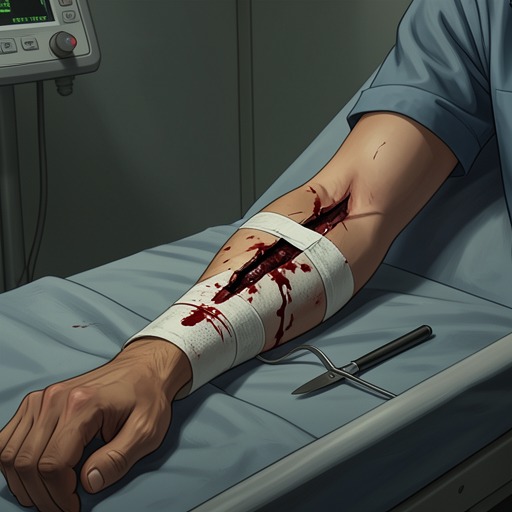
Requiem for a DreamThe American South becomes a landscape of danger for Harry Goldfarb and Tyrone C. Love as they travel in search of drugs. The journey’s meaning emerges less through broad description than through a sequence of encounters: a hostile gas station, a doctor who summons police instead of treating Harry, violent arrest, and the forced labor and abuse Tyrone later endures. Across these episodes, travel south exposes the men to racialized suspicion and coercive authority, while Harry’s infected arm makes the consequences immediate and physical.
A Journey South
The contrast between the men’s New York surroundings and the South is anticipated in an earlier bus ride through the Bronx. When Harry begins to sit near the driver, Tyrone pulls him away, alarmed that he might provoke danger. Their exchange plays on the word “south,” but Tyrone’s fear is not a joke: he imagines the threat of being lynched, and the two move to the back of the bus. The scene establishes how quickly a change of place can alter their sense of safety, even before their journey takes them into the American South itself.
On the southern road, the landscape is conveyed through practical pressures rather than scenic description. The men watch the fuel gauge, stop at successive stations, and travel through heat that leaves sweat running down their backs and sides. Harry holds his painful arm close to his body; Tyrone rubs and scratches his head. Their attention narrows to gas, the road ahead, and the prospect of finding a diner. The long stretches of driving become a passage through uncertainty, with the horizon seeming to remain out of reach.
Hostility on the Road
At one station, Harry asks for regular gas and directions to the men’s room. The attendant says the restroom is out of order, while a mechanic stares at the travelers and spits. Tyrone recognizes the hostility as part of the “solid South,” and Harry compares the encounter to a bad movie, invoking the Civil War as a contrast between the country’s supposed past and the prejudice they are facing. The mechanic’s stare turns an ordinary stop into a confrontation. Tyrone urges Harry to cool down; Harry gets into the car rather than responding, and they drive away tense and silent.
The next station offers no immediate relief. Its attendant leans against the pump and ignores the request to fill the car until Harry pays and they leave. The delay is brief, but after the first station it deepens the sense that even routine services are uncertain. The men’s silence lasts for minutes after they pull back onto the road. When Tyrone turns on the radio, the tension begins to ease. In these small roadside encounters, the South is experienced through dependence on strangers and the threat of refusal, not through any settled feeling of welcome.
Medical Care and Arrest
Harry’s worsening arm brings the travelers to a small medical office. He tells the nurse it is an emergency and says he fears losing the arm. The doctor examines it roughly, then leaves the room and calls the police. Rather than treating the infection, he interprets its appearance as evidence of drug use, notes Harry’s dilated pupils, and describes the two men in explicitly racist terms. His decision recasts a request for medical help as a matter for law enforcement.
The police arrive and separate the men into different rooms. An officer interrogates Harry about where he is from, strikes him, and knocks him down onto his injured arm. He then drags Harry out, handcuffs him, and puts him in a car; Tyrone is already cuffed there. The arrest makes the office’s change of purpose stark: Harry entered seeking treatment and is taken away in pain, while Tyrone’s presence beside him helps mark both men as targets of suspicion. At the station, Harry asks to see a doctor. The booking officer mocks the request and tells him there may not be a doctor until Monday. The delay leaves the infection untreated while Harry remains in custody.
Forced Labor and the South’s Power
Tyrone’s later experience in a labor camp extends the journey’s pattern from roadside hostility and arrest into sustained punishment. During the first week, he is weakened by cramps, diarrhea, and repeated retching. When exhaustion makes him fall, a guard laughs, pushes his chin with a foot, and hauls him upright. The guard’s taunts single him out as a New Yorker and make clear that the abuse is bound up with regional and racial antagonism. Tyrone is then expected to join a work gang for twelve hours on the highway despite his illness.
The American South thus links movement across distance to a shrinking ability to act freely. Harry and Tyrone depend on gas-station attendants, a physician, police, and guards, yet those encounters provide no dependable protection. Harry’s need for urgent care is subordinated to suspicion and custody; Tyrone’s withdrawal and physical collapse are met with humiliation and forced labor. The journey’s geography becomes inseparable from its power relations: the men are not simply passing through a region but are increasingly exposed to institutions and individuals who can deny assistance, impose violence, and control where they go.