
Justice and Retribution
RetributionThis thread traces how C.J. Townsend’s search for justice becomes entangled with revenge, legal limits, and the costs of pursuing a conviction at any price.
increasing Bearing strength in each event
 decreasing
Bearing strength in each eventdecreasingThe Unanswered Assault
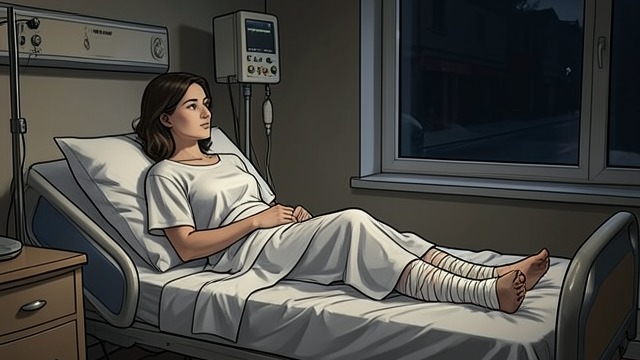
The Unanswered Assault
A crime without redress
The rape and near-murder of Chloe Larson leave her with catastrophic injuries, including an emergency hysterectomy, while the attacker escapes. The crime’s damage is both bodily and existential: it takes her sense of safety and the future she had imagined.
Justice deferred
The police investigation produces no arrest, and the case gradually loses institutional attention. Chloe repeatedly seeks updates, only to receive assurances that the investigation remains active. Her experience establishes the book’s central injustice: the victim must live with consequences while the perpetrator remains beyond accountability.
The passage of time does not resolve the crime. It changes Chloe’s name and career, but leaves the question of justice suspended until she recognizes William Rupert Bantling years later.
Justice Meets Its Deadline

Justice Meets Its Deadline
Recognition without recourse
C.J. Townsend recognizes William Rupert Bantling as the man who attacked her in New York. For a moment, identification seems to offer the possibility that an old crime can finally be answered. Instead, the Queens County District Attorney’s Office explains that New York’s limitation period has expired.
A legal boundary
The statute turns elapsed time into a barrier: C.J. may know who harmed her, but the state can no longer prosecute that assault. Her discovery is therefore both confirmation and deprivation. The legal system’s rules protect defendants from indefinitely delayed charges, yet here they leave a known victim without a remedy for her own case.
The dead end sharpens her focus on the Florida murder prosecution. If Bantling cannot be held accountable for what he did to her, she hopes the state can still stop him from harming others.
A Prosecutor’s Private Revenge
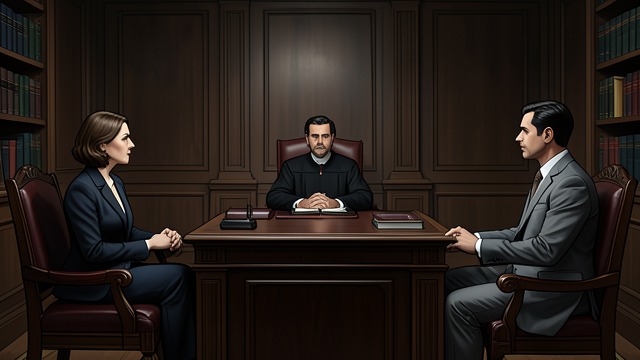
A Prosecutor’s Private Revenge
The conflict she conceals
C.J. understands that her personal history with Bantling creates a serious conflict, but fears that disclosure will remove her from a case she knows intimately. She decides to continue, telling herself she can prepare the prosecution correctly and that nobody can prove she recognized him from the start.
Justice compromised
The choice turns the pursuit of accountability into a moral risk. C.J. is not merely asking the court to convict a defendant; she is suppressing information that could affect the legitimacy of the prosecution. Her rationale—that a weaker or less experienced prosecutor might fail—does not erase the duty she knows she is avoiding.
Her decision reflects the danger of treating righteous purpose as permission. The case may protect future victims, but the means threaten the very fairness that gives a conviction its authority.
The Poisoned Search

The Poisoned Search
A case built on a false account
C.J. discovers that Victor Chavez did not have lawful grounds for the stop that led to Bantling’s arrest. The original anonymous tip was weak, and Chavez’s account of speeding and a broken taillight is a fabrication. Without the stop and search, the state may lose not only the body in the trunk but also the evidence found after the arrest.
A chosen compromise
Instead of exposing the misconduct, C.J. helps the officers replace their story with a version that may survive scrutiny. She sees the decision as a small sacrifice for the greater good: keeping a suspected serial killer behind bars. Yet the fabricated account threatens to make the prosecution an instrument of injustice even as it seeks a just outcome.
The compromise binds C.J. more tightly to the case. It also gives the defense a real vulnerability, demonstrating that a morally compelling defendant’s guilt does not make unlawful evidence lawful.
The Sentence and the Warning
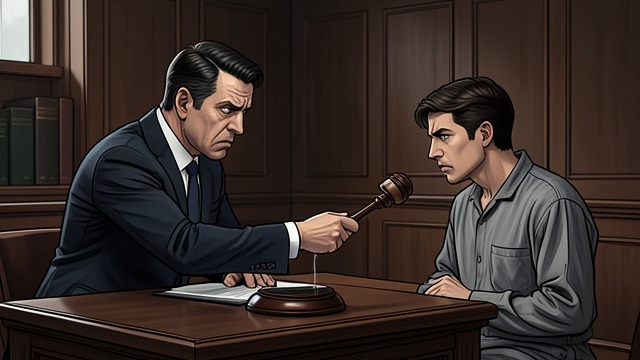
The Sentence and the Warning
Accountability achieved
After the discovery of Bantling’s victims’ hearts and photographs, the jury convicts him, and the court sentences him to death. The evidence shifts the case from a fragile prosecution built around one victim to a record that reveals a larger pattern of violence. C.J. has helped secure a judgment that can protect others from him.
Justice remains unsettled
Lourdes Rubio’s parting warning—that justice may choose not to look—recalls the compromises that helped make conviction possible. C.J. has won the case, but has not resolved whether its outcome vindicates her choices. Bantling’s later appeal is denied, yet the years of review ahead prevent the sentence from feeling like a simple ending.
C.J. says she will be present if the sentence is carried out. Her resolve suggests that justice has become inseparable from retribution, even as the novel leaves the moral cost of that union in view.
June 1988, after Chloe Larson’s attack
September 2000, after C.J. identifies Bantling
September 2000, before the grand jury indictment
September 2000, during Chavez’s prefile
Early 2001, after conviction and sentencing
