
Power as an Illusion
RetributionThis thread follows C.J.’s changing belief that control can protect her, through trauma, professional choices, and a final confrontation in which survival depends on action rather than mastery.
increasing Bearing strength in each event
 decreasing
Bearing strength in each eventdecreasingThe World Before
The World Before
Ordinary pressures
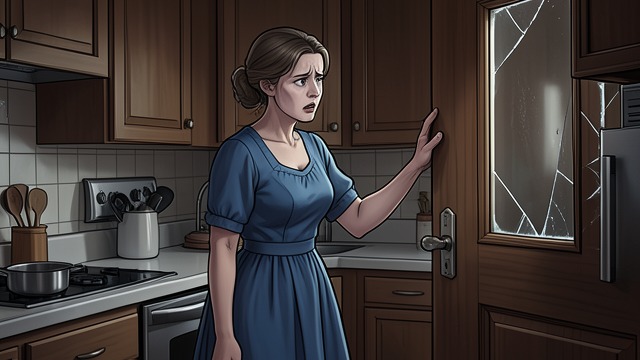
Before the attack, Chloe Larson’s life is shaped by ordinary plans: the bar exam, her relationship with Michael Decker, and the possibility of a future together. She moves quickly through familiar routines, assuming that effort and preparation will keep her life on course.
Security exposed
Her attacker has watched her and learned private details, turning the apparent familiarity of her home and habits against her. The intrusion reveals that the safety she relied on was never entirely under her control. A broken window latch and the attacker’s knowledge matter more than her plans or precautions.
The assault becomes the event that overturns her faith in predictability. The novel later gives this loss a name through C.J.’s reflection that power is an illusion.
The Cost of Avoidance
The Cost of Avoidance
A life narrowed by fear
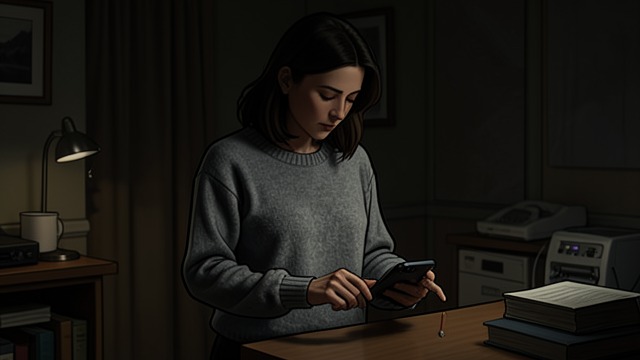
After leaving the hospital, Chloe relocates and tries to resume her studies, but ordinary settings trigger memories of the attack. She abandons the bar exam, withdraws from professional ambitions, and chooses night work at Marriott LaGuardia because anonymity and nearby people seem safer.
Control by retreat
Her precautions offer limited comfort but also shrink her life. She avoids places, relationships, and conversations that might expose her distress. When a caller appears to know her name, the old fear overwhelms her again, demonstrating that changing addresses cannot give her certainty about who is watching.
The choices are understandable responses to trauma, not failures of will. Their limits show how a search for control can become another form of confinement.
Power Claimed in Court
Power Claimed in Court
From victim to prosecutor
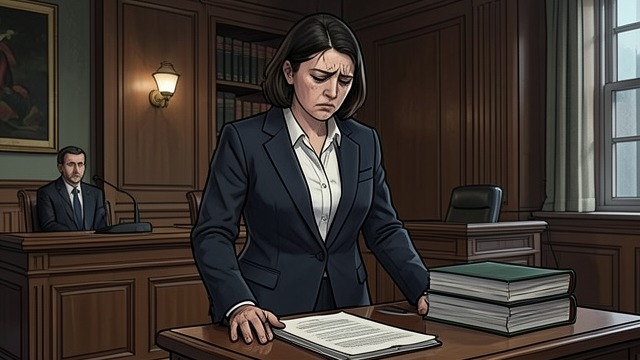
When C.J. learns that New York cannot prosecute her old assault, she feels that Bantling has taken even the possibility of a trial from her. She nevertheless holds an unusual position: she can prosecute the murders he is accused of committing in Florida.
Control through action
C.J. tells her therapist that she needs to regain a sense of control. She decides to carry the case through indictment, believing her knowledge and experience are essential. The decision gives her direction, but it also risks confusing personal agency with power over the case’s outcome.
Her confidence is therefore provisional. She can choose how to act, but she cannot guarantee a conviction, command the evidence, or control what Bantling will reveal.
The Case Slips Away
The Case Slips Away
The illusion of preparation
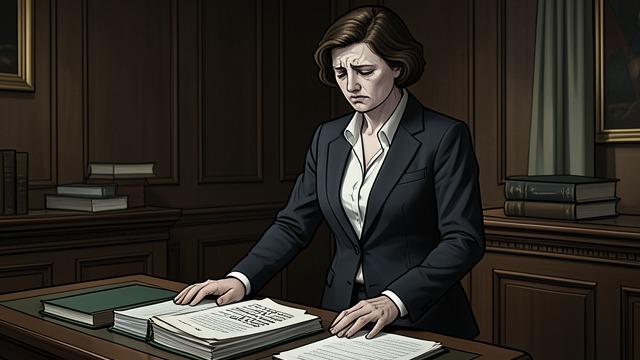
C.J. has spent months building a prosecution, yet Bantling’s defense produces new explanations for the Jaguar, the blood, and the scalpel. Her case begins to look less certain before the jury, while she grows exhausted and fears that an acquittal will return Bantling to freedom.
Dependence and vulnerability
The courtroom forces C.J. to recognize that preparation cannot eliminate uncertainty. Witnesses may falter, evidence may be reinterpreted, and a jury may not share her judgment. Her deteriorating confidence echoes the loss of control that followed the attack, while the trial also exposes the harm of her earlier ethical compromises.
The unexpected discovery of the hearts and photographs reverses the case’s direction, but not because C.J. can command events. The change comes through evidence and investigative chance beyond her control.
Survival Without Certainty
Survival Without Certainty
The final loss of control
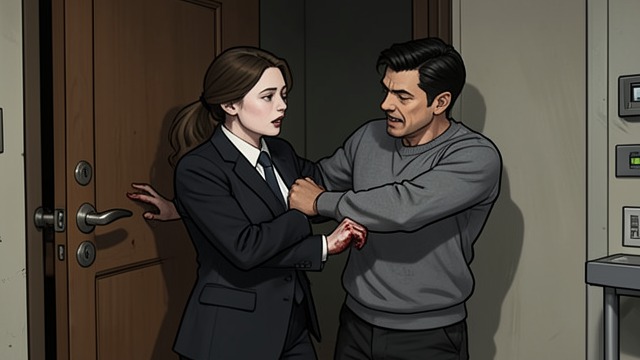
Gregory Chambers drugs and abducts C.J., placing her on a gurney in a hidden room and preparing to kill her. The man she trusted as a therapist has used his access and knowledge to turn her vulnerabilities into instruments of control.
Agency in a crisis
C.J. cannot simply regain mastery over her circumstances. Weakened and restrained, she seizes a chance to fight back, wounds Chambers, and struggles through the locked space to seek help. Her survival comes through imperfect, painful action rather than a guarantee that the danger can be managed.
The ending complicates her earlier declaration of power. She cannot command fate, but she can respond to it; the distinction is smaller than invulnerability and more durable than certainty.
June 1988, before the assault
Summer and autumn 1988, after Chloe leaves the hospital
September 2000, after the Queens limitation ruling
December 2000, during the murder trial
After Chambers’s attack, near the ending
