
The Greater Good and Its Price
RetributionThis thread examines how institutions and individuals justify compromises in the name of public safety, and how those compromises alter the meaning of justice.
increasing Bearing strength in each event
 decreasing
Bearing strength in each eventdecreasingA System That Moves On

A System That Moves On
Care without resolution
After Chloe’s assault, police and medical personnel respond to an immediate emergency, but the investigation yields no identified attacker. The system can treat injuries, record statements, and pursue leads; it cannot provide the certainty Chloe needs or restore what the crime has taken.
The victim’s burden
As attention shifts to other cases, Chloe continues calling for updates. Her experience of institutions is shaped by repetition: each official response acknowledges the case without changing its status. The gap between procedural activity and meaningful accountability becomes part of her lasting injury.
The story does not portray every official as indifferent. It shows how a system can continue operating while a victim remains alone with the consequences.
A Sound Legal Principle

A Sound Legal Principle
Protection through limits
C.J. learns that New York’s limitation period bars prosecution for her old assault. The rule serves a legitimate purpose: defendants should not face indefinitely delayed charges when evidence may have deteriorated and memories may have faded.
Unequal consequences
For C.J., however, the rule closes the door just as a credible suspect comes into view. The law’s general protections produce a specific hardship, separating what she knows from what the state can prove and charge. The same legal system she serves cannot offer her personal case a hearing.
The theme is not that procedure is needless. It is that abstract fairness can leave a real person without remedy, especially when a crime remains unsolved for years.
A Case at Risk

A Case at Risk
The rule against shortcuts
Chavez’s stop and search may violate the requirements for acting on an anonymous tip. If a court excludes the resulting evidence, the state could lose the body, the arrest’s foundation, and evidence uncovered through later investigation.
The seductive exception
C.J. understands the stakes: Bantling appears to be a dangerous offender, and the evidence seems to implicate him in Anna Prado’s murder. But guilt cannot by itself justify bypassing constitutional limits. The exclusionary rule exists precisely because public outrage can make shortcuts seem attractive.
When C.J. helps conceal the stop’s true basis, she places a conviction above the integrity of the process. The resulting compromise exposes the danger in defining justice solely by the outcome one hopes to achieve.
The Defense’s Moral Turn

The Defense’s Moral Turn
An advocate’s conflict
Lourdes Rubio initially defends Bantling as a client and believes his claims of innocence. As she learns that he admits to a brutal past assault and sees his behavior toward C.J., her professional role clashes with her recognition of the danger he poses.
Choosing what not to do
Lourdes could exploit the illegal stop and C.J.’s concealed conflict to undermine the prosecution. She does raise the allegations, but later restrains the challenge when she sees the harm and understands the threat of helping Bantling escape accountability. Her choice does not erase her duties as defense counsel; it reveals the human pressure inside them.
Her moral hesitation complicates the easy division between prosecution and defense. The adversarial system depends on advocacy, but the people within it must still decide what they are willing to make possible.
Justice’s Blind Spot
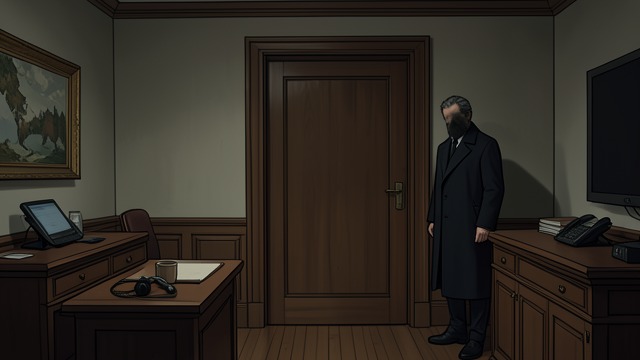
Justice’s Blind Spot
A conviction with residue
The jury convicts Bantling after the discovery of the victims’ hearts and photographs, and the court later imposes a death sentence. Yet the conviction does not erase the hidden compromises surrounding the case or settle whether every participant acted honorably.
The meaning of not looking
Lourdes’s warning that justice may choose not to look points to the novel’s unresolved ethical burden. C.J. has achieved an outcome that protects the public from Bantling, but she has also concealed a conflict and participated in a false account of the stop. The appeal is denied, yet legal finality does not make those choices disappear.
The story refuses a clean equation between conviction and justice. It leaves the reader with the question of whether a right result can remain just when the means used to reach it are compromised.
Summer 1988, after Chloe’s hospitalization
September 2000, before Bantling’s indictment
September 2000, after the Jaguar search
October 2000, after Lourdes confronts C.J.
After Bantling’s conviction, near the ending
