
The Federal Fight for Cupid
RetributionThis thread follows the institutional struggle between Florida investigators and federal authorities over access, jurisdiction, evidence, and control of the Cupid prosecution.
increasing Bearing strength in each event
 decreasing
Bearing strength in each eventdecreasingA State Task Force Forms
A State Task Force Forms
A growing investigation
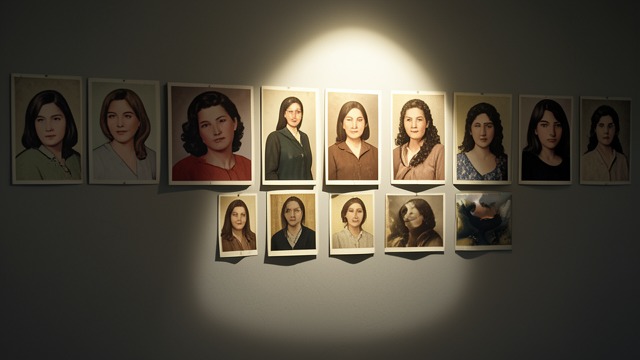
The disappearances and murders of young women in Miami-Dade County draw multiple local agencies into a shared investigation. The Florida Department of Law Enforcement provides headquarters and investigative support, while Special Agent Dominick Falconetti joins the work after the case has accumulated months of frustration and no clear lead.
The task force’s wall of victim photographs makes the investigation’s scale visible. The case crosses city and agency boundaries, but the investigators’ immediate purpose is shared: identify the killer and build evidence strong enough to sustain a prosecution.
Attention becomes a second pressure
As bodies are found and the nickname Cupid spreads, media coverage intensifies. Reporters and cameras gather at crime scenes, and law-enforcement leaders have incentives to be seen as central to the case. Public pressure does not itself settle jurisdiction, but it makes the question of who gets credit and authority increasingly consequential.
The task force’s difficult work is therefore accompanied by competition between institutions. Falconetti understands that a successful case may draw agencies eager to claim the public victory, even if they were not responsible for building the investigation from its beginning.
The FBI Is Turned Away
The FBI Is Turned Away
A disputed entrance
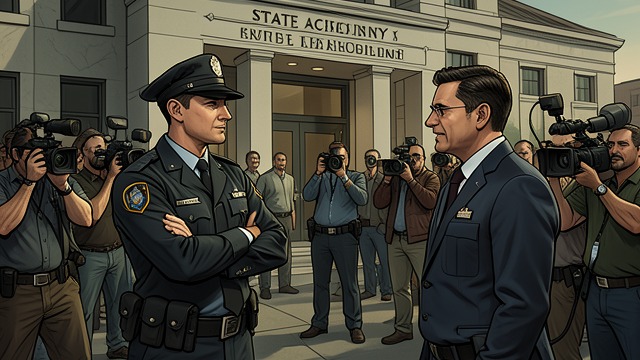
After William Rupert Bantling is arrested with Anna Prado’s body in his trunk, the task force obtains state search warrants for his home and vehicles. Federal agents arrive at the house and seek access, arguing that the discovery of an earlier victim on federal land gives the Federal Bureau of Investigation a legitimate role in the case.
Falconetti refuses to admit them under the state warrant. He emphasizes that the warrant authorizes specified state and local agencies, not federal agents. The confrontation is not simply a personal feud: allowing entry without the required authority could jeopardize the search and its evidence.
Access becomes a jurisdictional contest
Federal agents, including Mark Gracker, press their claim in front of waiting reporters. Their presence raises the possibility that the public may see the investigation as having transferred to federal control, even while the state task force is still processing Bantling’s home.
Falconetti holds his ground until federal agents obtain their own warrant. The episode establishes a recurring pattern: cooperation is possible, but neither side is willing to surrender control without a legal basis. The evidence itself becomes part of the institutional contest.
A Federal Case Is Proposed
A Federal Case Is Proposed
A bid to take over
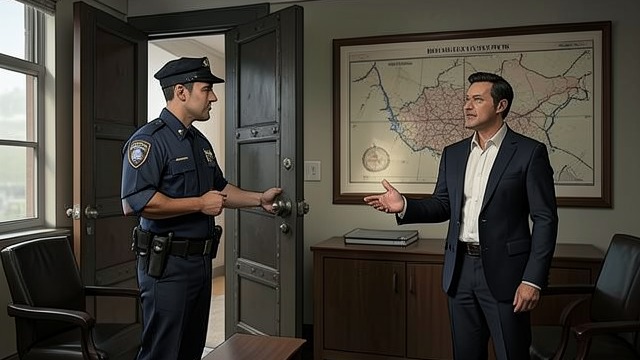
After Bantling is indicted for Anna Prado’s murder, the U.S. Attorney and the FBI’s Miami leadership meet with State Attorney Jerry Tigler. They argue that federal resources and experience make their office better suited to manage the publicity and complexity of the investigation.
Their proposed transfer would give federal authorities more than the investigation of the victim found on federal land. They also want the state’s accumulated evidence and suggest theories that could let them prosecute Bantling for other acts, including alleged robberies connected to the victims’ missing clothing and hearts.
C.J. Townsend resists the pressure
C.J. Townsend challenges the legal basis for federal jurisdiction over murders that occurred outside federal land. She rejects an expansive argument that the killings can be grouped under a continuing criminal enterprise, noting that the theory as presented does not satisfy its required elements.
The exchange exposes the different incentives at work. Federal leaders seek a high-profile prosecution with national reach, while Townsend argues that the state should retain cases it can legally bring and prove. Her resistance protects the state’s role, but it also leaves the two offices in open conflict.
A Fragile Division of Evidence
A Fragile Division of Evidence
Cooperation under protest
The state does not hand federal officials unrestricted control of its case. Townsend agrees to provide copies of documents and lab reports, and to arrange supervised access to evidence, while making clear that she will challenge any effort to seize the prosecution without proper authority.
The arrangement is deliberately limited. It allows federal investigators to examine material relevant to their own legal theories without automatically dissolving the state’s prosecution of Bantling. The evidence remains central to both sides’ competing plans, making custody and access matters of strategy as well as procedure.
The next victim changes the balance
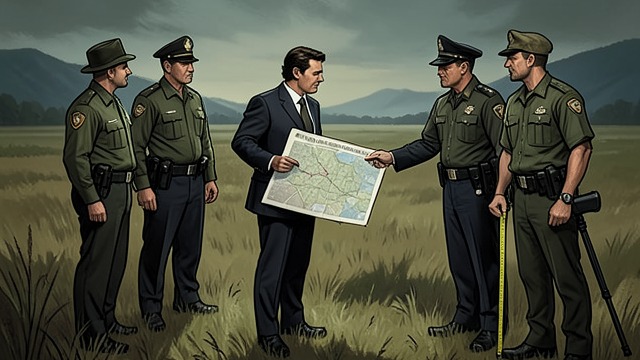
When Morgan Weber’s body is found in the Everglades, federal agents again seek a foothold. Townsend investigates whether the location belongs to federal or county jurisdiction and establishes that the scene lies on county property. That finding prevents an immediate transfer based solely on the location of the body.
She also resists the federal effort to interfere with the state crime scene, using the land survey and legal threats to make the agents withdraw. The episode strengthens her position temporarily, but the underlying rivalry remains: a new jurisdictional opening could still alter who controls the evidence and the case.
After eight months of unsolved murders in 2000
September 2000, during the search of William Bantling’s home
Late September 2000, after the first indictment
October 2000, after the federal warrant and before trial
