
Lourdes Rubio’s Collapse of Trust
RetributionThis thread follows Lourdes Rubio from confident defense counsel to a lawyer troubled by her client’s cruelty and her own role in using a rape survivor’s trauma as a litigation tactic.
increasing Bearing strength in each event
 decreasing
Bearing strength in each eventdecreasingThe Client She Trusts
The Client She Trusts
A polished public image
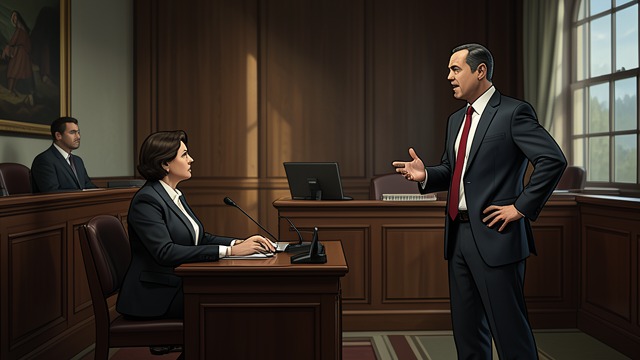
Lourdes Rubio represents William Rupert Bantling after his arrest. He is a well-dressed businessman with no apparent criminal history, and he presents himself as calm, respectable, and wrongfully accused. Rubio initially accepts his claim that he is not responsible for Anna Prado’s murder.
Bantling’s appearance and manner help sustain the defense story. He is not simply a stranger she has met at the jail: before his arrest, he has been part of her social life, and she has regarded him as a friend. Her confidence rests on personal familiarity as well as the legal weaknesses she sees in the prosecution’s evidence.
Defense as an oath and an identity
Rubio has built a career defending clients against the power of the state. She believes in constitutional protections even when the accused is unpopular, and she has spent years establishing herself in a profession dominated by men.
Her work for Bantling therefore begins as an extension of a principle she has long held. The challenge is not only whether the evidence proves the charges, but whether her personal trust has distorted her judgment of the man she agreed to defend.
The Jailroom Accusation
The Jailroom Accusation
A defense tactic crosses a line
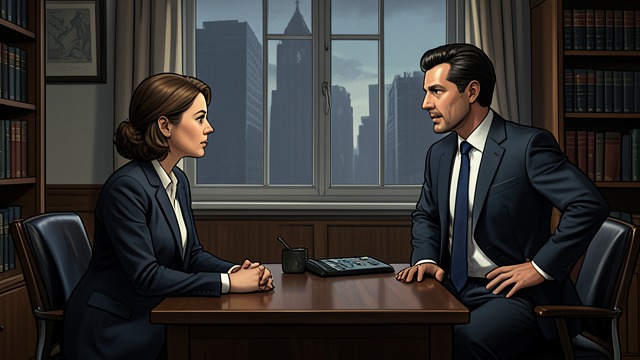
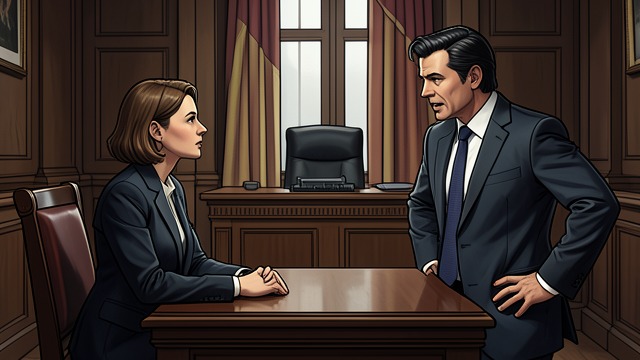
Rubio tells C.J. Townsend that Bantling claims he raped her twelve years earlier and that she is now prosecuting him out of revenge. The accusation is designed to turn Townsend’s undisclosed history into a challenge to her impartiality and the integrity of the murder case.
Rubio knows the claim will land with unusual force because she has brought police reports concerning Townsend’s assault into the meeting. She tries to frame the accusation as a legitimate defense concern, but Bantling’s behavior makes the encounter more than an ordinary legal argument. He taunts Townsend and speaks about the assault in a deliberately intimate, degrading way.
The client’s cruelty becomes undeniable
Townsend responds that she does not know how Bantling learned about the assault and rejects his claim that he was the attacker. She also warns Rubio that using the accusation without care is unethical and harmful. The meeting leaves Rubio facing a question she cannot comfortably avoid: whether she is defending her client’s rights or helping him weaponize a victim’s suffering.
The interaction damages Rubio’s confidence in Bantling and exposes the pleasure he takes in intimidating Townsend. Although she continues as his counsel, her earlier certainty that he is a misunderstood innocent man is no longer secure.
A Deliberate Retreat in Court
A Deliberate Retreat in Court
A witness approaches the decisive question
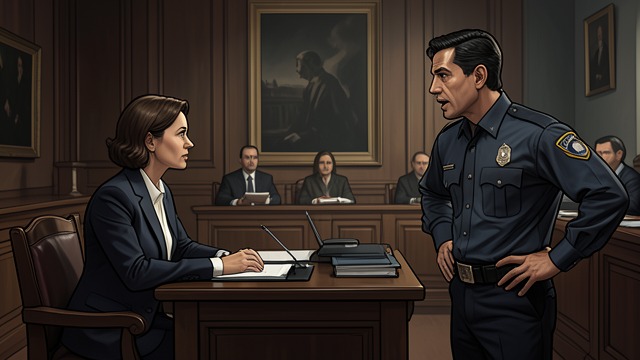
During the motion to suppress hearing, Rubio questions Victor Chavez about why he stopped Bantling’s Jaguar. She has reason to suspect that the real basis was an anonymous tip, not the traffic violations described in the official account. Her questioning makes Chavez visibly uncomfortable and moves close to exposing the concealed call.
A successful challenge could destroy the prosecution’s case and free Bantling. Rubio has the opportunity to press the officer harder and exploit the inconsistencies she has found. Instead, she abruptly stops the line of questioning without fully revealing what she knows.
Conscience interrupts strategy
Rubio’s retreat is not caused by confidence in Chavez’s testimony. She has seen Bantling’s lack of remorse toward Townsend and recognizes how readily he uses another person’s trauma as a weapon. She cannot fully reconcile her professional duty to challenge the state with the possibility that winning might return a brutal predator to the world.
The hearing ends without the defense’s strongest information being presented. Rubio’s choice leaves her troubled: she has held back evidence that could help her client because she fears the consequences of helping him escape accountability. Her professional role and her personal moral judgment are now in direct conflict.
The Defense Becomes a Performance
The Defense Becomes a Performance
Reasonable doubt by design
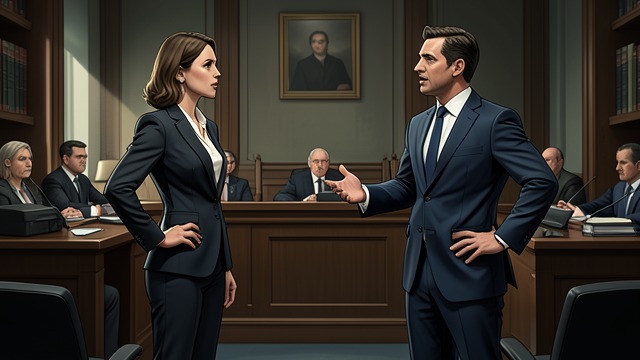
In opening statement, Rubio urges the jury not to mistake a vivid account for proof. She describes the prosecution’s case as a movie trailer and argues that disturbing details cannot substitute for a reliable chain of evidence. She emphasizes possible contamination, the Jaguar’s time at a repair shop, and the lack of forensic links to the other murders.
Her argument is effective because the state’s case has real vulnerabilities. The anonymous-tip issue has not been disclosed, Chavez is a weak witness, and several forensic claims can be challenged. Rubio is able to create reasonable doubt without proving an alternative account of Anna Prado’s death.
A client’s trustworthiness erodes
Bantling appears to enjoy the courtroom spectacle and pays close attention to the women around him. Rubio sees the same arrogance and cruelty that disturbed her in the jail meeting, while the prosecution’s witnesses describe a calculated and intimate form of violence.
She continues to make the strongest legal case she can, but the gap between her courtroom performance and her private belief grows wider. She doubts Bantling’s innocence even as she attacks the state’s proof, and she understands that a successful defense might have consequences far beyond winning a case.
An Attorney’s Moral Reckoning
An Attorney’s Moral Reckoning
A defense ends in conviction
After the jury finds Bantling guilty of Anna Prado’s murder, he erupts and publicly accuses Townsend of having been his rape victim. Rubio has already concluded that the allegation is without merit as a way to challenge Townsend’s prosecution, and she says so when the judge asks whether she supports her client’s claims.
Her answer confirms how far her trust has collapsed. She no longer sees Bantling as the innocent friend she first believed him to be. He has shown her that he will use both her loyalty and another person’s pain whenever they serve his interests.
The question of justice remains
After Bantling receives a death sentence, Rubio tells Townsend that the case troubles her, including the parts for which she accepts responsibility. She does not offer an easy apology or claim that the outcome settles every moral question. Instead, she asks whether the ends justify the means and admits that she does not know.
Rubio leaves with her own judgment unsettled. She has represented a client whose guilt has become difficult to deny, but she has also watched a prosecution carry serious ethical compromises. Her final warning to Townsend—that justice can sometimes choose not to look—captures her unease about what the verdict has and has not repaired.
September 2000, at Bantling’s first court appearances
October 2000, during a private meeting at the jail
October 31, 2000, during the suppression hearing
December 2000, during opening statements and the state’s case
January 2001, after the guilty verdict and during sentencing
